Reaction equation
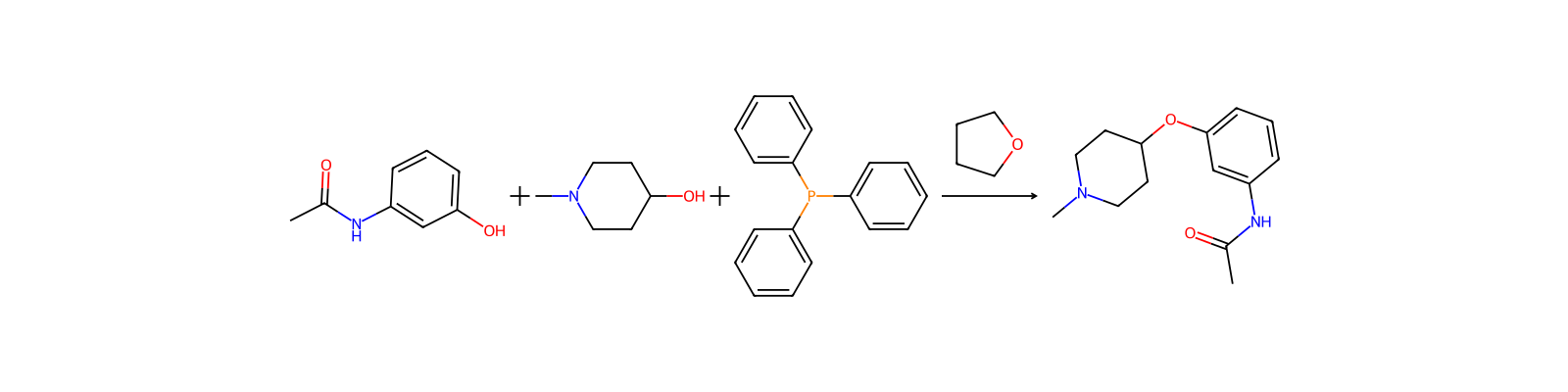
[OH:1][C:2]1[CH:3]=[C:4]([NH:8][C:9](=[O:11])[CH3:10])[CH:5]=[CH:6][CH:7]=1.O[CH:13]1[CH2:18][CH2:17][N:16]([CH3:19])[CH2:15][CH2:14]1.C1(P(C2C=CC=CC=2)C2C=CC=CC=2)C=CC=CC=1>O1CCCC1>[CH3:19][N:16]1[CH2:17][CH2:18][CH:13]([O:1][C:2]2[CH:3]=[C:4]([NH:8][C:9](=[O:11])[CH3:10])[CH:5]=[CH:6][CH:7]=2)[CH2:14][CH2:15]1Participants
5
Reactant 3


Product 1

Reagents, catalysts & solvents 1

Procedure
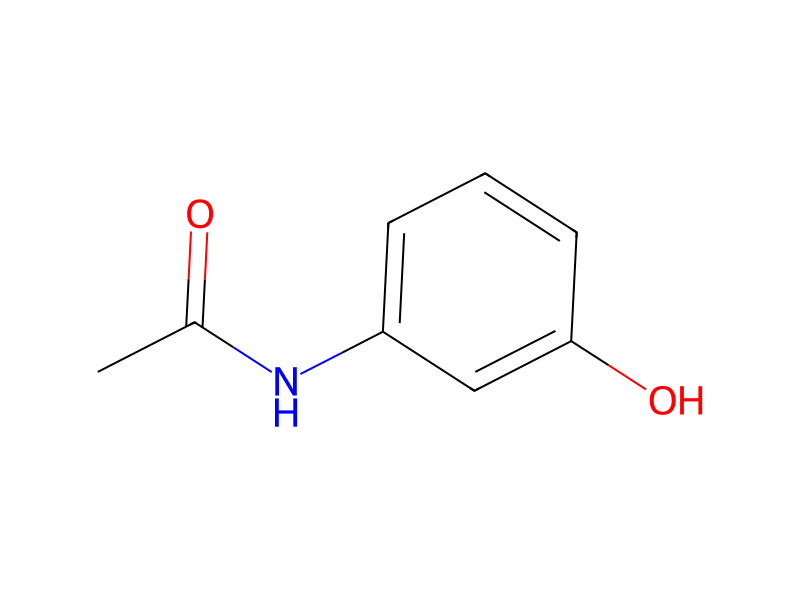
A suspension of N-(3-Hydroxy-phenyl)-acetamide (30.2 g) in anhydrous tetrahydrofuran (600 mL) was treated with 4-hydroxy-N-methylpiperidine (30.54 mL) and triphenylphosphine (68.18 g); a solution of diethylazadicarboxylate in anhydrous tetrahydrofuran (THF) (40.94 mL in 60 mL of THF) was added dropwise and the mixture was stirred at room temperature for 2 hours and then heated to 50° C. overnight. Further amounts of triphenylphosphine (28.00 g) and diethylazadicarboxylate (14 mL) were added and the heating was continued for additional 24 hours.
Workup
- temperatureheated to 50° C. overnight
- additionwere added
- waitthe heating was continued for additional 24 hours
Sources & evidence
- ORD record
- ord-c4473f8be0684334b827e5bd7897e708
- Source dataset
- uspto-grants-2013_09
- Patent number
- US08541429B2
Linked notes
Loading…