HomeMCPWorkbenchSkills
HomeWorkbenchNotificationsMe
llms.txt · MCP GuidePrivacy Policy · Terms of Service · Supportv1.8.3
  1. Home
  2. /Reaction

Acetate → 1-Allyl-1-nitrocyclohexane

HRID 446631
Print

Reaction equation

HRID 446631 reaction equation
[OH-].[K+].[N+:3]([CH:6]1[CH2:11][CH2:10][CH2:9][CH2:8][CH2:7]1)([O-:5])=[O:4].[C:12]1(P(C2C=CC=CC=2)C2C=CC=CC=2)[CH:17]=CC=C[CH:13]=1.C(OCC=C)(=O)C.C([O-])(=O)C>C([O-])(=O)C.[Pd+2].C([O-])(=O)C.O.C(O)(C)C.CO>[CH2:17]([C:6]1([N+:3]([O-:5])=[O:4])[CH2:11][CH2:10][CH2:9][CH2:8][CH2:7]1)[CH:12]=[CH2:13]
ParticipantsConditionsProcedureWorkupSources & evidenceReaction notes

Participants

10

Reactant 5

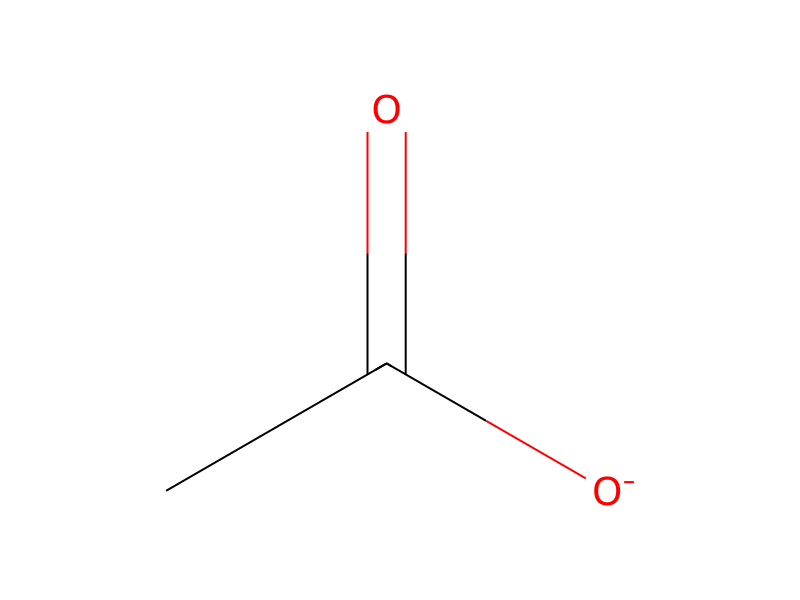
HCID 175AcetateHCID 11584Allyl acetateHCID 11776TriphenylphosphineHCID 14285NitrocyclohexaneHCID 14797Potassium Hydroxide

Product 1

HCID 128119361-Allyl-1-nitrocyclohexane

Reagents, catalysts & solvents 4

HCID 167845
palladium(II) acetate
Catalyst
HCID 887MethanolSolvent
HCID 962WaterSolvent
HCID 3776IsopropanolSolvent

Conditions

Temperature
55 °C

Procedure

A 3 neck 2 L round bottom flask equipped with dropping funnel, temperature controller, nitrogen outlet, stir bar and condenser is charged with 71 g (1.27 mols) of potassium hydroxide (KOH), 300 mL of methanol and 300 mL of isopropanol. The addition takes place at room temperature, however, while the base is dissolving in the solvent there is approximately 30° C. increase in temperature. The base solution is allowed to stir under nitrogen for 20 minutes. During this time, the temperature of the flask goes down to 44.7° C. To the above base solution, 156 g of nitrocyclohexane (“NCyHex”) (1.16 mols) is added slowly with vigorous stirring. The mixture stirred for 10 minutes, and palladium acetate (0.56 mmol)/triphenyl phosphine (1.7 mmol) added as catalyst. The resulting yellow solution stirred under nitrogen for another 5 minutes and 139.5 mL (1.06 mols) of allyl acetate added drop-wise to the mixture via the dropping funnel. During the addition of the acetate, the reaction mixture turns brown but transparent. During the addition, the temperature rises. At this point, heat is switched on and the mixture stirred for 8 h at 55° C. followed by overnight stiffing at room temperature. The next day the mixture is heated again to 55° C. followed by room temperature stirring overnight. After the reaction is complete, the contents of the flask are poured into a separatory funnel containing 600 mL of water. The organic layer is extracted with pentane (3×200 mL) and dried under MgSO4. Excess solvent is removed under a rotary evaporator and 167 g (93.5%) of deep brown solution of the desired 1-allyl-1-nitrocyclohexane (11) obtained at 90.7% purity. GC/MS analysis shows [MH]+ m/z 123.

Workup

  1. customA 3 neck 2 L round bottom flask equipped
  2. additionThe addition
  3. customat room temperature
  4. dissolutionhowever, while the base is dissolving in the solvent there
  5. customis approximately 30° C.
  6. temperatureincrease in temperature
  7. stirringto stir under nitrogen for 20 minutes
  8. customgoes down to 44.7° C
  9. stirringThe mixture stirred for 10 minutes
  10. stirringThe resulting yellow solution stirred under nitrogen for another 5 minutes
  11. additionDuring the addition
  12. temperatureAt this point, heat
  13. stirringstirred for 8 h at 55° C.
  14. customstiffing at room temperature
  15. customfollowed by room temperature
  16. stirringstirring overnight
  17. additionthe contents of the flask are poured into a separatory funnel
  18. extractionThe organic layer is extracted with pentane (3×200 mL)
  19. customdried under MgSO4
  20. customExcess solvent is removed under a rotary evaporator and 167 g (93.5%) of deep brown solution of the desired 1-allyl-1-nitrocyclohexane (11)
  21. customobtained at 90.7% purity

Sources & evidence

ORD record
ord-8cebf3388ce54654bd1b89a77e308c42
Source dataset
uspto-grants-2013_07
DOI
10.6084/m9.figshare.5104873.v1
Patent number
US08480800B2

Reaction notes

On this pageParticipantsConditionsProcedureWorkupSources & evidenceReaction notes




