HomeMCPWorkbenchSkills
HomeWorkbenchNotificationsMe
llms.txt · MCP GuidePrivacy Policy · Terms of Service · Supportv1.8.3
  1. Home
  2. /Reaction

4-Methylmorpholine → N-Benzyl-2-(2-methoxyisonicotinamido)-4-methylthiazole-5-carboxamide

HRID 45383
Print

Reaction equation

HRID 45383 reaction equation
[CH3:1][O:2][C:3]1[CH:4]=[C:5]([CH:9]=[CH:10][N:11]=1)[C:6]([OH:8])=O.CN1CCOCC1.C(OC(Cl)=O)C(C)C.[NH2:27][C:28]1[S:29][C:30]([C:34]([NH:36][CH2:37][C:38]2[CH:43]=[CH:42][CH:41]=[CH:40][CH:39]=2)=[O:35])=[C:31]([CH3:33])[N:32]=1>O1CCCC1>[CH2:37]([NH:36][C:34]([C:30]1[S:29][C:28]([NH:27][C:6](=[O:8])[C:5]2[CH:9]=[CH:10][N:11]=[C:3]([O:2][CH3:1])[CH:4]=2)=[N:32][C:31]=1[CH3:33])=[O:35])[C:38]1[CH:43]=[CH:42][CH:41]=[CH:40][CH:39]=1
ParticipantsProcedureWorkupSources & evidenceReaction notes

Participants

6

Reactant 4

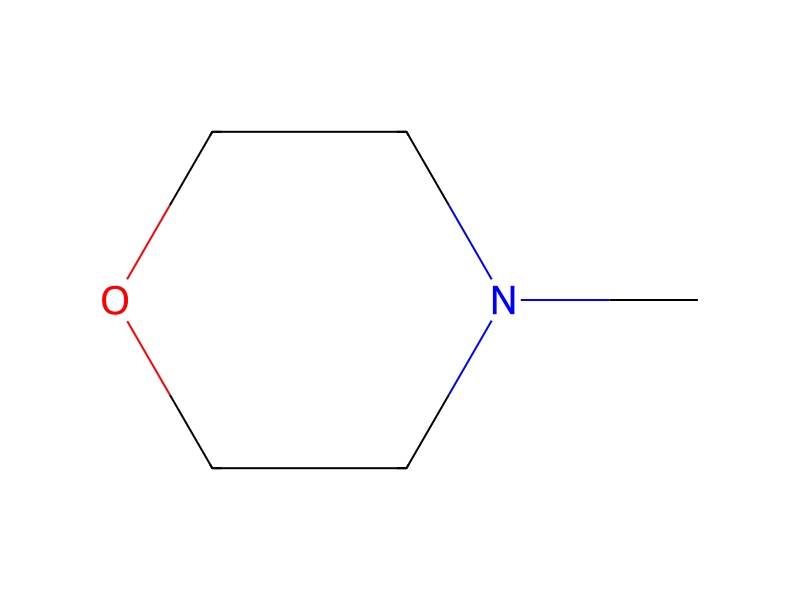
HCID 79724-MethylmorpholineHCID 62365Isobutyl chloroformateHCID 210824N-Benzyl-2-imino-4-methyl-2,3-dihydro-1,3-thiazole-5-carboximidic acidHCID 8199422-Methoxyisonicotinic Acid

Product 1

HCID 59369644N-Benzyl-2-(2-methoxyisonicotinamido)-4-methylthiazole-5-carboxamideYield 83%

Reagents, catalysts & solvents

1
HCID 8028TetrahydrofuranSolvent2×

Procedure

To a solution of 2-methoxyisonicotinic acid (0.25 g, 1.01 mmol) in anhydrous tetrahydrofuran (10 mL) was added 4-methyl morpholine (0.15 g, 1.45 mmol), followed by the dropwise addition of isobutylchloroformate (0.19 g, 1.36 mmol) at 0° C. The reaction mixture was stirred at ambient temperature for 6 hours. Then a solution of 2-amino-N-benzyl-4-methylthiazole-5-carboxamide in tetrahydrofuran (10 mL) was added to it. The reaction mixture was stirred at ambient temperature for another 6 hours. The solvent was removed in vacuo. The residue was dissolved in ethyl acetate (50 mL) and washed with diluted hydrochloric acid solution (10 mL), saturated sodium bicarbonate solution (10 mL) and brine (10 mL). The organic layer was dried over anhydrous sodium sulfate, filtered and the filtrate was concentrated in vacuo. The residue was recrystallized from ethyl acetate and hexane to yield the title compound as a colorless solid in 83% yield (0.32 g); m.p. 188-190° C.; 1H NMR (CDCl3, 300 MHz) δ 8.32 (d, J=5.3 Hz, 1H), 7.37-7.25 (m, 7H), 7.17 (s, 1H), 5.99 (t, J=5.0 Hz, 1H), 4.59 (d, J=5.6 Hz, 2H), 3.96 (s, 3H), 2.55 (s, 3H); 1H NMR (CDCl3, 75 MHz) δ 164.9, 163.7, 161.9, 157.1, 151.3, 148.4, 141.5, 137.6, 128.8, 127.8, 127.8, 119.4, 113.8, 109.4, 54.0, 44.2, 16.7; MS (ES+) m/z 383.5 (M+1).

Workup

  1. stirringThe reaction mixture was stirred at ambient temperature for another 6 hours
  2. customThe solvent was removed in vacuo
  3. dissolutionThe residue was dissolved in ethyl acetate (50 mL)
  4. washwashed with diluted hydrochloric acid solution (10 mL), saturated sodium bicarbonate solution (10 mL) and brine (10 mL)
  5. dry with materialThe organic layer was dried over anhydrous sodium sulfate
  6. filtrationfiltered
  7. concentrationthe filtrate was concentrated in vacuo
  8. customThe residue was recrystallized from ethyl acetate and hexane

Sources & evidence

ORD record
ord-c6649a9425964144be49335e60f62a31
Source dataset
uspto-grants-2013_09
DOI
10.6084/m9.figshare.5104873.v1
Patent number
US08541457B2

Reaction notes

On this pageParticipantsProcedureWorkupSources & evidenceReaction notes
