Reaction equation

Br[C:2]1[CH:7]=[CH:6][C:5]([CH3:8])=[CH:4][CH:3]=1.[Li]C(C)(C)C.[Br:14][C:15]1[CH:16]=[C:17]([CH:23]=[CH:24][CH:25]=1)[C:18](N(C)C)=[O:19].O>C1COCC1.CCCCC>[Br:14][C:15]1[CH:16]=[C:17]([C:18]([C:2]2[CH:7]=[CH:6][C:5]([CH3:8])=[CH:4][CH:3]=2)=[O:19])[CH:23]=[CH:24][CH:25]=1Participants

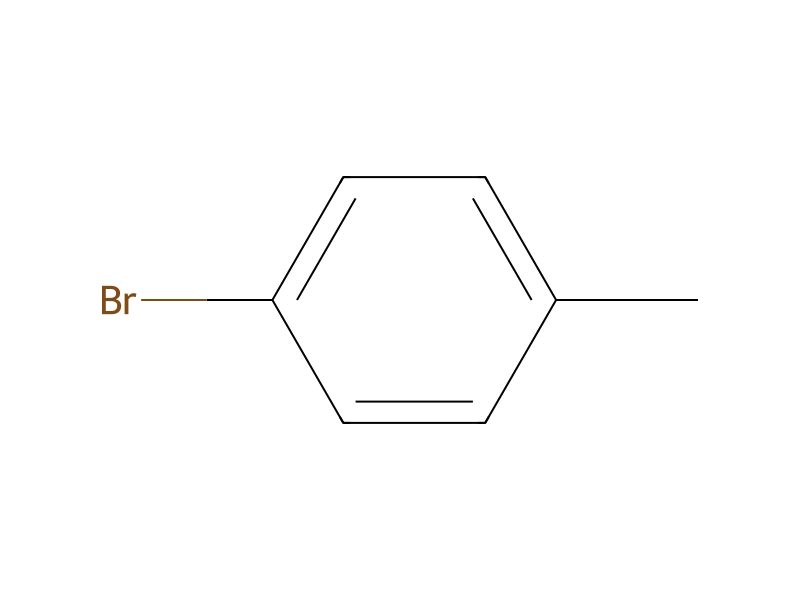



Conditions
- Temperature
- -80 °C
Procedure
To a solution of 38.5 g (0.225 mol) of 4-bromotoluene in 450 mL of THF, 300 mL (0.450 mol) of 1.5 M tBuLi in pentane was added dropwise with vigorous stirring for 2 hr at −80° C. This mixture was slowly warmed to room temperature and additionally stirred at this temperature for 30 min. To this mixture 52.0 g (0.23 mol) of 3-bromo-N,N-dimethylbenzamide was added at 0° C., and then this mixture was stirred for 12 hr at room temperature. Later, 300 mL of water was added, organic solvent was evaporated using a rotary evaporator. The product was extracted with 2×200 mL of dichloromethane. The combined organic extracts were evaporated to dryness, and the residue was dried in vacuum. This procedure gave 51.3 g (83%) of 40 which was further used without additional purification.
Workup
- temperatureThis mixture was slowly warmed to room temperature
- stirringadditionally stirred at this temperature for 30 min
- stirringthis mixture was stirred for 12 hr at room temperature
- customorganic solvent was evaporated
- customa rotary evaporator
- extractionThe product was extracted with 2×200 mL of dichloromethane
- customThe combined organic extracts were evaporated to dryness
- customthe residue was dried in vacuum
Sources & evidence
- ORD record
- ord-559d82a387544e008795df8e74291c68
- Source dataset
- uspto-grants-2013_09
- Patent number
- US08541522B2
Linked notes
Loading…