HomeMCPWorkbenchSkills
HomeWorkbenchNotificationsMe
llms.txt · MCP GuidePrivacy Policy · Terms of Service · Supportv1.8.3
  1. Home
  2. /Reaction

Ammonium Chloride → 4-Isobutyl-dihydro-furan-2-one

HRID 458078
Print

Reaction equation

HRID 458078 reaction equation
C([O:5][C:6](=[O:16])[CH2:7][CH:8]([CH2:12][CH:13]([CH3:15])[CH3:14])[C:9](O)=O)(C)(C)C.C[Si](C)(C)[N-][Si](C)(C)C.[Li+].CC(C)=CCBr.[Cl-].[NH4+]>C1COCC1.CCOCC.Cl>[CH2:12]([CH:8]1[CH2:9][O:16][C:6](=[O:5])[CH2:7]1)[CH:13]([CH3:14])[CH3:15]
ParticipantsConditionsProcedureWorkupSources & evidenceReaction notes

Participants

8

Reactant 4

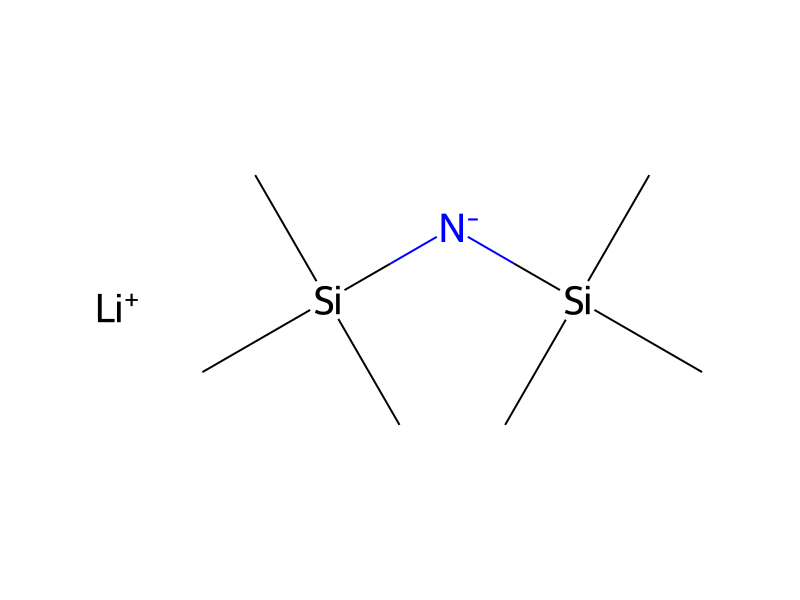
HCID 25517Ammonium ChlorideHCID 700922-Butene, 1-bromo-3-methyl-HCID 2733832Lithium hexamethyldisilazaneHCID 99427122-Isobutyl-succinic acid-4-t-butyl ester

Product 1

HCID 152136444-Isobutyl-dihydro-furan-2-oneYield 95.1%

Reagents, catalysts & solvents 3

HCID 313
Hydrochloric Acid
Solvent
HCID 3283Diethyl EtherSolvent
HCID 8028TetrahydrofuranSolvent3×

Conditions

Temperature
-40 °C

Procedure

Cyanide 3 (0.86 g, 7.1 mmol) in THF (30 mL) was added dropwise over 1 hour to a stirring mixture of lithium hexamethyldisilazide (7.8 mL of a 1 M solution in THF, 7.8 mmol) in THF (40 mL) at −78° C. under argon. The mixture was allowed to warm to −40° C. and stirred for 2 hours. The mixture was cooled to −78° C. and dimethylallyl bromide (1.3 mL, 10.6 mmol) was added. The mixture was stirred for a further 2 hours at −78° C. and then allowed to warm to room temperature overnight. Saturated ammonium chloride solution (20 mL) was added, and the mixture was diluted with ether (50 mL) and dilute hydrochloric acid (30 mL). The aqueous layer was further extracted with ether (2×50 mL), and the combined 15 organic fractions were washed with brine, dried (MgSO4), and the solvent was evaporated under reduced pressure. The residue was chromatographed (SiO2, heptane-ethyl acetate, 98:2) to give the cyanoalkene 4 (0.96 g, 72%) as a colorless oil; Rf(heptane-ethyl acetate, 95:5) 0.38; νmax(film)/cm−1 2230 (CN),1673 (C═C); δH (400 MHz; CDCl3) 5.27 (1H, tt, J 7.6, 1.3, CHCMe2), 2.89 (2H, m), 2.30–2.22 (4H, m), 2.10 (2H, d, J 14.2), 1.94 (2H, m), 1.84–1.62 (2H, m), 1.65 (3 H, s, Me), 1.55 (3H, s, Me); m/z (AP+) 190 (M+H, 100%).


Workup

  1. temperatureThe mixture was cooled to −78° C.
  2. stirringThe mixture was stirred for a further 2 hours at −78° C.
  3. temperatureto warm to room temperature overnight
  4. extractionThe aqueous layer was further extracted with ether (2×50 mL)
  5. washwere washed with brine
  6. dry with materialdried (MgSO4)
  7. customthe solvent was evaporated under reduced pressure
  8. customThe residue was chromatographed (SiO2, heptane-ethyl acetate, 98:2)

Sources & evidence

ORD record
ord-0e827b1bd27e4ac6b6ec3b9662839883
Source dataset
uspto-grants-2007_03
DOI
10.6084/m9.figshare.5104873.v1
Patent number
US07189747B2

Reaction notes

On this pageParticipantsConditionsProcedureWorkupSources & evidenceReaction notes