HomeMCPSkillsWorkbenchOpenChem
HomeWorkbenchNotificationsMe
llms.txt · skill.md · MCP GuidePrivacy Policy · Terms of Service · Supportv1.8.5
  1. Home
  2. /Reaction

Dimethylamine → P,P-bis(2,2-dimethyl-1-aziridinyl)-N,N-dimethylphosphinic amide

HRID 463632
Print

Reaction equation

C([N:3]([CH2:6][CH3:7])[CH2:4]C)C.[O:8]=[P:9](Cl)(Cl)Cl.[CH3:13][C:14]1([CH3:17])[CH2:16][NH:15]1.[CH3:18][NH:19][CH3:20].[CH2:21]1COCC1>>[CH3:13][C:14]1([CH3:17])[CH2:16][N:15]1[P:9]([N:3]1[CH2:4][C:6]1([CH3:7])[CH3:21])(=[O:8])[N:19]([CH3:20])[CH3:18]
ParticipantsConditionsProcedureWorkupSources & evidenceReaction notes

Participants

6

Reactant 5

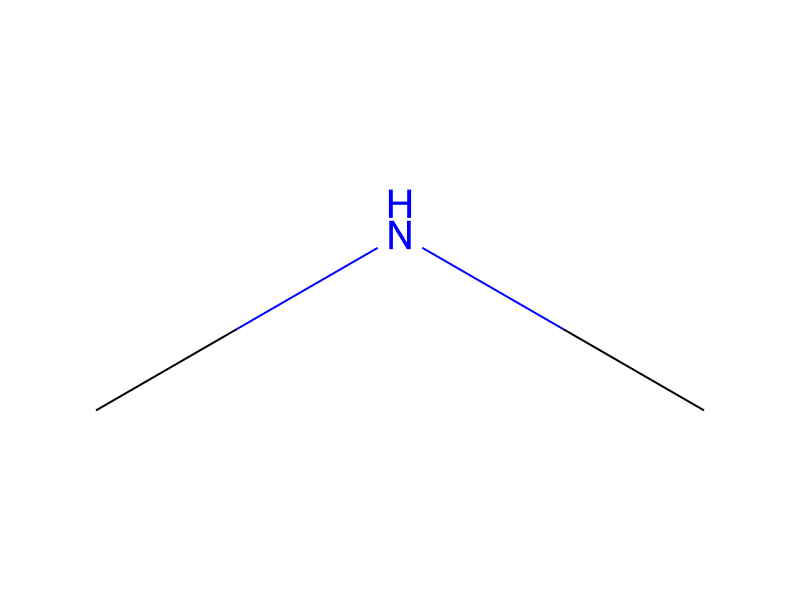
HCID 674DimethylamineHCID 8028Tetrahydrofuran3×HCID 8471TriethylamineHCID 24813Phosphorus oxychlorideHCID 2272442,2-Dimethylaziridine

Product 1

HCID 13491129P,P-bis(2,2-dimethyl-1-aziridinyl)-N,N-dimethylphosphinic amideYield 75%

Conditions

Temperature
-40 °C

Procedure

0.16 moles of triethylamine, 0.05 moles of POCl3 and 150 milliliters of dried tetrahydrofuran were combined in a 250 milliliter round bottom flask, under a nitrogen atmosphere to avoid moisture contamination, to form a first solution which was then cooled to -40° C. A second solution was then prepared containing 0.10 moles of 2,2-dimethylaziridine in 20 milliliters of THF and the second solution was added dropwise to the cooled first addition over a period of about 2 hours. The resulting slurry was then warmed to approximately 0° C. over an hours' time and thereafter cooled again to -20° C. A third solution was then prepared containing 0.16 moles of dimethylamine in 25 milliliters of dried THF and the third solution was added dropwise to the cooled aforesaid combination of the first and second solutions over a period of about 2 hours. The vessel was sealed and stirred overnight at 4° C. The resulting slurry was then filtered, the filtrate was concentrated by rotary evaporation, and thereafter vacuum distilled at 58° C./0.15 millimeters Hg to produce a 75% yield of P,P-bis(2,2-dimethyl-1-aziridinyl)-N,N-dimethylphosphinic amide. The product was characterized by NMR and aziridine titration as having a purity of 99.45%. Elemental analysis confirmed the structure as follows:

Workup

  1. customto form a first solution which
  2. customA second solution was then prepared
  3. additionthe second solution was added dropwise to the cooled first addition over a period of about 2 hours
  4. temperatureThe resulting slurry was then warmed to approximately 0° C. over an hours' time
  5. temperaturecooled again to -20° C
  6. customA third solution was then prepared
  7. additionthe third solution was added dropwise to the cooled aforesaid combination of the first and second solutions over a period of about 2 hours
  8. customThe vessel was sealed
  9. filtrationThe resulting slurry was then filtered
  10. concentrationthe filtrate was concentrated by rotary evaporation
  11. distillationvacuum distilled at 58° C./0.15 millimeters Hg

Sources & evidence

ORD record
ord-172ab33ca9444940899f32b767dbcac5
Source dataset
uspto-grants-1985_10
DOI
10.6084/m9.figshare.5104873.v1
Patent number
US04544501

Reaction notes

On this pageParticipantsConditionsProcedureWorkupSources & evidenceReaction notes


