Reaction equation

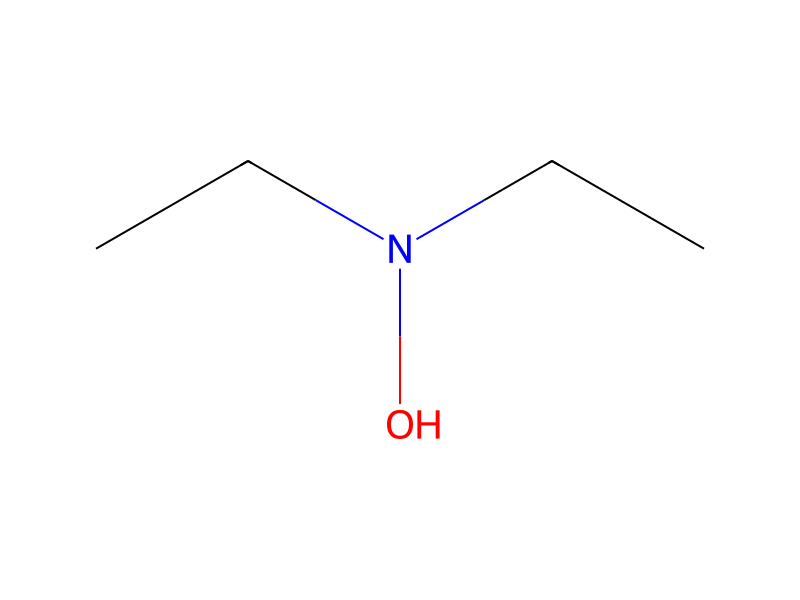
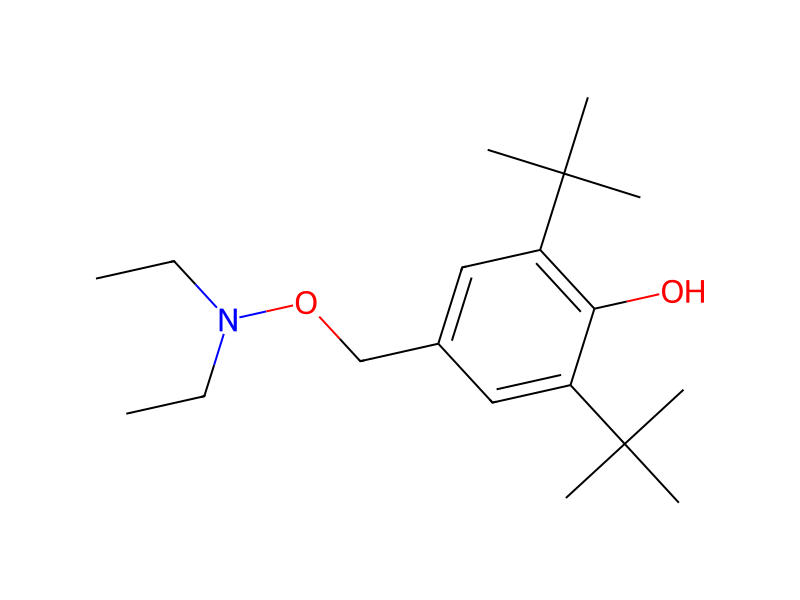
C(Cl)(=O)C(Cl)=O.[C:7]([C:11]1[CH:12]=[C:13]([CH:17]=[C:18]([C:21]([CH3:24])([CH3:23])[CH3:22])[C:19]=1[OH:20])[C:14](O)=[O:15])([CH3:10])([CH3:9])[CH3:8].[CH2:25]([N:27]([CH2:29][CH3:30])O)[CH3:26]>C(N(CC)CC)C>[C:21]([C:18]1[CH:17]=[C:13]([CH:12]=[C:11]([C:7]([CH3:9])([CH3:8])[CH3:10])[C:19]=1[OH:20])[CH2:14][O:15][N:27]([CH2:29][CH3:30])[CH2:25][CH3:26])([CH3:22])([CH3:23])[CH3:24]Participants
5



Procedure
Following the procedure of Example II, the compound is prepared from 3.17 g of oxalyl chloride, 6.25 g of 3,5-di-tert-butyl-4-hydroxybenzoic acid, 2.53 g of N,N-diethylhydroxylamine, and 2.53 g of triethylamine. The residue is recrystallized from petroleum ether to give 3.47 g of a white solid: mp 129°-137° C.
Workup
- customThe residue is recrystallized from petroleum ether
Sources & evidence
- ORD record
- ord-2f84cf5b9a2f46a8b4efbad69142ca05
- Source dataset
- uspto-grants-1989_12
- Patent number
- US04888444
Linked notes
Loading…