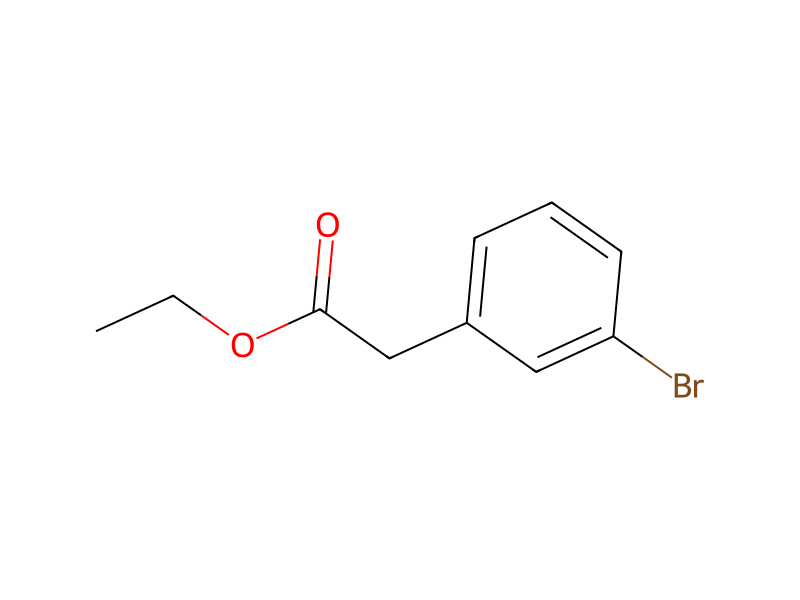
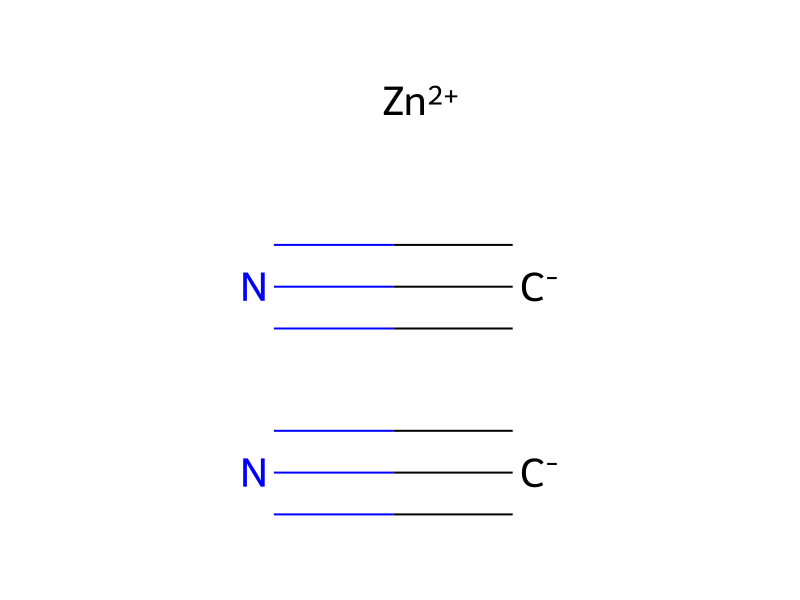
[CH2:1]([O:3][C:4](=[O:13])[CH2:5][C:6]1[CH:11]=[CH:10][CH:9]=[C:8](Br)[CH:7]=1)[CH3:2].[NH4+].[OH-].[CH3:16][N:17](C=O)C>[C-]#N.[Zn+2].[C-]#N.C1C=CC([P]([Pd]([P](C2C=CC=CC=2)(C2C=CC=CC=2)C2C=CC=CC=2)([P](C2C=CC=CC=2)(C2C=CC=CC=2)C2C=CC=CC=2)[P](C2C=CC=CC=2)(C2C=CC=CC=2)C2C=CC=CC=2)(C2C=CC=CC=2)C2C=CC=CC=2)=CC=1>[CH2:1]([O:3][C:4](=[O:13])[CH2:5][C:6]1[CH:11]=[CH:10][CH:9]=[C:8]([C:16]#[N:17])[CH:7]=1)[CH3:2]A mixture of (3-bromo-phenyl)-acetic acid ethyl ester (12.38 g, 54.05 mmol), zinc cyanide (4.33 g, 36.9 mmol), and DMF (150 mL) was deoxygenated with nitrogen and Pd(PPh3)4 (3.10 g, 2.68 mmol) was added. The mixture was heated in a 90° C. oil bath for 2.5 h and was cooled to room temperature. Aqueous NH4OH (5%) was added and the product was extracted into Et2O (3×). The combined organic extracts were washed with 5% NH4OH followed by brine. The organic solution was dried over MgSO4, filtered and concentrated. Flash chromatography (9:1 hexanes:EtOAc) provided (3-cyano-phenyl)-acetic acid ethyl ester (9.08 g) as a pale yellow liquid which was identical spectroscopically to that obtained using Method A above.