Reaction equation

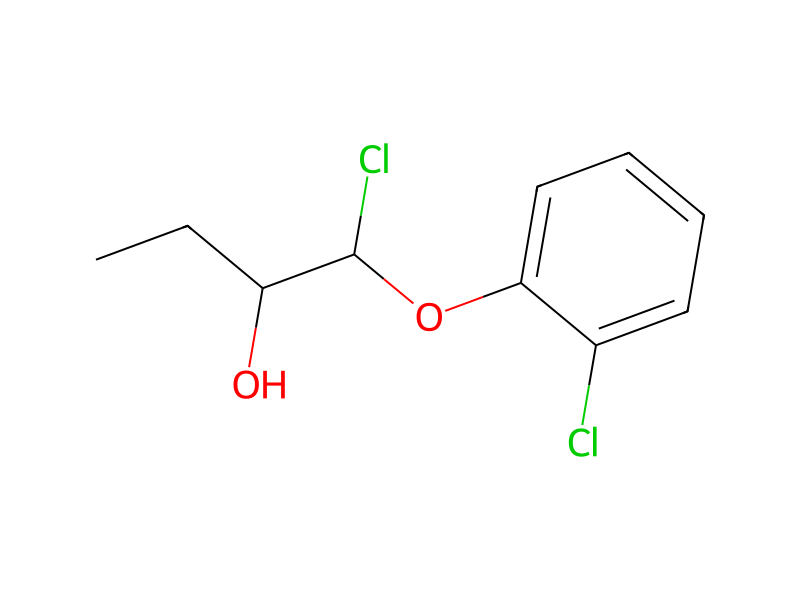
[Cl:1][C:2]1[CH:14]=[CH:13][CH:12]=[CH:11][C:3]=1[O:4][CH:5](Cl)[CH:6]([OH:9])[CH2:7][CH3:8].[C:15]1([N:21]2[CH2:26][CH2:25][NH:24][CH2:23][CH2:22]2)[CH:20]=[CH:19][CH:18]=[CH:17][CH:16]=1.Cl.[OH-].[Na+]>C(O)(C)C>[Cl:1][C:2]1[CH:14]=[CH:13][CH:12]=[CH:11][C:3]=1[O:4][CH2:5][CH:6]([OH:9])[CH2:7][CH2:8][N:24]1[CH2:25][CH2:26][N:21]([C:15]2[CH:20]=[CH:19][CH:18]=[CH:17][CH:16]=2)[CH2:22][CH2:23]1Participants
6





Procedure
A mixture of 35.1 g. (0.15 mole) of 1-(o-chlorophenoxy)-2-hydroxybutyl chloride, 32.6 g. (0.2 mole) of N-phenylpiperazine and 400 ml. of isopropanol was refluxed for 48 hr. The reaction mixture was allowed to stand in a refrigerator overnight and filtered. The filtrate was treated with ethereal hydrogen chloride and the salt precipitated by the addition of ether. The white crystalline solid formed was dissolved in 0.1 mole of hydrochloric acid and then neutralized with sodium hydroxide producing a crystalline precipitate. This was recrystallized with isopropanol yielding 36 g. of the free base of the product which melted at 100°-101.5° C.
Workup
- additionA mixture of 35.1 g
- customto stand in a refrigerator overnight
- filtrationfiltered
- additionThe filtrate was treated with ethereal hydrogen chloride
- customthe salt precipitated by the addition of ether
- customThe white crystalline solid formed
- customThis was recrystallized with isopropanol yielding 36 g
Sources & evidence
- ORD record
- ord-380f4295623941fc9742303735cd2793
- Source dataset
- uspto-grants-1985_08
- Patent number
- US04538001
Linked notes
Loading…