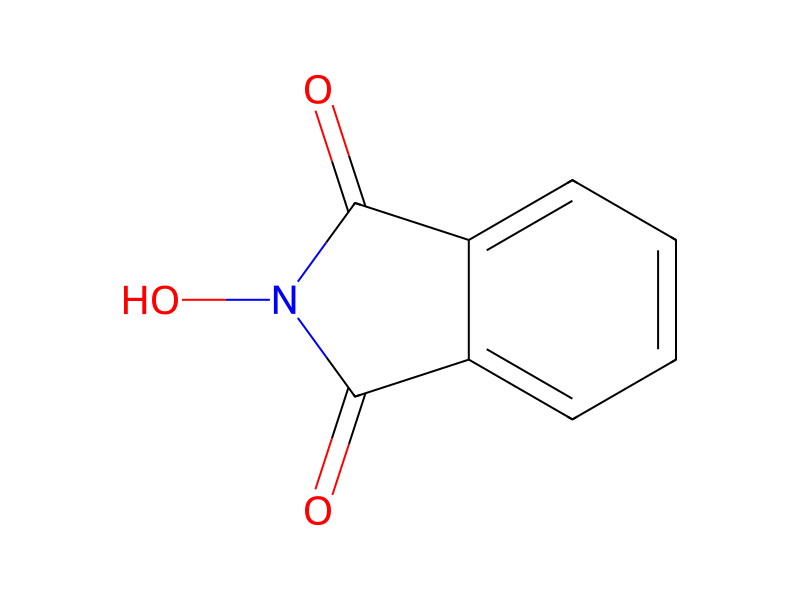
N-Hydroxyphthalimide → [3-(1,3-Dioxo-1,3-dihydro-isoindol-2-yloxy)-2,2-dimethyl-propyl]-carbamic acid tert-butyl ester
HRID 494742
Reaction equation

CCOC(/N=N/C(OCC)=O)=O.[C:13]([O:17][C:18](=[O:26])[NH:19][CH2:20][C:21]([CH3:25])([CH3:24])[CH2:22][OH:23])([CH3:16])([CH3:15])[CH3:14].O[N:28]1[C:32](=[O:33])[C:31]2=[CH:34][CH:35]=[CH:36][CH:37]=[C:30]2[C:29]1=[O:38].C1(P(C2C=CC=CC=2)C2C=CC=CC=2)C=CC=CC=1>C1COCC1.ClCCl>[C:13]([O:17][C:18](=[O:26])[NH:19][CH2:20][C:21]([CH3:25])([CH3:24])[CH2:22][O:23][N:28]1[C:32](=[O:33])[C:31]2[C:30](=[CH:37][CH:36]=[CH:35][CH:34]=2)[C:29]1=[O:38])([CH3:16])([CH3:14])[CH3:15]Participants
7