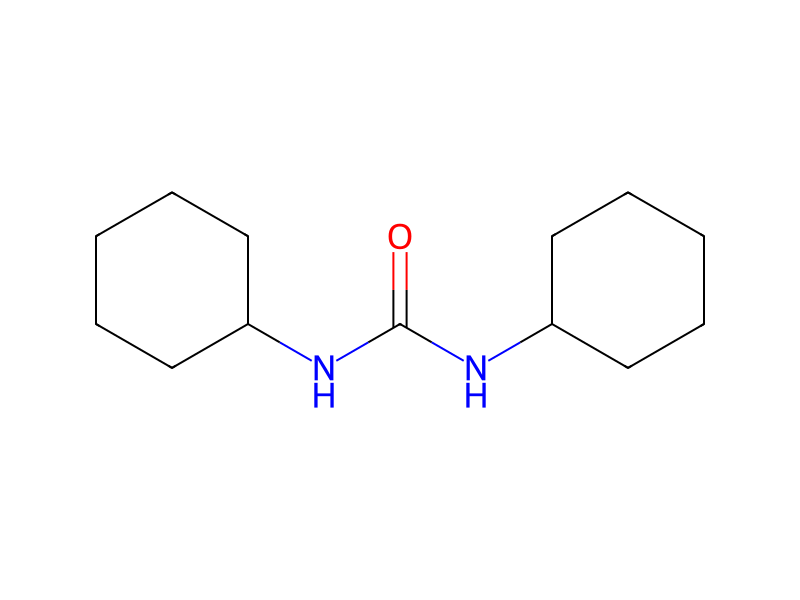
N-Boc-D-Pro(cis-4-BzT)-ODpm (350 mg, 0.58 mmol) was dissolved in acetonitrile (5 mL). p-Toluenesulfonic acid monohydrate (552 mg, 2.9 mmol) was added and the solution was stirred at room temperature for 1.5 h, after which tlc indicated complete deprotection of the N-Boc group. Diisopropylethylamine (515 ml, excess) and DMF (5 ml) were added and the reaction stirred under argon. In a separate reaction vessel, a mixture of Fmoc-L-Ser(OtBu)—OH (268 mg, 0.70 mmol) HOBt.H2O (118 mg, 0.77 mmol) and DCCl (160 mg, 0.78 mmol) in DMF (2 ml) was stirred at room temperature. After 2 hours, a white precipitate of dicyclohexylurea formed which was removed by filtration and the filtrate transferred to the first reaction vessel. The reaction mixture was stirred at room temperature for a further 3 h then diluted with dichloromethane (50 ml) followed by washing with saturated aqueous NaHCO3 and water. The organic phase was dried (MgSO4) and the solvent removed under reduced pressure to give the crude product as an oil which was purified by column chromatography (SiO2; dichloromethane: acetone 20:1). The product (R1=0.43) was obtained as a white foam (455 mg, 89%), δH (200 MHz, CDCl3) 1.15 (9H, s, tBu), 1.81 (3H, s, thymine CH3), 2.01-2.15 and 2.41-2.83 [2H 2×m, CH2(3′)], 3.45-3.54(1H, m) 3.63-3.71 (1H, m) 3.80-3.89 (1H, m) [CH2(5′) and Ser CHaHb], 4.19-4.54(5H, m, unresolved Fmoc aliphatic CH, CH2 and Ser CHaHb), 4.71-4.79 [2H, m, CH(2′) and Ser CH], 5.18-5.30 [CH(4′)], 5.73-5.77 (1H, d J=8.2 Hz, peptide NH), 6.90 (1H, s, CHPh2), 7.18 [1H, s, CH(6)], 7.22-7.66 (m, phenyl, Fmoc and benzoyl aromatic CH), 7.90-7.94 and 8.04-8.08 (2×2H, 2×d, Fmoc aromatic CH); dc (50.28 MHz; CDCl3) 12.3 (thymine CH3), 27.3 (tBu CH3), 33.1 [CH2(3′)], 47.0 (Fmoc aliphatic CH), 49.5 [CH2(5′)], 52.5 and 52.9 [Ser CaH and CH(4′)], 57.5 [CH(2′)], 63.3 and 64.0 (Ser CH2 rotamers), 67.3 (Fmoc CH2), 73.9 (tBu C), 78.5 (CHPh2), 112.0[C(5)], 120.2 (Fmoc aromatic CH), 125.2-131.7 (aromatic CH), 135.4 and 136.0[CH(6) and benzoyl p-CH], 139.5 and 139.8 (aromatic C rotamers), 141.5, 143.9 and 144.1 (Fmoc aromatic C), 150.1 [C(2)], 156.2 (Fmoc CO), 162.7 [C(4)], 169.1 (benzoyl CO), 170.5 (peptide CO), 170.8 (ester CO); M/z (APCl+) 931 (M+C4H8+, 90%) 876 (M+H+, 88), 654, 587, 550, 503, 409, 165, 105 (PhCO+, 100).