HomeMCPSkillsWorkbenchOpenChem
HomeWorkbenchNotificationsMe
llms.txt · skill.md · MCP GuidePrivacy Policy · Terms of Service · Supportv1.8.5
  1. Home
  2. /Reaction

N-Hydroxyphthalimide → Benzyl (4-aminooxybutyl)carbamate

HRID 514598
Print

Reaction equation

O[N:2]1C(=O)C2=CC=CC=C2C1=O.[OH:13][CH2:14][CH2:15][CH2:16][CH2:17][NH:18][C:19](=[O:28])[O:20][CH2:21][C:22]1[CH:27]=[CH:26][CH:25]=[CH:24][CH:23]=1.C1(P(C2C=CC=CC=2)C2C=CC=CC=2)C=CC=CC=1.CC(OC(/N=N/C(OC(C)C)=O)=O)C>ClCCl.C1(C)C=CC=CC=1>[NH2:2][O:13][CH2:14][CH2:15][CH2:16][CH2:17][NH:18][C:19](=[O:28])[O:20][CH2:21][C:22]1[CH:23]=[CH:24][CH:25]=[CH:26][CH:27]=1
ParticipantsProcedureWorkupSources & evidenceReaction notes

Participants

7

Reactant 4

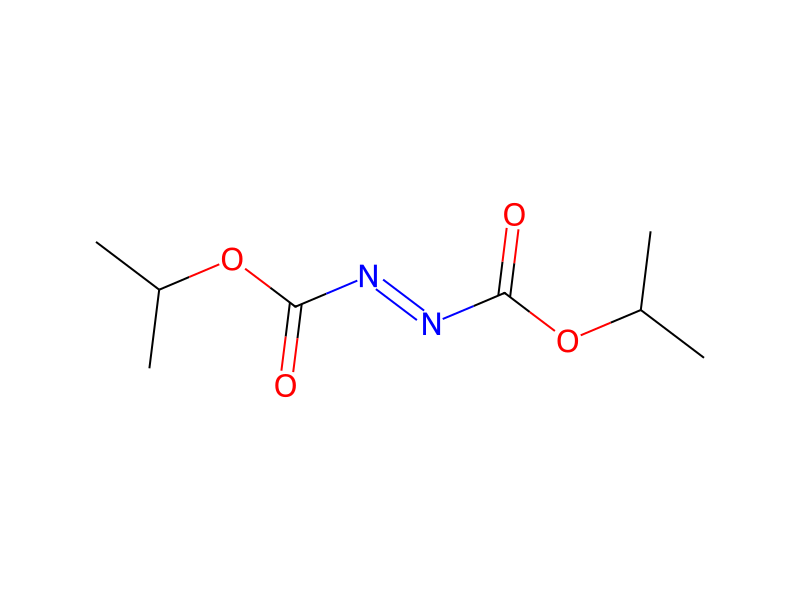
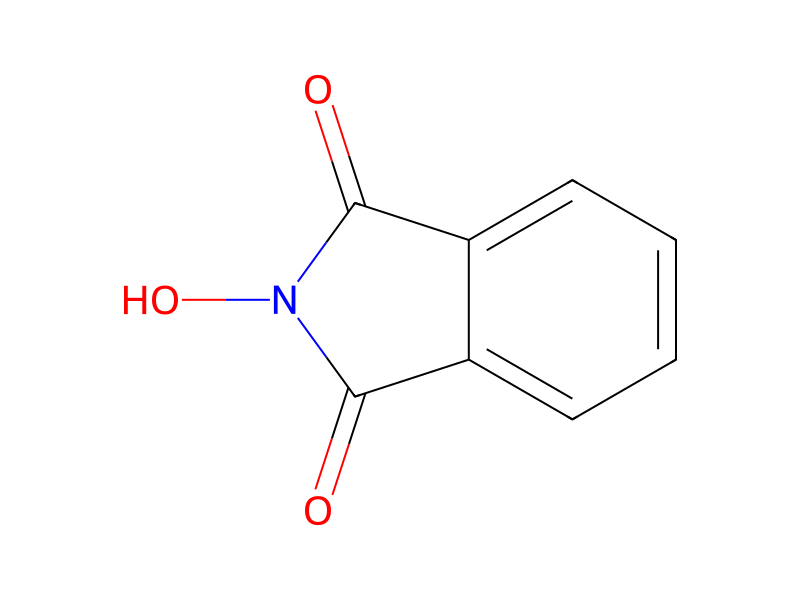
HCID 10665N-HydroxyphthalimideHCID 11776TriphenylphosphineHCID 3366758benzyl N-(4-hydroxybutyl)carbamateHCID 5363146Diisopropyl azodicarboxylate2×

Product 1

HCID 86695045Benzyl (4-aminooxybutyl)carbamateYield 84.3%

Reagents, catalysts & solvents 2

HCID 1140
Toluene
Solvent
HCID 6344DichloromethaneSolvent2×

Procedure

A solution of N-hydroxyphthalimide (3.36 g), benzyl (4-hydroxybutyl)carbamate (4.18 g) and triphenylphosphine (7.41 g) in dichloromethane (100 mL) was chilled in an ice bath and approximately two-thirds of a solution of diisopropylazodicarboxylate (DIAD, 5.68 g) in dichloromethane (50 mL) was slowly added with stirring. The internal temperature of the reaction was monitored and the addition of the DIAD solution was stopped when an exotherm could no longer be detected. The ice bath was removed and the reaction was allowed to warm to room temperature. The reaction was concentrated under reduced pressure and the resulting residue was dissolved in ethanol (200 proof, 100 mL). Hydrazine (1.98 g, 35% in water) was added and the reaction was stirred for 6 hours. The reaction was cooled in the freezer and the resulting solid was removed by filtration. The solid was washed with ethanol (50 mL). The combined filtrate was concentrated under reduced pressure and diethyl ether (100 mL) was added. Insoluble impurities were removed by filtration and 2.0 M HCl in ether (10 mL) was added to the solution. A precipitate formed immediately. The crude product was added to toluene (100 mL) and heated at reflux temperature for one hour. After cooling to room temperature, the solid product was recovered by filtration, washed with toluene, and dried under vacuum to yield 3.76 g of benzyl (4-aminooxybutyl)carbamate.

Workup

  1. customThe ice bath was removed
  2. concentrationThe reaction was concentrated under reduced pressure
  3. dissolutionthe resulting residue was dissolved in ethanol (200 proof, 100 mL)
  4. additionHydrazine (1.98 g, 35% in water) was added
  5. stirringthe reaction was stirred for 6 hours
  6. temperatureThe reaction was cooled in the freezer
  7. customthe resulting solid was removed by filtration
  8. washThe solid was washed with ethanol (50 mL)
  9. concentrationThe combined filtrate was concentrated under reduced pressure and diethyl ether (100 mL)
  10. additionwas added
  11. customInsoluble impurities were removed by filtration and 2.0 M HCl in ether (10 mL)
  12. additionwas added to the solution
  13. customA precipitate formed immediately
  14. temperatureheated
  15. temperatureat reflux temperature for one hour
  16. temperatureAfter cooling to room temperature
  17. filtrationthe solid product was recovered by filtration
  18. washwashed with toluene
  19. customdried under vacuum

Sources & evidence

ORD record
ord-700a695ee5954751a7ed4e0eb25d3a85
Source dataset
uspto-grants-2015_08
DOI
10.6084/m9.figshare.5104873.v1
Patent number
US09107958B2

Reaction notes

On this pageParticipantsProcedureWorkupSources & evidenceReaction notes