Reaction equation

[Cl:1][C:2]1[C:3](Cl)=[C:4]([Cl:13])[C:5]([Cl:12])=[C:6]([C:10]#[N:11])[C:7]=1[C:8]#[N:9].[OH:15][C:16]1[CH:25]=[CH:24][C:19]([C:20]([O:22][CH3:23])=[O:21])=[CH:18][CH:17]=1.C(=O)([O-])[O-].[K+].[K+].C(#N)C>C(OCC)(=O)C>[Cl:13][C:4]1[C:5]([Cl:12])=[C:6]([C:10]#[N:11])[C:7]([C:8]#[N:9])=[C:2]([Cl:1])[C:3]=1[O:15][C:16]1[CH:17]=[CH:18][C:19]([C:20]([O:22][CH3:23])=[O:21])=[CH:24][CH:25]=1Participants
6

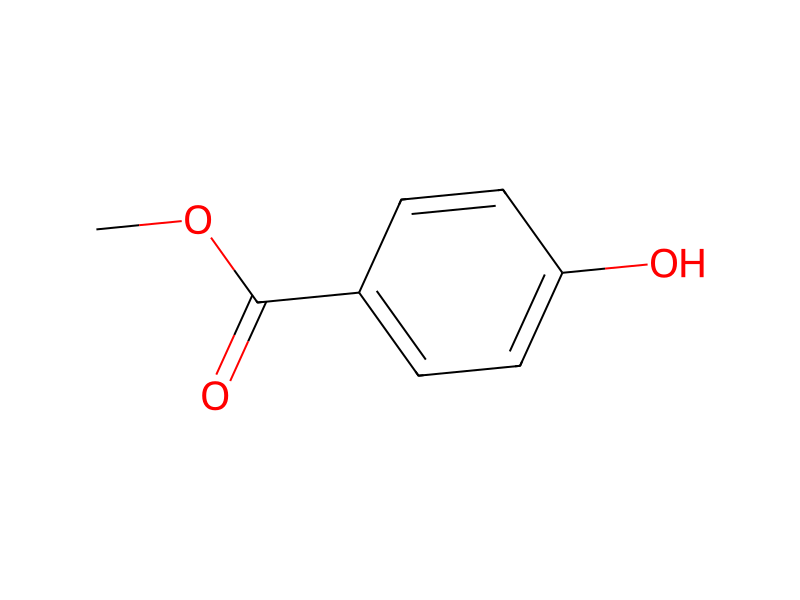

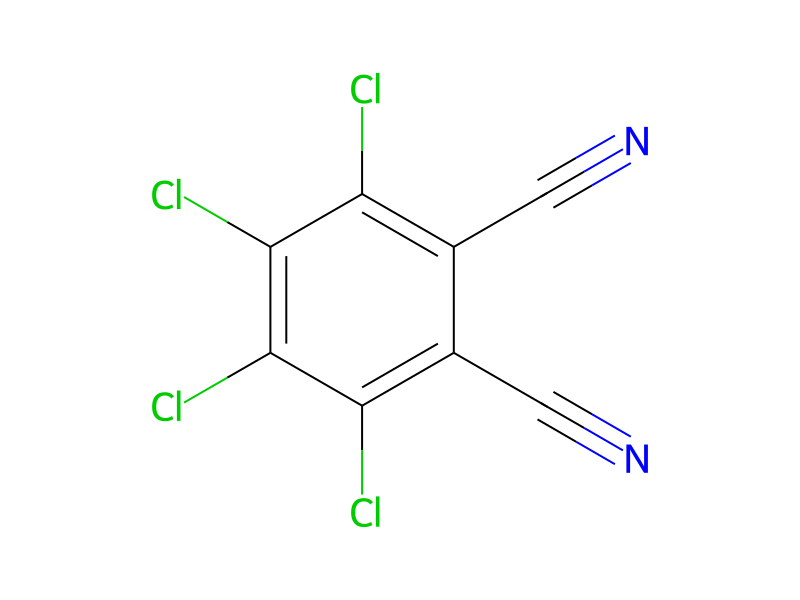


Procedure
To a 250 mL flask, 4.8 g of tetrachlorophthalonitrile, 3.98 g of methyl 4-hydroxybenzoate, 5 g of potassium carbonate (K2CO3), and 55 mL of acetonitrile are added, followed by heating for 12 hours while refluxing. After completion of the reaction, 30 mL of ethyl acetate is added and filtered to remove the solvent. To the obtained solid, a suitable amount of dichloromethane is added to dissolve the solid, followed by adding hexane for crystallization. The obtained solid is filtered and dried under vacuum to obtain a compound, methyl 4-(2,3,6-trichloro-4,5-dicyano-phenoxy)benzoate. The first step reaction may be represented by Reaction Scheme 1:
Workup
- temperatureby heating for 12 hours
- temperaturewhile refluxing
- additionis added
- filtrationfiltered
- customto remove the solvent
- additionTo the obtained solid, a suitable amount of dichloromethane is added
- dissolutionto dissolve the solid
- additionby adding hexane
- customfor crystallization
- filtrationThe obtained solid is filtered
- customdried under vacuum
Sources & evidence
- ORD record
- ord-91f652bde2d144b8bcc88d059b1c6ca6
- Source dataset
- uspto-grants-2016_05
- Patent number
- US09341743B2
Linked notes
Loading…