HomeMCPWorkbenchSkills
HomeWorkbenchNotificationsMe
llms.txt · MCP GuidePrivacy Policy · Terms of Service · Supportv1.8.0
  1. Home
  2. /Reaction

Water → 2-(trans-Styryl)-4-vinyloxazole

HRID 546397
Notes
Print preview

Reaction equation

HRID 546397 reaction equation
[CH2:1]([Li])CCC.[CH:6]([C:8]1[N:9]=[C:10](/[CH:13]=[CH:14]/[C:15]2[CH:20]=[CH:19][CH:18]=[CH:17][CH:16]=2)[O:11][CH:12]=1)=O.O.C(OCC)(=O)C>[Br-].C[P+](C1C=CC=CC=1)(C1C=CC=CC=1)C1C=CC=CC=1.O1CCCC1>[CH:13](/[C:10]1[O:11][CH:12]=[C:8]([CH:6]=[CH2:1])[N:9]=1)=[CH:14]\[C:15]1[CH:20]=[CH:19][CH:18]=[CH:17][CH:16]=1
ParticipantsProcedureWorkupSources & evidenceReaction notes

Participants

7

Reactant 4

HCID 962WaterHCID 8857Ethyl AcetateHCID 117357772-Styryloxazole-4-carbaldehydeHCID 178418339Butyllithium

Product 1

HCID 227101032-(trans-Styryl)-4-vinyloxazole

Reagents, catalysts & solvents 2

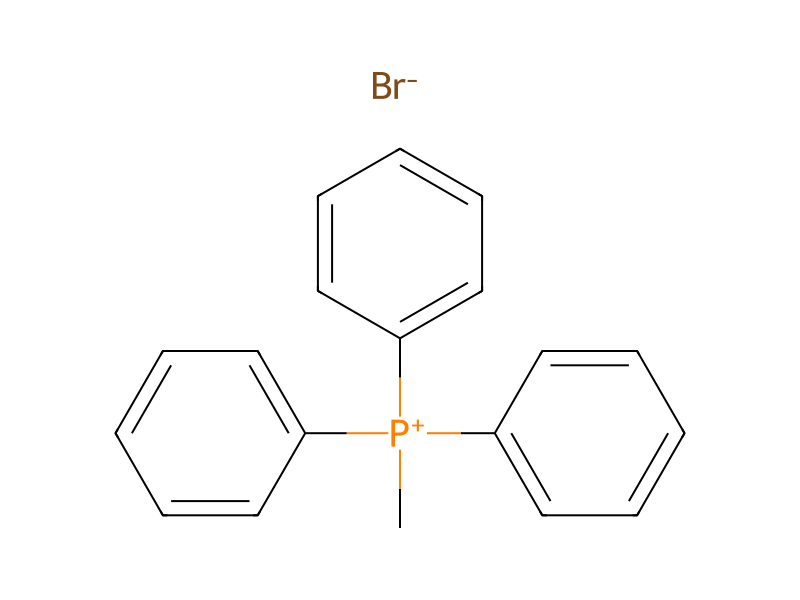
HCID 74505Methyltriphenyliphosphonium bromide
Catalyst
HCID 8028TetrahydrofuranSolvent2×

Procedure

n-Butyllithium (1.54N hexane solution, 14.2 ml) was added dropwise to a solution of methyl-triphenylphosphonium bromide (8.16 g) in tetrahydrofuran (80 ml) at 0° C., and the mixture was stirred at room temperature for 30 minutes. The reaction mixture was cooled again to 0° C., a solution of 4-formyl-2-(trans-styryl)oxazole (3.64 g) in tetrahydrofuran (20 ml) was added, and the mixture was warmed to room temperature. After stirring for 2 hours, water (200 ml) and ethyl acetate (100 ml) were added and an organic layer was separated. The water layer was extracted with ethyl acetate (50 ml). After the organic layers were combined, washed with saturated saline (100 ml) and dried over anhydrous sodium sulfate, the solvent was distilled off under reduced pressure. The residue was purified by column chromatography on silica gel (hexane:ethyl acetate=4:1→3:1) to obtain the title compound (2.84 g) as a pale yellow oil.


Workup

  1. temperatureThe reaction mixture was cooled again to 0° C.
  2. temperaturethe mixture was warmed to room temperature
  3. stirringAfter stirring for 2 hours
  4. customan organic layer was separated
  5. extractionThe water layer was extracted with ethyl acetate (50 ml)
  6. washwashed with saturated saline (100 ml)
  7. dry with materialdried over anhydrous sodium sulfate
  8. distillationthe solvent was distilled off under reduced pressure
  9. customThe residue was purified by column chromatography on silica gel (hexane:ethyl acetate=4:1→3:1)

Sources & evidence

ORD record
ord-abf924919c814b77b97caa434d32326f
Source dataset
uspto-grants-2011_05
DOI
10.6084/m9.figshare.5104873.v1
Patent number
US07935824B2

Reaction notes

Loading…

On this pageParticipantsProcedureWorkupSources & evidenceReaction notes