Reaction equation

Cl[CH2:2][C:3]1[CH:8]=[CH:7][C:6]([N+:9]([O-:11])=[O:10])=[CH:5][CH:4]=1.C(=O)([O-])[O-].[K+].[K+].[NH:18]1[CH2:23][CH2:22][CH2:21][CH2:20][CH2:19]1>C(#N)C>[N+:9]([C:6]1[CH:7]=[CH:8][C:3]([CH2:2][N:18]2[CH2:23][CH2:22][CH2:21][CH2:20][CH2:19]2)=[CH:4][CH:5]=1)([O-:11])=[O:10]Participants
5
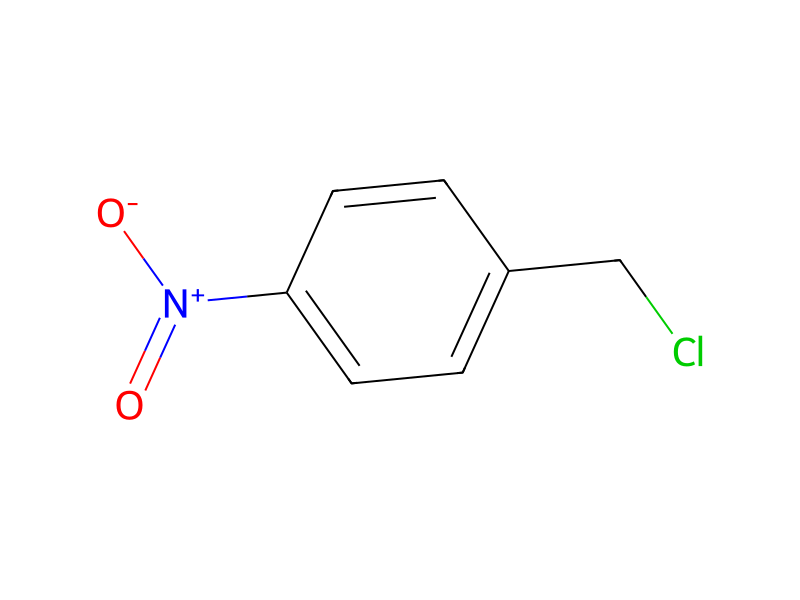
Reactant 3


Product 1

Reagents, catalysts & solvents 1

Procedure
To a solution of 0.34 g (2.0 mmol, 1.0 eq.) of 1-(chloromethyl)-4-nitrobenzene in 20 mL of acetonitrile was added 0.83 g (6.0 mmol, 3.0 eq.) of potassium carbonate and 0.4 mL (4.0 mmol, 2.0 eq.) of piperidine. The reaction mixture was heated at reflux for 16 h. The reaction mixture was allowed to cool to room temperature, filtered and the solvent removed in vacuo. The resulting residue was purified by preparative TLC to give 0.31 g (1.4 mmol, 70%) of 1-(4-nitrobenzyl)piperidine (I-27).
Workup
- temperatureThe reaction mixture was heated
- temperatureat reflux for 16 h
- filtrationfiltered
- customthe solvent removed in vacuo
- customThe resulting residue was purified by preparative TLC
Sources & evidence
- ORD record
- ord-14f438f7dd8349eab32f6271c140cd50
- Source dataset
- uspto-grants-2011_05
- Patent number
- US07951803B2
Linked notes
Loading…