HomeMCPWorkbenchSkills
HomeWorkbenchNotificationsMe
llms.txt · MCP GuidePrivacy Policy · Terms of Service · Supportv1.8.3
  1. Home
  2. /Reaction

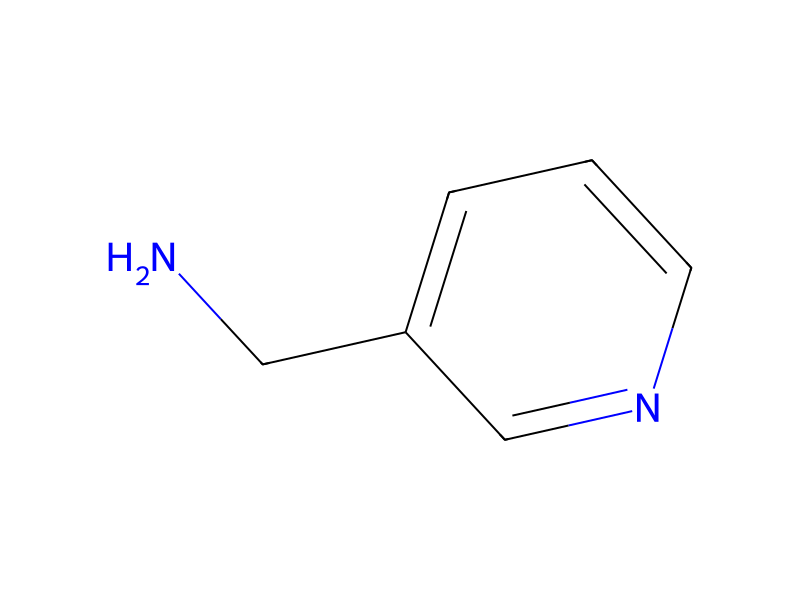
3-Pyridinemethanamine → 2-(3-(cyclopropylmethyl)-2-oxoimidazolidin-1-yl)-N-(pyridin-3-ylmethyl)thiazole-5-carboxamide

HRID 560793
Print

Reaction equation

HRID 560793 reaction equation
[CH:1]1([CH2:4][N:5]2[CH2:9][CH2:8][N:7]([C:10]3[S:11][C:12]([C:15]([OH:17])=O)=[CH:13][N:14]=3)[C:6]2=[O:18])[CH2:3][CH2:2]1.C(N(CC)C(C)C)(C)C.Cl.C(N=C=NCCCN(C)C)C.ON1C2C=CC=CC=2N=N1.[N:50]1[CH:55]=[CH:54][CH:53]=[C:52]([CH2:56][NH2:57])[CH:51]=1>CN(C)C=O>[CH:1]1([CH2:4][N:5]2[CH2:9][CH2:8][N:7]([C:10]3[S:11][C:12]([C:15]([NH:57][CH2:56][C:52]4[CH:51]=[N:50][CH:55]=[CH:54][CH:53]=4)=[O:17])=[CH:13][N:14]=3)[C:6]2=[O:18])[CH2:2][CH2:3]1
ParticipantsProcedureWorkupSources & evidenceReaction notes

Participants

7

Reactant 5

HCID 310183-PyridinemethanamineHCID 757711-HydroxybenzotriazoleHCID 81531DiisopropylethylamineHCID 27239391,3-Propanediamine, N'-(ethylcarbonimidoyl)-N,N-dimethyl-, monohydrochlorideHCID 580314172-(3-(Cyclopropylmethyl)-2-oxoimidazolidin-1-yl)thiazole-5-carboxylic acid

Product 1

HCID 25096444
2-(3-(cyclopropylmethyl)-2-oxoimidazolidin-1-yl)-N-(pyridin-3-ylmethyl)thiazole-5-carboxamide
Yield 40%

Reagents, catalysts & solvents 1

HCID 6228DimethylformamideSolvent

Procedure

To a solution of 2-(3-(cyclopropylmethyl)-2-oxoimidazolidin-1-yl)thiazole-5-carboxylic acid (0.10 g, 0.37 mmol) in anhydrous N,N-dimethylformamide (10 mL) was added N,N-diisopropylethylamine (0.17 mL, 1.34 mmol), followed by the addition of 1-ethyl-3-(3-dimethylaminopropyl)carbodiimide hydrochloride (0.11 g, 0.59 mmol). The reaction was stirred at ambient temperature for 0.5 hours, 1-Hydroxybenzotriazole (0.07 g, 0.52 mmol) was added, followed by the addition of pyridin-3-ylmethanamine (0.06 g, 0.56 mmol). The reaction mixture was stirred at ambient temperature for 18 hours. The solvent was concentrated in vacuo. The residue was diluted with dichloromethane (150 mL), washed with water (100 mL) and brine (50 mL). The organic layer was dried over anhydrous sodium sulfate, filtered and concentrated in vacuo. The residue was crystallized in dichloromethane and hexane to yield the title compound as a colorless solid in 40% yield (0.065 g): mp 190-192° C. (dichloromethane/hexanes); 1H NMR (300 MHz, DMSO-d6) δ 8.98 (t, J=5.8 Hz 1H), 8.49 (m, 1H), 8.43-8.39 (m, 1H), 7.98 (s, 1H), 7.68-7.65 (m, 1H), 7.34-7.30 (m, 1H), 4.40 (d, J=5.8 Hz, 2H), 4.01-3.95 (m, 2H), 3.65-3.59 (m, 2H), 3.07 (d, J=7.1 Hz, 2H), 1.01-0.85 (m, 1H), 0.53-0.39 (m, 2H), 0.21-0.16 (m, 2H); 13C NMR (75 MHz, DMSO-d6) δ 161.5, 161.3, 155.1, 149.3, 148.6, 140.1, 135.7, 135.3, 127.1, 123.9, 48.2, 42.5, 42.3, 9.31, 3.63; MS (ES+) m/z 358.2 (M+1).

Workup

  1. stirringThe reaction mixture was stirred at ambient temperature for 18 hours
  2. concentrationThe solvent was concentrated in vacuo
  3. additionThe residue was diluted with dichloromethane (150 mL)
  4. washwashed with water (100 mL) and brine (50 mL)
  5. dry with materialThe organic layer was dried over anhydrous sodium sulfate
  6. filtrationfiltered
  7. concentrationconcentrated in vacuo
  8. customThe residue was crystallized in dichloromethane

Sources & evidence

ORD record
ord-46b7f7267e764e6d8f340981917aac7a
Source dataset
uspto-grants-2011_11
DOI
10.6084/m9.figshare.5104873.v1
Patent number
US08063084B2

Reaction notes

On this pageParticipantsProcedureWorkupSources & evidenceReaction notes


