HomeMCPWorkbenchSkills
HomeWorkbenchNotificationsMe
llms.txt · MCP GuidePrivacy Policy · Terms of Service · Supportv1.8.3
  1. Home
  2. /Reaction

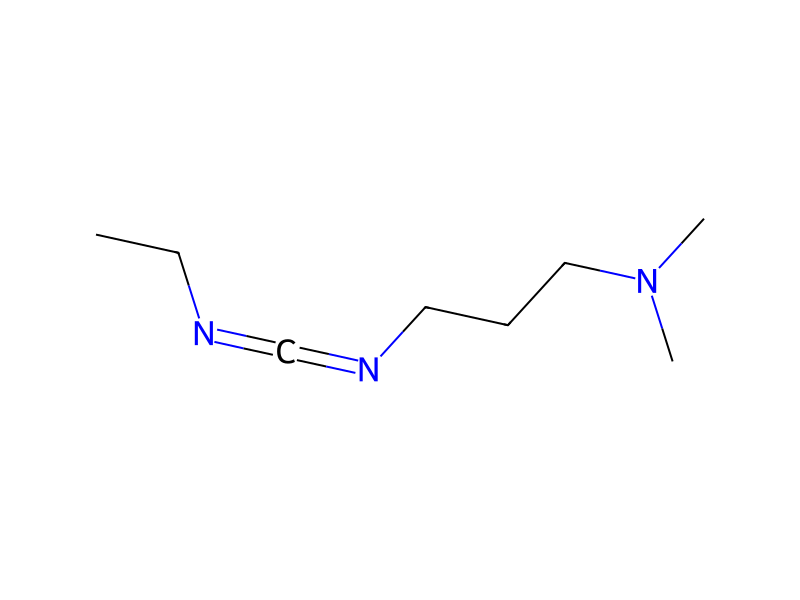
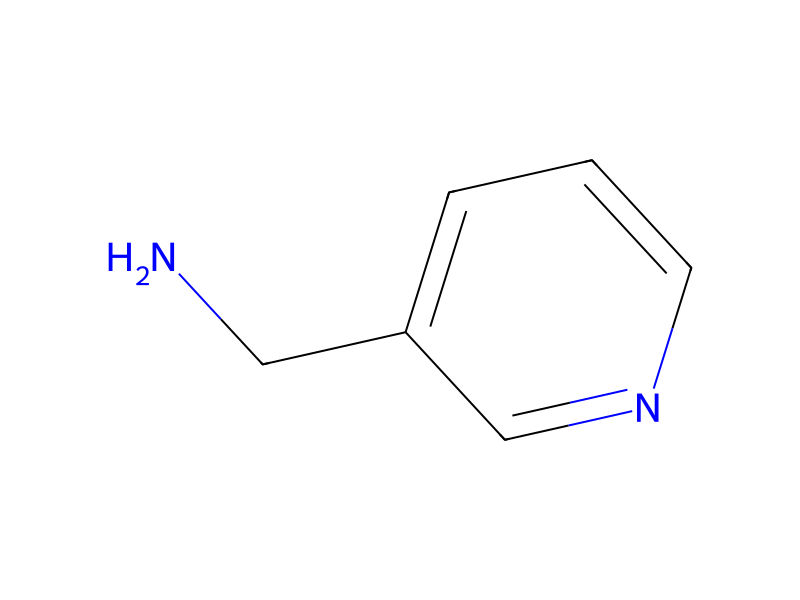
1-Ethyl-3-(3'-dimethylaminopropyl)carbodiimide → 2-(3-((5-chlorobenzo[b]thiophen-3-yl)methyl)-2-oxoimidazolidin-1-yl)-4-methyl-N-(pyridin-3-ylmethyl)thiazole-5-carboxamide

HRID 560819
Print

Reaction equation

HRID 560819 reaction equation
[Cl:1][C:2]1[CH:26]=[CH:25][C:5]2[S:6][CH:7]=[C:8]([CH2:9][N:10]3[CH2:14][CH2:13][N:12]([C:15]4[S:16][C:17]([C:21]([OH:23])=O)=[C:18]([CH3:20])[N:19]=4)[C:11]3=[O:24])[C:4]=2[CH:3]=1.ON1C2C=CC=CC=2N=N1.CN(C)CCCN=C=NCC.C(N(C(C)C)CC)(C)C.[NH2:57][CH2:58][C:59]1[CH:60]=[N:61][CH:62]=[CH:63][CH:64]=1>CN(C)C=O>[Cl:1][C:2]1[CH:26]=[CH:25][C:5]2[S:6][CH:7]=[C:8]([CH2:9][N:10]3[CH2:14][CH2:13][N:12]([C:15]4[S:16][C:17]([C:21]([NH:57][CH2:58][C:59]5[CH:60]=[N:61][CH:62]=[CH:63][CH:64]=5)=[O:23])=[C:18]([CH3:20])[N:19]=4)[C:11]3=[O:24])[C:4]=2[CH:3]=1
ParticipantsProcedureWorkupSources & evidenceReaction notes

Participants

7

Reactant 5

HCID 159081-Ethyl-3-(3'-dimethylaminopropyl)carbodiimideHCID 310183-PyridinemethanamineHCID 757711-HydroxybenzotriazoleHCID 81531DiisopropylethylamineHCID 580315052-(3-((5-Chlorobenzo[b]thiophen-3-yl)methyl)-2-oxoimidazolidin-1-yl)-4-methylthiazole-5-carboxylic acid

Product 1

HCID 25096448
2-(3-((5-chlorobenzo[b]thiophen-3-yl)methyl)-2-oxoimidazolidin-1-yl)-4-methyl-N-(pyridin-3-ylmethyl)thiazole-5-carboxamide
Yield 45%

Reagents, catalysts & solvents 1

HCID 6228DimethylformamideSolvent

Procedure

To a solution of 2-(3-((5-chlorobenzo[b]thiophen-3-yl)methyl)-2-oxoimidazolidin-1-yl)-4-methylthiazole-5-carboxylic acid (0.55 g, 1.35 mmol) in anhydrous N,N-dimethylformamide (10 mL) was added 1-hydroxy benzotriazole (0.22 g, 1.62 mmol), N-(3-dimethylaminopropyl)-N′-ethylcarbodiimide (0.31 g, 1.62 mmol), diisopropylethylamine (0.85 mL, 4.87 mmol) and 3-(aminomethyl)pyridine (0.17 mL, 1.62 mmol). The resulting solution was stirred at ambient temperature for 16 hours, then concentrated in vacuo. The residue was dissolved in dichloromethane (50 mL), washed with saturated aqueous sodium bicarbonate solution (15 mL) and brine (15 mL). The organic layer was dried over anhydrous sodium sulfate, filtered, and concentrated in vacuo. The residue was purified by column chromatography eluted with 55-75% ethyl acetate in hexanes to afford the title compound as a colorless solid in 45% yield (0.30 g): mp 185-187° C. (dichloromethane/hexanes); 1H NMR (300 MHz, CDCl3) δ 8.61 (s, 1H), 8.54 (d, J=6.0 Hz, 1H), 7.87 (s, 1H), 7.78 (d, J=6.0 Hz, 1H), 7.70 (d, J=9.0 Hz, 1H), 7.45 (s, 1H), 7.36-7.28 (m, 2H), 6.09 (br s, 1H), 4.70 (s, 2H), 4.60 (d, J=3.0 Hz, 2H), 4.06 (t, J=6.0 Hz, 2H), 3.47 (t, J=6.0 Hz, 2H), 2.61 (s, 3H); MS (ES+) m/z 498.1 (M+1).

Workup

  1. concentrationconcentrated in vacuo
  2. dissolutionThe residue was dissolved in dichloromethane (50 mL)
  3. washwashed with saturated aqueous sodium bicarbonate solution (15 mL) and brine (15 mL)
  4. dry with materialThe organic layer was dried over anhydrous sodium sulfate
  5. filtrationfiltered
  6. concentrationconcentrated in vacuo
  7. customThe residue was purified by column chromatography
  8. washeluted with 55-75% ethyl acetate in hexanes

Sources & evidence

ORD record
ord-92befde1e74d4caba452d05ba50b80fd
Source dataset
uspto-grants-2011_11
DOI
10.6084/m9.figshare.5104873.v1
Patent number
US08063084B2

Reaction notes

On this pageParticipantsProcedureWorkupSources & evidenceReaction notes


