HomeMCPWorkbenchSkills
HomeWorkbenchNotificationsMe
llms.txt · MCP GuidePrivacy Policy · Terms of Service · Supportv1.8.0
  1. Home
  2. /Reaction

Ammonium Chloride → 2-Methoxy-1-phenylnaphthalene

HRID 563454
Notes
Print preview

Reaction equation

HRID 563454 reaction equation
Br[C:2]1[C:11]2[C:6](=[CH:7][CH:8]=[CH:9][CH:10]=2)[CH:5]=[CH:4][C:3]=1[O:12][CH3:13].[C:14]1(B(O)O)[CH:19]=[CH:18][CH:17]=[CH:16][CH:15]=1.P([O-])([O-])([O-])=O.[K+].[K+].[K+].[Cl-].[NH4+]>C([O-])(=O)C.[Pd+2].C([O-])(=O)C.C1(P(C2C=CC=CC=2)C2C=CC=CC=2)C=CC=CC=1.C(OCC)C.C(COC)OC.O>[CH3:13][O:12][C:3]1[CH:4]=[CH:5][C:6]2[C:11](=[CH:10][CH:9]=[CH:8][CH:7]=2)[C:2]=1[C:14]1[CH:19]=[CH:18][CH:17]=[CH:16][CH:15]=1
ParticipantsProcedureWorkupSources & evidenceReaction notes

Participants

10

Reactant 4

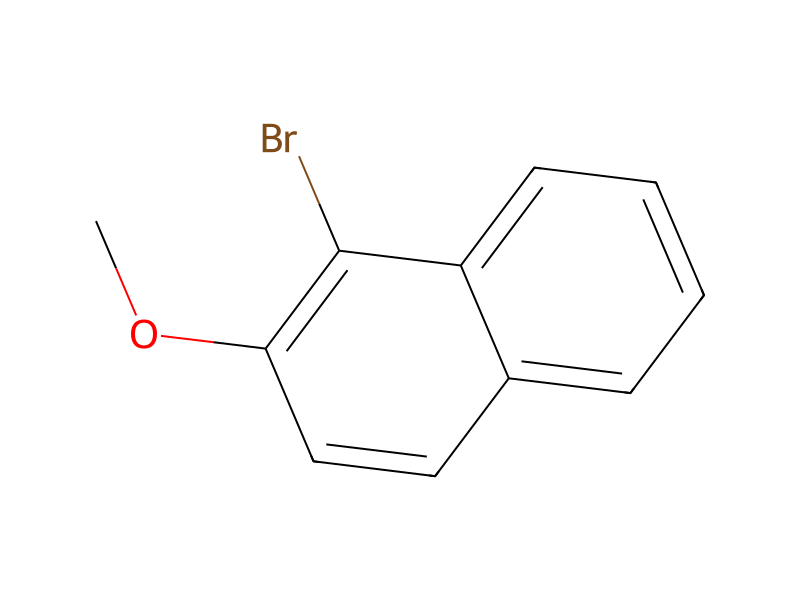
HCID 25517Ammonium ChlorideHCID 62657Potassium Phosphate, TribasicHCID 66827Phenylboronic AcidHCID 728601-Bromo-2-methoxynaphthalene

Product 1

HCID 113222662-Methoxy-1-phenylnaphthaleneYield 66%

Reagents, catalysts & solvents 5

HCID 11776
Triphenylphosphine
Catalyst
HCID 167845palladium(II) acetateCatalyst
HCID 962WaterSolvent
HCID 3283Diethyl EtherSolvent
HCID 80711,2-DimethoxyethaneSolvent

Procedure

In a flask charged with 1-bromo-2-methoxynaphthalene (20.0 g, 84.4 mmol), phenylboronic acid (11.3 g, 92.8 mmol), palladium acetate (0.10 g, 0.46 mmol), triphenylphosphine (0.85 g, 2.78 mmol) and potassium phosphate (40.9 g, 177.9 mmol), mixture of water (60 mL) and dimethoxyethane (120 mL) was added, and the resultant mixture was heated under reflux for 6 hours. After cooling to ambient temperature, aqueous ammonium chloride (150 mL) and diethyl ether (200 mL) were charged thereto. The organic layer was isolated, and the residue was extracted with diethyl ether. Combined organic layer was dried over magnesium sulfate, and evaporated to remove the volatiles. Purification via silica gel column chromatography (eluent: hexane) gave 2-methoxy-1-phenylnaphthalene (13.0 g, yield: 66%) as colorless liquid.

Workup

  1. additionwas added
  2. temperatureunder reflux for 6 hours
  3. customThe organic layer was isolated
  4. extractionthe residue was extracted with diethyl ether
  5. dry with materialCombined organic layer was dried over magnesium sulfate
  6. customevaporated
  7. customto remove the volatiles
  8. customPurification via silica gel column chromatography (eluent: hexane)

Sources & evidence

ORD record
ord-478e6e1c71fe4c42a26002ea40ca122f
Source dataset
uspto-grants-2011_11
DOI
10.6084/m9.figshare.5104873.v1
Patent number
US08067511B2

Reaction notes

Loading…

On this pageParticipantsProcedureWorkupSources & evidenceReaction notes