HomeMCPWorkbenchSkills
HomeWorkbenchNotificationsMe
llms.txt · MCP GuidePrivacy Policy · Terms of Service · Supportv1.8.3
  1. Home
  2. /Reaction

Ethyl Bromide → N-(3-chloro-1-(pyridin-3-yl)-1H-pyrazol-4-yl)-N-ethylacetamide

HRID 57085
Print

Reaction equation

HRID 57085 reaction equation
[Cl:1][C:2]1(NCC)[CH:6]=[CH:5][N:4]([C:7]2[CH:8]=[N:9][CH:10]=[CH:11][CH:12]=2)[NH:3]1.[Cl:16][C:17]1[C:21]([NH:22][C:23](=[O:25])[CH3:24])=[CH:20][N:19]([C:26]2[CH:27]=[N:28][CH:29]=[CH:30][CH:31]=2)[N:18]=1.C(Br)C.[H-].[Na+].CC(C)([O-])C.[Na+].CC(C)([O-])C.[K+].C(OC(CC)(C)C)(CC)(C)C.[Na]>O1CCCC1>[Cl:1][C:2]1[C:6]([N:22]([CH2:21][CH3:20])[C:23](=[O:25])[CH3:24])=[CH:5][N:4]([C:7]2[CH:8]=[N:9][CH:10]=[CH:11][CH:12]=2)[N:3]=1.[Cl:16][C:17]1[C:21]([NH:22][C:23](=[O:25])[CH3:24])=[CH:20][N:19]([C:26]2[CH:27]=[N:28][CH:29]=[CH:30][CH:31]=2)[N:18]=1
ParticipantsProcedureSources & evidenceReaction notes

Participants

10

Reactant 7

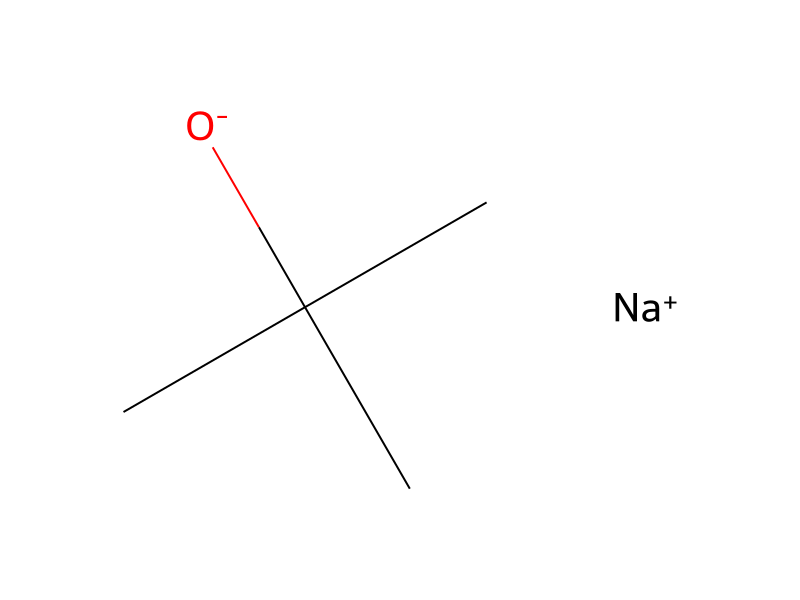
HCID 6332Ethyl BromideHCID 24758Sodium hydrideHCID 23665647Potassium tert-butoxideHCID 23676156Sodium t-butoxideHCID 70700164Sodium t-amyl oxideHCID 1180221923-chloro-N-ethyl-1-(pyridin-3-yl)-1H-pyrazol-amine
HCID 118023019
N-(3-chloro-1-(pyridin-3-yl)-1H-pyrazol-4-yl)acetamide

Product 2

HCID 72194633N-(3-chloro-1-(pyridin-3-yl)-1H-pyrazol-4-yl)-N-ethylacetamideHCID 118023019N-(3-chloro-1-(pyridin-3-yl)-1H-pyrazol-4-yl)acetamide

Reagents, catalysts & solvents 1

HCID 8028TetrahydrofuranSolvent

Procedure

3-Chloro-N-ethyl-1-(pyridin-3-yl)-1H-pyrazol-amine (1d) may be prepared through the reaction pathway sequence disclosed in Scheme 3. In step d1, N-(3-chlorol-(pyridin-3-yl)-1H-pyrazol-4-yl)acetamide (1c) may be alkylated with ethyl bromide (EtBr) in the presence of a base, such as sodium hydride (NaH), sodium tert-butoxide (NaOt-Bu), potassium tert-butoxide (KOt-Bu), or sodium tert-amyloxide, in a polar aprotic solvent, such as tetrahydrofuran, at temperatures from about 20° C. to about 40° C., over a period of time of about 60 hours to about 168 hours, to yield N-(3-chloro-1-(pyridin-3-yl)-1H-pyrazol-4-yl)-N-ethylacetamide (1c′). It has been discovered that use of an iodide additive, such as potassium iodide (KI) or tetrabutylammonium iodide (TBAI) can decrease the time necessary for the reaction to occur to about 24 hours. It has also been discovered that heating the reaction at about 50° C. to about 70° C. in a sealed reactor (to prevent loss of ethyl bromide) also decreases the reaction time to about 24 hours. In step d2, N-(3-chloro-1-(pyridin-3-yl)-1H-pyrazol-4-yl)-N-ethylacetamide (1c′) may be treated with hydrochloric acid in water at temperatures from about 50° C. to about 90° C., to yield 3-chloro-N-ethyl-1-(pyridin-3-yl)-1H-pyrazol-amine (1d). The reaction pathway sequence disclosed in Scheme 3 may also be performed without the isolation of N-(3-chloro-1-(pyridin-3-yl)-1H-pyrazol-4-yl)-N-ethylacetamide (1c′).

Sources & evidence

ORD record
ord-23dedd4d40d44918addb9d275428ce03
Source dataset
uspto-grants-2016_09
DOI
10.6084/m9.figshare.5104873.v1
Patent number
US09434712B2

Reaction notes

On this pageParticipantsProcedureSources & evidenceReaction notes