HomeMCPWorkbenchSkills
HomeWorkbenchNotificationsMe
llms.txt · MCP GuidePrivacy Policy · Terms of Service · Supportv1.8.3
  1. Home
  2. /Reaction

Sodium Hydroxide → 4-(2-Cyclopentylethyl)-2-fluoroaniline

HRID 576080
Print

Reaction equation

HRID 576080 reaction equation
C12BC(CCC1)CCC2.[CH:10]([CH:12]1[CH2:16][CH2:15][CH2:14][CH2:13]1)=[CH2:11].Br[C:18]1[CH:24]=[CH:23][C:21]([NH2:22])=[C:20]([F:25])[CH:19]=1.[OH-].[Na+]>O1CCCC1.C1C=CC(P(C2C=CC=CC=2)[C-]2C=CC=C2)=CC=1.C1C=CC(P(C2C=CC=CC=2)[C-]2C=CC=C2)=CC=1.Cl[Pd]Cl.[Fe+2].C(OCC)(=O)C>[CH:12]1([CH2:10][CH2:11][C:18]2[CH:24]=[CH:23][C:21]([NH2:22])=[C:20]([F:25])[CH:19]=2)[CH2:16][CH2:15][CH2:14][CH2:13]1
ParticipantsProcedureWorkupSources & evidenceReaction notes

Participants

8

Reactant 4

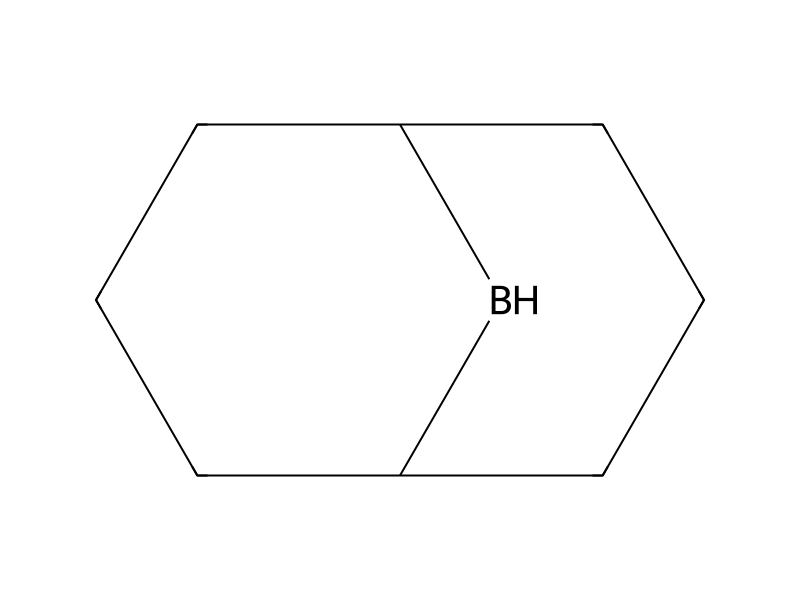
HCID 14798Sodium HydroxideHCID 77345VinylcyclopentaneHCID 789669-Borabicyclo(3.3.1)nonaneHCID 1230504-Bromo-2-fluoroaniline

Product 1

HCID 867072834-(2-Cyclopentylethyl)-2-fluoroanilineYield 96.8%

Reagents, catalysts & solvents 3

HCID 44119782
Bis(cyclopenta-1,4-dien-1-yl(diphenyl)phosphane);dichloropalladium;iron(2+)
Catalyst
HCID 8028TetrahydrofuranSolvent
HCID 8857Ethyl AcetateSolvent

Procedure

9-Borabicyclo[3,3,1]nonane (9-BBN) (tetrahydrofuran solution, 0.5 mol/L, 33 mL, 16.5 mmol) was added dropwise to a solution of vinylcyclopentane (1.59 g, 16.5 mmol) in tetrahydrofuran (7.5 mL) at 0° C. under a nitrogen atomosphere. The mixture was warmed gradually to room temperature and stirred for 15 hr. To the reaction mixture were added dichloro[1,1′-bis(diphenylphosphino)ferrocene]palladium(II) (367 mg, 0.45 mmol), 4-bromo-2-fluoroaniline (2.85 g, 15.0 mmol) and 3 mol/L aqueous sodium hydroxide solution (15 mL, 45.0 mmol), and the mixture was heated to reflux for 10 hr. After cooling, ethyl acetate was added thereto, the mixture was filtered through Celite (registered trademark), and the filtrate was concentrated under reduced pressure. Water was added thereto, the mixture was extracted with ethyl acetate, and the organic layer was washed with brine. After drying over anhydrous magnesium sulfate, the desiccant was filtered off, followed by concentration under reduced pressure. The resulting residue was purified by silica gel column chromatography (hexane:ethyl acetate=9:1) to afford the title compound as a pale yellow oil (3.01 g).


Workup

  1. temperaturethe mixture was heated
  2. temperatureto reflux for 10 hr
  3. temperatureAfter cooling
  4. filtrationthe mixture was filtered through Celite (registered trademark)
  5. concentrationthe filtrate was concentrated under reduced pressure
  6. additionWater was added
  7. extractionthe mixture was extracted with ethyl acetate
  8. washthe organic layer was washed with brine
  9. dry with materialAfter drying over anhydrous magnesium sulfate
  10. filtrationthe desiccant was filtered off
  11. concentrationfollowed by concentration under reduced pressure
  12. customThe resulting residue was purified by silica gel column chromatography (hexane:ethyl acetate=9:1)

Sources & evidence

ORD record
ord-27f6b73871bd4f1e91128c9653f0fb28
Source dataset
uspto-grants-2015_05
DOI
10.6084/m9.figshare.5104873.v1
Patent number
US09035059B2

Reaction notes

On this pageParticipantsProcedureWorkupSources & evidenceReaction notes