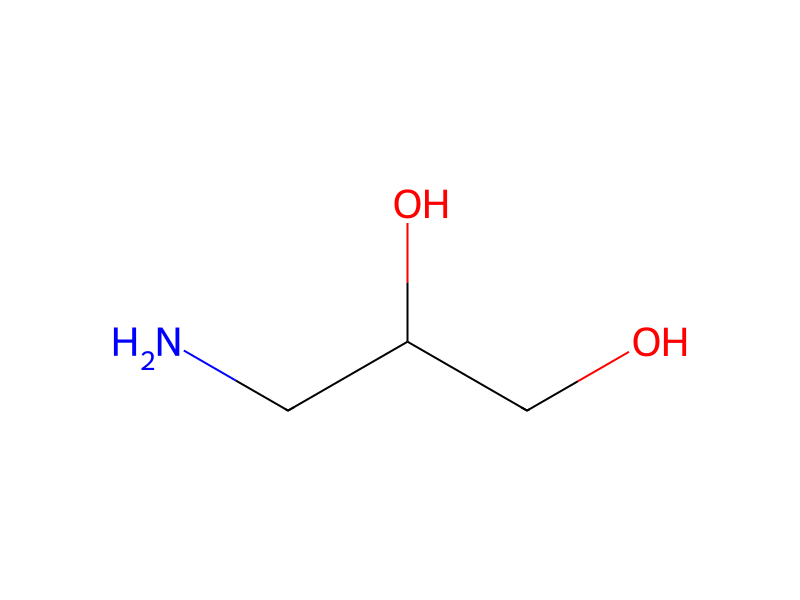
45.56 g (500 mmol) of 2,3-dihydroxypropylamine is introduced in 1000 ml of dimethylformamide. After 50.6 g (500 mmol) of triethylamine is added, 57.28 g (500 mmol) of methanesulfonic acid chloride, dissolved in 500 ml of dichloromethane, is instilled under nitrogen atmosphere at 0° C. Then, it is stirred for 1 hour at 0° C. and for 16 hours at room temperature. After the reaction (TLC control) is completed, it is filtered, and the filtrate is concentrated by evaporation in a vacuum. The residue is mixed with 500 ml of tetrahydrofuran, cooled to 0° C. and again filtered. The filtrate is mixed with 500 ml of tetrahydrofuran, 260 ml of 2,2-dimethoxypropane and 5.2 g of ammonium chloride. The resulting reaction mixture is refluxed for 4 hours, then the solvent is evaporated in a vacuum and the residue is taken up in dichloromethane. It is washed three times with one-percent aqueous citric acid, three times with saturated, aqueous sodium bicarbonate solution and finally three times with water. After the organic phase is dried on sodium sulfate, the solvent is drawn off in a vacuum and the residue is distilled on a bulb tube.