HomeMCPWorkbenchSkills
HomeWorkbenchNotificationsMe
llms.txt · MCP GuidePrivacy Policy · Terms of Service · Supportv1.8.3
  1. Home
  2. /Reaction

Hydrochloric Acid → 8-[2,4-Bis(methoxymethoxy)phenyl]-1,4-dioxaspiro[4.5]decan-8-ol

HRID 585632
Print

Reaction equation

HRID 585632 reaction equation
Br[C:2]1[CH:7]=[CH:6][C:5]([O:8][CH2:9][O:10][CH3:11])=[CH:4][C:3]=1[O:12][CH2:13][O:14][CH3:15].CN(C)CCN(C)C.C([Li])CCC.[CH2:29]1[O:39][C:32]2([CH2:37][CH2:36][C:35](=[O:38])[CH2:34][CH2:33]2)[O:31][CH2:30]1.Cl>C1COCC1.C(OCC)(=O)C>[CH3:15][O:14][CH2:13][O:12][C:3]1[CH:4]=[C:5]([O:8][CH2:9][O:10][CH3:11])[CH:6]=[CH:7][C:2]=1[C:35]1([OH:38])[CH2:36][CH2:37][C:32]2([O:39][CH2:29][CH2:30][O:31]2)[CH2:33][CH2:34]1
ParticipantsConditionsProcedureWorkupSources & evidenceReaction notes

Participants

8

Reactant 5

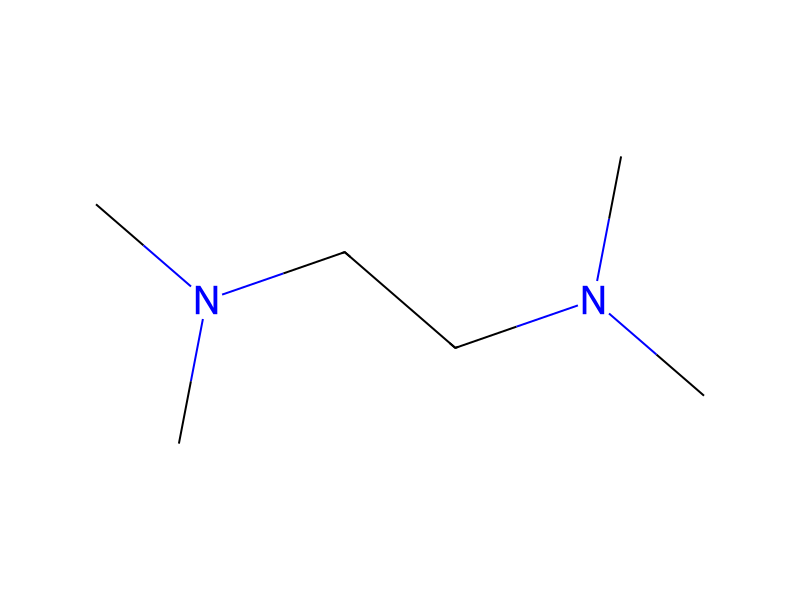
HCID 313Hydrochloric AcidHCID 8037N,N,N',N'-TetramethylethylenediamineHCID 5674151,4-Dioxaspiro[4.5]decan-8-oneHCID 113917541-Bromo-2,4-bis(methoxymethoxy)benzeneHCID 178418339Butyllithium

Product 1

HCID 121351678-[2,4-Bis(methoxymethoxy)phenyl]-1,4-dioxaspiro[4.5]decan-8-ol
Yield 56%

Reagents, catalysts & solvents 2

HCID 8028TetrahydrofuranSolvent2×HCID 8857Ethyl AcetateSolvent

Conditions

Temperature
-78 °C

Procedure

A round bottomed flask, equipped with magnetic stirrer, under an argon atmosphere was loaded with 1-bromo-2,4-bis(methoxymethoxy)benzene (2.00 g, 7.2 mmol) and THF (50 mL). N,N,N′,N′-Tetramethylethylene diamine (2.3 ml, 15.2 mmol) was added in one portion via syringe and the stirred solution was cooled to −78° C. n-Butyl lithium (9.5 ml, 15.2 mmol, 1.6M in hexane) was added dropwise via syringe. The resulting yellow solution was stirred for 1 hr at −78° C. and 1,4-cyclohexanedione monoethylene ketal (1.35 g, 8.7 mmol) was added as a solution in THF (25 ml) slowly, via syringe. The resulting solution was stirred at −78° C. for 1 hr and then allowed to warm to room temperature overnight. Hydrochloric acid (20 ml, 2M) was added and the reaction mixture stirred vigorously for 15 min. Ethyl acetate (100 ml) was added and the mixture poured into a separating funnel. The phases were separated and the aqueous phase was extracted with ethyl acetate (3×20 ml). The combined organics were washed with brine (20 ml), dried over anhydrous magnesium sulphate, filtered and concentrated affording an orange oil which was purified by flash column chromatography (SiO2, ethyl acetate/petroleum ether, 45:55, v/v). The title product (1.42 g, 56%) was isolated as a colourless oil. m/z (ES30) 337 (M−H2O+H+); δH (CDCl3) 1.61-1.64(2H, m), 2.00-2.18(6H, m), 3.44(3H, s), 3.48(3H, s), 3.90-3.97(4H, m), 5.11(2H, s), 5.24(2H, s), 6.64(1H, dd), 6.82(1H, d), 7.20(1H, d).


Workup

  1. customA round bottomed flask, equipped with magnetic stirrer, under an argon atmosphere
  2. additionwas added dropwise via syringe
  3. stirringThe resulting solution was stirred at −78° C. for 1 hr
  4. temperatureto warm to room temperature overnight
  5. stirringthe reaction mixture stirred vigorously for 15 min
  6. additionthe mixture poured into a separating funnel
  7. customThe phases were separated
  8. extractionthe aqueous phase was extracted with ethyl acetate (3×20 ml)
  9. washThe combined organics were washed with brine (20 ml)
  10. dry with materialdried over anhydrous magnesium sulphate
  11. filtrationfiltered
  12. concentrationconcentrated
  13. customaffording an orange oil which
  14. customwas purified by flash column chromatography (SiO2, ethyl acetate/petroleum ether, 45:55, v/v)

Sources & evidence

ORD record
ord-d9389b9411104c8cb91383cbfc65f275
Source dataset
uspto-grants-2005_08
DOI
10.6084/m9.figshare.5104873.v1
Patent number
US06933319B2

Reaction notes

On this pageParticipantsConditionsProcedureWorkupSources & evidenceReaction notes