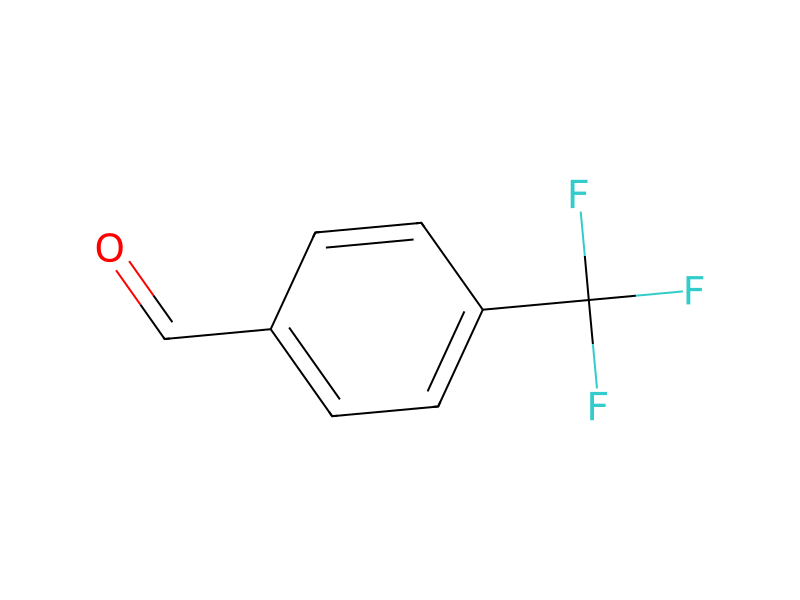
[F:1][C:2]([F:12])([F:11])[C:3]1[CH:10]=[CH:9][C:6]([CH:7]=O)=[CH:5][CH:4]=1.[CH3:13][C:14]1[CH:15]=[C:16]([CH:18]=[CH:19][C:20]=1[N+:21]([O-:23])=[O:22])[NH2:17].C([BH3-])#N.[Na+].C(O)(=O)C>CC1C=CC=CC=1C.C(OCC)(=O)C>[CH3:13][C:14]1[CH:15]=[C:16]([NH:17][CH2:7][C:6]2[CH:9]=[CH:10][C:3]([C:2]([F:12])([F:11])[F:1])=[CH:4][CH:5]=2)[CH:18]=[CH:19][C:20]=1[N+:21]([O-:23])=[O:22]A suspension of 4-trifluoromethylbenzaldehyde (819 μL, 6.00 mmol), 3-methyl-4-nitroaniline (609 mg, 4.00 mmol), and Amberlite IRC-84 (200 mg, H+ form) in o-xylene (4 mL) was heated under nitrogen at 140° C. for 6 hours. It was then cooled to room temperature, diluted with ethyl acetate (5 mL), dried over sodium sulfate, filtered, and volatiles were evaporated. The residue was dissolved in acetonitrile (20 mL) and sodium cyanoborohydride (503 mg, 8.00 mmol) was added in one portion, followed by acetic acid (1 mL) in several portions over 15 minutes. After a further 30 minutes solvents were evaporated and the residue was partitioned between ethyl acetate (50 mL), brine (25 mL), and 10% aqueous potassium carbonate (25 mL). The organic layer was dried over sodium sulfate, solvents were evaporated, and the residue was purified on a FlashMaster system (silica, eluted with heptane/ethyl acetate mixtures) to yield the title compound as a yellow powder (1.02 g, 82%).