HomeMCPWorkbenchSkills
HomeWorkbenchNotificationsMe
llms.txt · MCP GuidePrivacy Policy · Terms of Service · Supportv1.8.0
  1. Home
  2. /Reaction

Potassium Carbonate → 4-(p-Chlorophenyl)-3-fluoro-1-(4-fluoro-3-phenoxyphenyl)-4-methyl-2-pentene

HRID 610852
Notes
Print preview

Reaction equation

HRID 610852 reaction equation
Br[CH2:2][CH:3]=[C:4]([F:15])[C:5]([C:8]1[CH:13]=[CH:12][C:11]([Cl:14])=[CH:10][CH:9]=1)([CH3:7])[CH3:6].C(=O)([O-])[O-].[K+].[K+].[F:22][C:23]1[CH:28]=[CH:27][C:26](B(O)O)=[CH:25][C:24]=1[O:32][C:33]1[CH:38]=[CH:37][CH:36]=[CH:35][CH:34]=1.C(Cl)Cl.CCCCCC>C1(C)C=CC=CC=1.C(O)C.C(OCC)(=O)C.C1C=CC(/C=C/C(/C=C/C2C=CC=CC=2)=O)=CC=1.C1C=CC(/C=C/C(/C=C/C2C=CC=CC=2)=O)=CC=1.[Pd]>[Cl:14][C:11]1[CH:12]=[CH:13][C:8]([C:5]([CH3:7])([CH3:6])[C:4]([F:15])=[CH:3][CH2:2][C:26]2[CH:27]=[CH:28][C:23]([F:22])=[C:24]([O:32][C:33]3[CH:38]=[CH:37][CH:36]=[CH:35][CH:34]=3)[CH:25]=2)=[CH:9][CH:10]=1
ParticipantsProcedureWorkupSources & evidenceReaction notes

Participants

9

Reactant 4

HCID 11430Potassium CarbonateHCID 21185404(4-Fluoro-3-phenoxyphenyl)-boronic acidHCID 21226440Methylenechloride HexaneHCID 542729131-Bromo-4-(p-chlorophenyl)-3-fluoro-4-methyl-2-pentene

Product 1

HCID 545425684-(p-Chlorophenyl)-3-fluoro-1-(4-fluoro-3-phenoxyphenyl)-4-methyl-2-penteneYield 85.6%

Reagents, catalysts & solvents

4
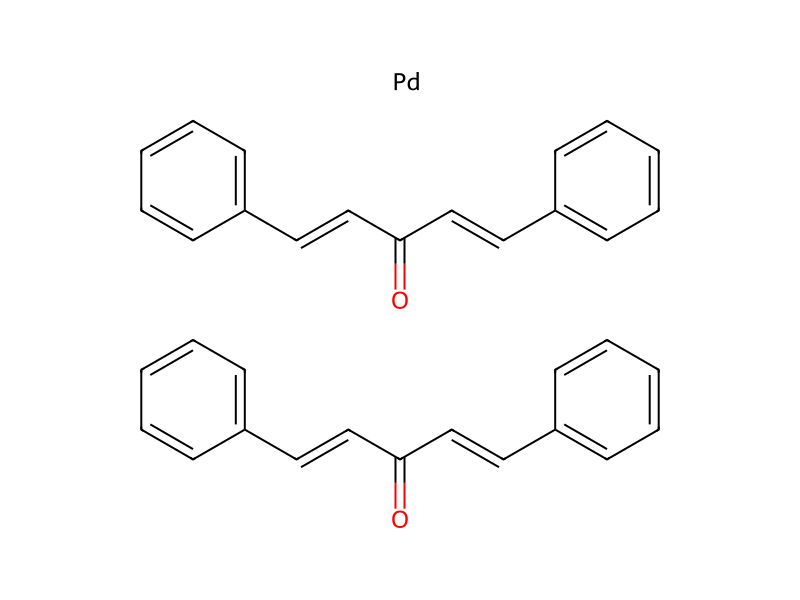
HCID 6505921(1E,4E)-1,5-diphenylpenta-1,4-dien-3-one; palladiumCatalystHCID 702EthanolSolventHCID 1140TolueneSolventHCID 8857Ethyl AcetateSolvent

Procedure

A mixture of 1-bromo-4-(p-chlorophenyl)-3-fluoro-4-methyl-2-pentene, (Z)- (1.02 g, 3.5 mmol), and bis(dibenzylideneacetone)palladium(0) (Pd(dba)2, 0.1 g, 0.17 mmol) in toluene (20 mL) under nitrogen is stirred for one minute, treated with potassium carbonate (1.94 g, 0.014 mol), degassed, treated with a solution of 4-fluoro-3-phenoxybenzeneboronic acid (1.05 g, 4.55 mmol) in ethanol (5 mL), refluxed for 50 minutes, cooled to room temperature, diluted with ethyl acetate and filtered through diatomaceous earth. The filtrate is washed sequentially with water and brine, dried over anhydrous sodium sulfate and concentrated in vacuo to obtain a residue. Flash chromatography of the residue using silica gel and a 15:100 methylene chloride/hexane solution gives the title compound as a colorless oil (1.19 g, 85.6% yield) which is identified by NMR spectral analyses.

Workup

  1. customdegassed
  2. temperaturerefluxed for 50 minutes
  3. filtrationfiltered through diatomaceous earth
  4. washThe filtrate is washed sequentially with water and brine
  5. dry with materialdried over anhydrous sodium sulfate
  6. concentrationconcentrated in vacuo
  7. customto obtain a residue

Sources & evidence

ORD record
ord-574bbfc419564dcf957547d94d493c7f
Source dataset
uspto-grants-1999_12
DOI
10.6084/m9.figshare.5104873.v1
Patent number
US05998673

Reaction notes

Loading…

On this pageParticipantsProcedureWorkupSources & evidenceReaction notes