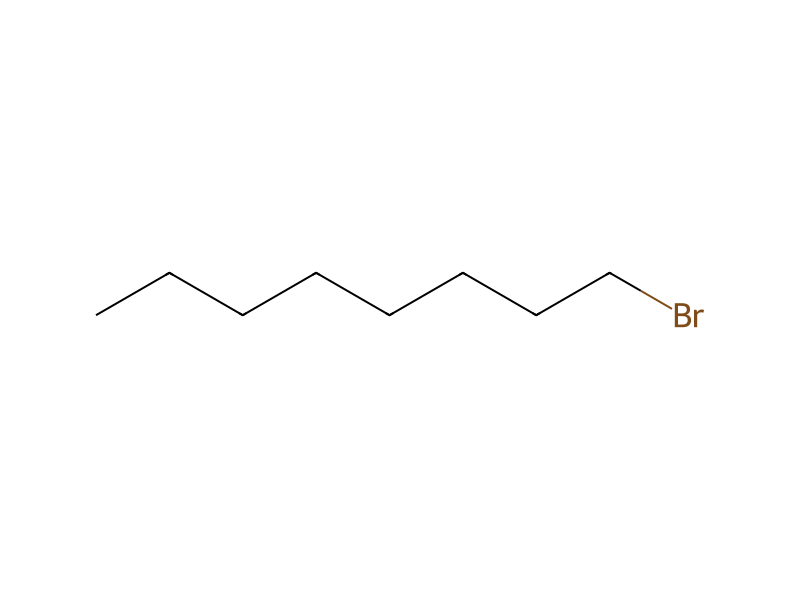
[C:1]([C:9]1[CH:14]=[CH:13][C:12]([OH:15])=[CH:11][CH:10]=1)([CH2:4][C:5]([CH3:8])([CH3:7])[CH3:6])([CH3:3])[CH3:2].C(=O)([O-])[O-].[K+].[K+].Br[CH2:23][CH2:24][CH2:25][CH2:26][CH2:27][CH2:28][CH2:29][CH3:30]>CN(C)C=O>[CH2:23]([O:15][C:12]1[CH:11]=[CH:10][C:9]([C:1]([CH2:4][C:5]([CH3:8])([CH3:7])[CH3:6])([CH3:2])[CH3:3])=[CH:14][CH:13]=1)[CH2:24][CH2:25][CH2:26][CH2:27][CH2:28][CH2:29][CH3:30]To 700 ml of N,N-dimethylformamide were added 206 g of 4-t-octylphenol and 207 g of anhydrous potassium carbonate and the mixture was stirred at 50° C. To the mixture was added dropwise 251 g of 1-bromooctane and thereafter the mixture was stirred for 7 hours at 65° to 80° C. Then, after removing insoluble matter by filtration, water was added to the filtrate thus obtained and the product was extracted with ethyl acetate. The organic solvent layer was collected, washed with a saturated aqueous sodium chloride solution, dried on anhydrous magnesium sulfate, and concentrated under reduced pressure. The oily material thus obtained was distilled under reduced pressure (169°-172° C./0.05-0.06 mmHg) to provide 257 g (81% in yield) of 1-octyloxy-4-t-octylbenzene (Compound A).