HomeMCPWorkbenchSkills
HomeWorkbenchNotificationsMe
llms.txt · MCP GuidePrivacy Policy · Terms of Service · Supportv1.8.0
  1. Home
  2. /Reaction

Potassium Carbonate → (1-(5-(4-Cyclopropylpyridin-2-yl)pyrimidin-2-yl)-3-(methylthio)-1H-indol-6-yl)(pyrrolidin-1-yl)methanone

HRID 630549
Notes
Print preview

Reaction equation

HRID 630549 reaction equation
B1(B2OC(C)(C)C(C)(C)O2)OC(C)(C)C(C)(C)O1.C([O-])(=O)C.[K+].Br[C:25]1[CH:26]=[N:27][C:28]([N:31]2[C:39]3[C:34](=[CH:35][CH:36]=[C:37]([C:40]([N:42]4[CH2:46][CH2:45][CH2:44][CH2:43]4)=[O:41])[CH:38]=3)[C:33]([S:47][CH3:48])=[CH:32]2)=[N:29][CH:30]=1.Br[C:50]1[CH:55]=[C:54]([CH:56]2[CH2:58][CH2:57]2)[CH:53]=[CH:52][N:51]=1.C(=O)([O-])[O-].[K+].[K+]>O1CCOCC1.C1C=CC(P(C2C=CC=CC=2)[C-]2C=CC=C2)=CC=1.C1C=CC(P(C2C=CC=CC=2)[C-]2C=CC=C2)=CC=1.Cl[Pd]Cl.[Fe+2].C1C=CC([P]([Pd]([P](C2C=CC=CC=2)(C2C=CC=CC=2)C2C=CC=CC=2)([P](C2C=CC=CC=2)(C2C=CC=CC=2)C2C=CC=CC=2)[P](C2C=CC=CC=2)(C2C=CC=CC=2)C2C=CC=CC=2)(C2C=CC=CC=2)C2C=CC=CC=2)=CC=1>[CH:56]1([C:54]2[CH:53]=[CH:52][N:51]=[C:50]([C:25]3[CH:30]=[N:29][C:28]([N:31]4[C:39]5[C:34](=[CH:35][CH:36]=[C:37]([C:40]([N:42]6[CH2:43][CH2:44][CH2:45][CH2:46]6)=[O:41])[CH:38]=5)[C:33]([S:47][CH3:48])=[CH:32]4)=[N:27][CH:26]=3)[CH:55]=2)[CH2:58][CH2:57]1
ParticipantsConditionsProcedureWorkupSources & evidenceReaction notes

Participants

9

Reactant 5

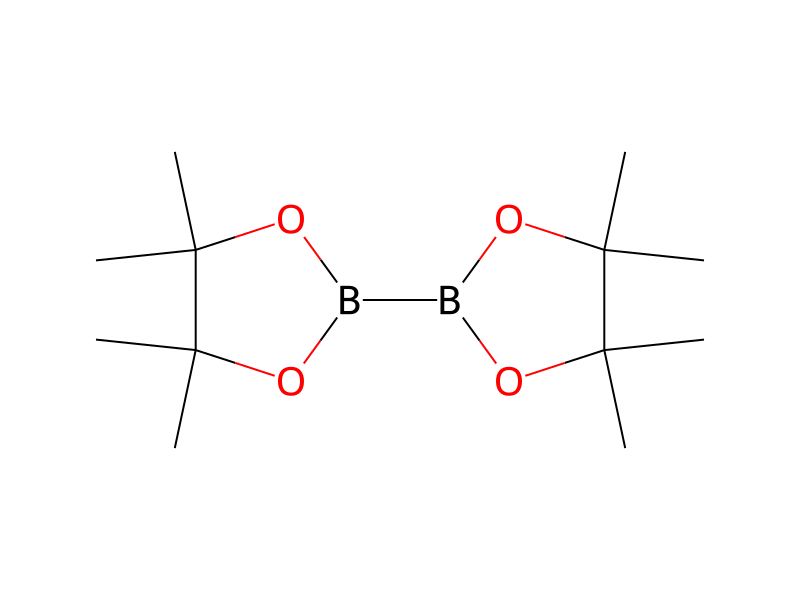
HCID 11430Potassium CarbonateHCID 517044Potassium AcetateHCID 2733548Bis(pinacolato)diboraneHCID 457879032-Bromo-4-cyclopropylpyridineHCID 118676809(1-(5-Bromopyrimidin-2-yl)-3-(methylthio)-1H-indol-6-yl)(pyrrolidin-1-yl)methanone

Product 1

HCID 118676890
(1-(5-(4-Cyclopropylpyridin-2-yl)pyrimidin-2-yl)-3-(methylthio)-1H-indol-6-yl)(pyrrolidin-1-yl)methanone

Reagents, catalysts & solvents 3

HCID 44119782Bis(cyclopenta-1,4-dien-1-yl(diphenyl)phosphane);dichloropalladium;iron(2+)CatalystHCID 178418397HCID 178418397, compoundCatalystHCID 312751,4-DioxaneSolvent

Conditions

Temperature
110 °C

Procedure

Bis(pinacolato)diboron (0.584 g, 2.3 mmol) and potassium acetate (0.421 g, 4.29 mmol) were added at room temperature to a solution of 341a) (0.6 g, 1.43 mmol) in dry dioxane (35 mL). The reaction apparatus was flushed with argon, PdCl2(dppf) (58 mg, 0.071 mmol) was added and the resulting mixture was stirred for 1 h at 110° C. (complete consumption of starting material). 2-bromo-4-cyclopropyl-pyridine (0.328 g, 2.14 mmol), potassium carbonate (2M, 2.5 mL) and tetrakis(triphenylphosphine)palladium(0) (83 mg, 0.071 mmol) were added successively and the reaction mixture was stirred for 16 h at 100° C. The mixture was then cooled to ambient temperature and filtered through a sintered funnel. The filtrate was concentrated and the remnant was purified by flash column chromatography [silica; dichloromethane with 2% methanol]. White solid. Yield: 0.28 g (43% of theory)


Workup

  1. additionwas added
  2. custom(complete consumption of starting material)
  3. stirringthe reaction mixture was stirred for 16 h at 100° C
  4. temperatureThe mixture was then cooled to ambient temperature
  5. filtrationfiltered through a sintered funnel
  6. concentrationThe filtrate was concentrated
  7. customthe remnant was purified by flash column chromatography [silica; dichloromethane with 2% methanol]

Sources & evidence

ORD record
ord-ae184684a3454d3cb839a24f4e366ad9
Source dataset
uspto-grants-2016_04
DOI
10.6084/m9.figshare.5104873.v1
Patent number
US09315490B2

Reaction notes

Loading…

On this pageParticipantsConditionsProcedureWorkupSources & evidenceReaction notes