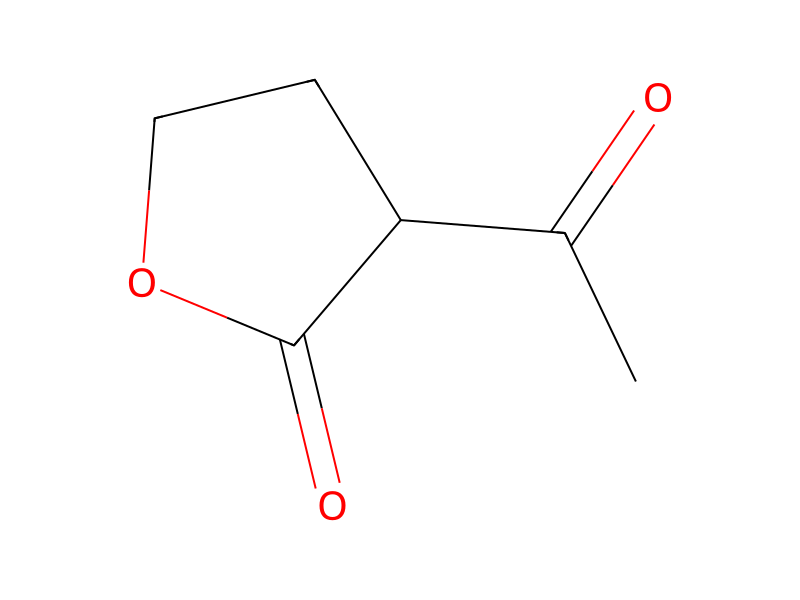
P(Cl)(Cl)([Cl:3])=O.[NH2:6][C:7]1[C:12]([OH:13])=[CH:11][CH:10]=[CH:9][N:8]=1.[C:14]([CH:17]1[CH2:22][CH2:21]O[C:18]1=[O:19])(=O)[CH3:15].N>O>[OH:13][C:12]1[C:7]2=[N:6][C:14]([CH3:15])=[C:17]([CH2:22][CH2:21][Cl:3])[C:18](=[O:19])[N:8]2[CH:9]=[CH:10][CH:11]=1To a mixture comprising phosphorus oxychloride (2520 parts) and 2-amino-3-hydroxy pyridine (300 parts) was charged 2-acetyl butyrolactone (348 parts). The resulting mixture was heated to 60° to 65° C. and stirred for 10 hours at the same temperature. The reaction mass was cooled and poured into a mixture of ice and water to produce a quenched reaction mass. The pH was adjusted (pH meter) to 5.5 using aqueous ammonia. The resulting solid was filtered and washed with water followed by drying in vacuum oven to yield 235 parts of 9-hydroxy-3-(2-chloroethyl)-2-methyl-4H-pyrido[1,2-a]pyrimidin-4-one with a purity (HPLC) of 99%.