HomeMCPWorkbenchSkills
HomeWorkbenchNotificationsMe
llms.txt · MCP GuidePrivacy Policy · Terms of Service · Supportv1.8.1
  1. Home
  2. /Reaction

Hydrochloric Acid → Duloxetine Hydrochloride

HRID 656690
Print

Reaction equation

HRID 656690 reaction equation
C(N(C(C)C)CC)(C)C.[CH3:10][N:11](C)[CH2:12][CH2:13][C@H:14]([O:20][C:21]1[C:30]2[C:25](=[CH:26][CH:27]=[CH:28][CH:29]=2)[CH:24]=[CH:23][CH:22]=1)[C:15]1[S:16][CH:17]=[CH:18][CH:19]=1.[ClH:32].C(=O)([O-])O.[Na+]>C1(C)C=CC=CC=1.C1(OC(Cl)=O)C=CC=CC=1.C(C(C)=O)C.O>[CH3:10][NH:11][CH2:12][CH2:13][C@H:14]([O:20][C:21]1[CH:22]=[CH:23][CH:24]=[C:25]2[CH:26]=[CH:27][CH:28]=[CH:29][C:30]=12)[C:15]1[S:16][CH:17]=[CH:18][CH:19]=1.[ClH:32]
ParticipantsConditionsProcedureWorkupSources & evidenceReaction notes

Participants

9

Reactant 4

HCID 313Hydrochloric Acid2×HCID 81531DiisopropylethylamineHCID 516892Sodium BicarbonateHCID 9818212(S)-(+)-N,N-Dimethyl-3-(1-naphthalenyloxy)-3-(2-thienyl)propanamine

Product 1

HCID 60834Duloxetine Hydrochloride

Reagents, catalysts & solvents 4

HCID 962
Water
Solvent
HCID 1140TolueneSolvent
HCID 6569Methyl Ethyl KetoneSolvent
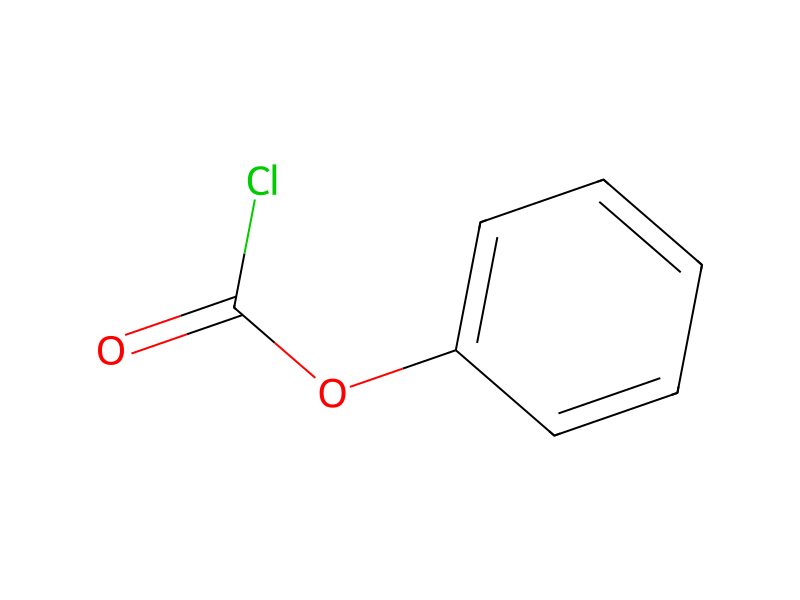
HCID 15891Phenyl chloroformateSolvent

Conditions

Temperature
80 °C

Procedure

Diisopropylethylamine (210 ml) is added to a solution of (S)-N,N-dimethyl-3-(1-naphthyloxy)-3-(2-thienyl)-propanamine (311 g; 99.6% ee) in toluene (1200 ml) and phenylchloroformate (150 ml) is then added at 60° C. After two hours of stirring at 80° C., the mixture is cooled down, shaken with a diluted solution of hydrochloric acid, water and a 2% solution of sodium hydrogencarbonate. The organic phase is dried with sodium sulfate and evaporated. The evaporation residue is dissolved in ethanol (300 ml) and a 5M solution of potassium hydroxide (400 ml) is added drop-wise under reflux. After two hours of refluxing, the mixture is evaporated to half the volume, diluted with water (1000 ml) and extracted with toluene (300 ml). The organic phase is dried with sodium sulfate and evaporated. The evaporation residue is dissolved in ethylmethylketone (300 ml) and concentrated HCl (1 mole), diluted with ethylmethylketone (300 ml), is added drop-wise at 0° C.; then the mixture is stirred for two hours. The precipitated crystals are then sucked off. Yield: 250 g (75%), m.p.: 167-169° C. Recrystallization from ethylmethylketone affords colorless crystalline duloxetine hydrochloride, m.p. 170.5-171.5° C. Optical purity: 99.9% ee (CE), chemical purity: 99.9% (HPLC).


Workup

  1. additionis then added at 60° C
  2. temperaturethe mixture is cooled down
  3. dry with materialThe organic phase is dried with sodium sulfate
  4. customevaporated
  5. dissolutionThe evaporation residue is dissolved in ethanol (300 ml)
  6. additiona 5M solution of potassium hydroxide (400 ml) is added drop-wise
  7. temperatureunder reflux
  8. temperatureAfter two hours of refluxing
  9. customthe mixture is evaporated to half the volume
  10. additiondiluted with water (1000 ml)
  11. extractionextracted with toluene (300 ml)
  12. dry with materialThe organic phase is dried with sodium sulfate
  13. customevaporated
  14. dissolutionThe evaporation residue is dissolved in ethylmethylketone (300 ml)
  15. additionis added drop-wise at 0° C.
  16. stirringthen the mixture is stirred for two hours
  17. customRecrystallization from ethylmethylketone

Sources & evidence

ORD record
ord-db00709369344367aad9a98167c76d3c
Source dataset
uspto-grants-2011_12
DOI
10.6084/m9.figshare.5104873.v1
Patent number
US08071791B2

Reaction notes

On this pageParticipantsConditionsProcedureWorkupSources & evidenceReaction notes