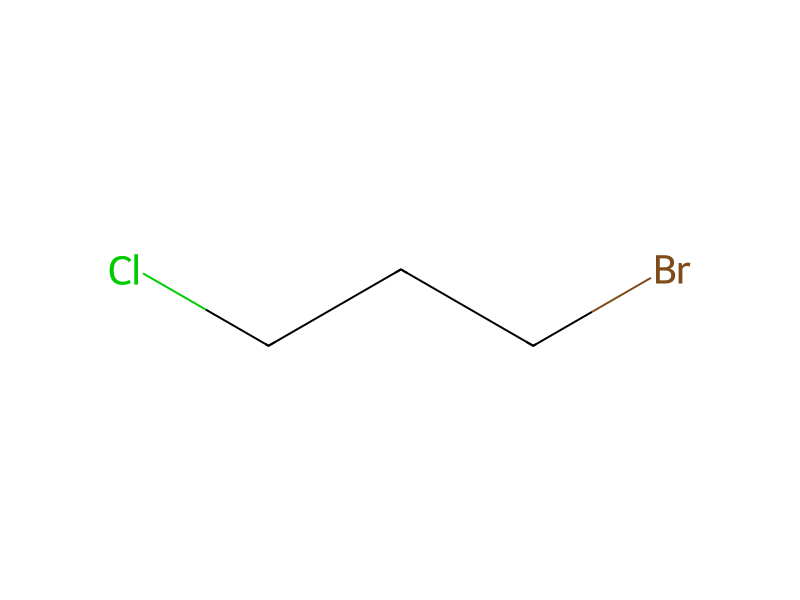
1-Bromo-3-chloropropane → 4-(3-Chloropropoxy)stilbene
HRID 657614
Reaction equation

[OH:1][C:2]1[CH:7]=[CH:6][C:5]([CH:8]=[CH:9][C:10]2[CH:15]=[CH:14][CH:13]=[CH:12][CH:11]=2)=[CH:4][CH:3]=1.C(=O)([O-])[O-].[K+].[K+].Br[CH2:23][CH2:24][CH2:25][Cl:26]>CN(C)C=O>[Cl:26][CH2:25][CH2:24][CH2:23][O:1][C:2]1[CH:3]=[CH:4][C:5]([CH:8]=[CH:9][C:10]2[CH:11]=[CH:12][CH:13]=[CH:14][CH:15]=2)=[CH:6][CH:7]=1Participants
5
Reactant 3


Product 1

Reagents, catalysts & solvents 1

Procedure
Following the procedure described in example 1§E, but starting from 4-hydroxystilbene (2 g), potassium carbonate (7.04 g) and 1-bromo-3-chloropropane (5 mL) in N,N-dimethylformamide (10 mL) affords 2.06 g of 4-(3-chloropropoxy)stilbene as a white solid.