Propylenediamine → N,N'-bis-(2-hydroxybenzyl)-propylenediamine
HRID 65831
Reaction equation
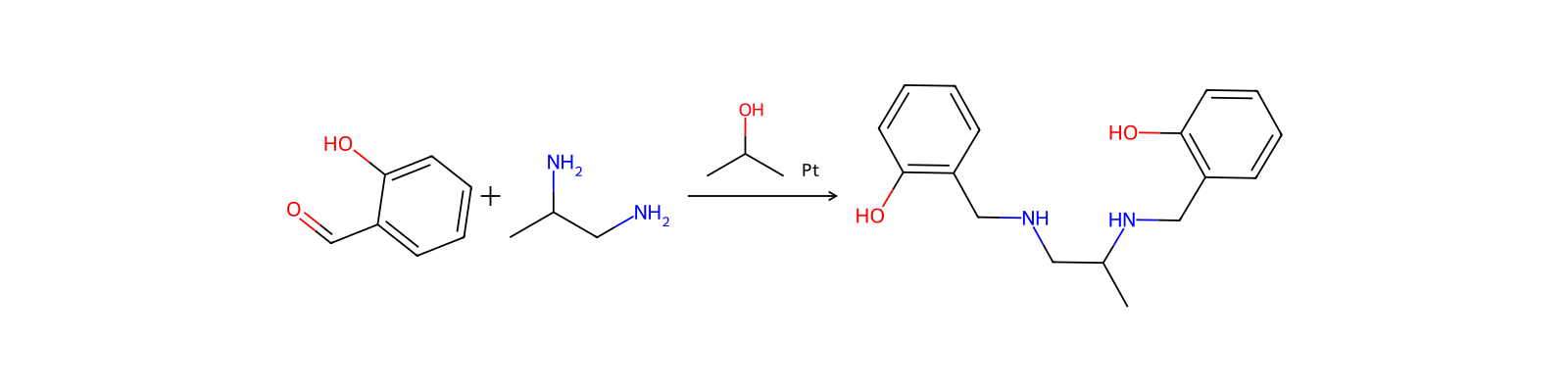
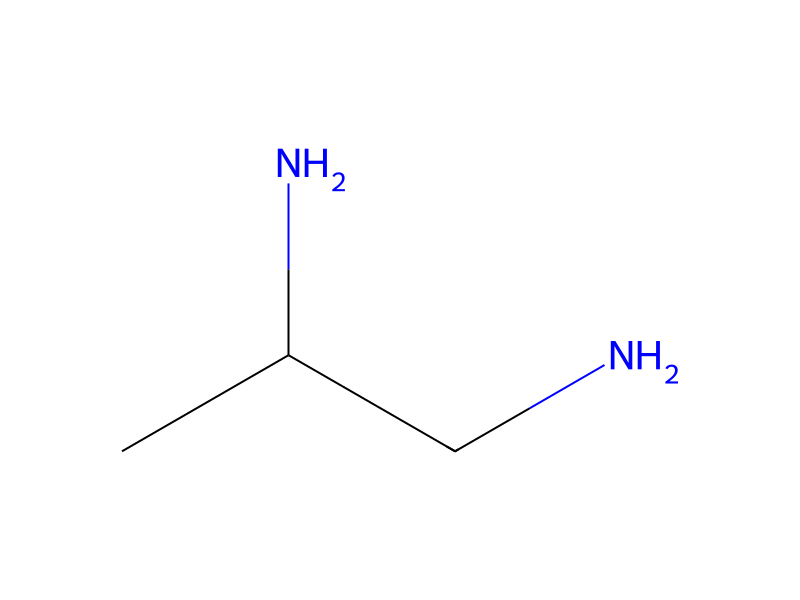
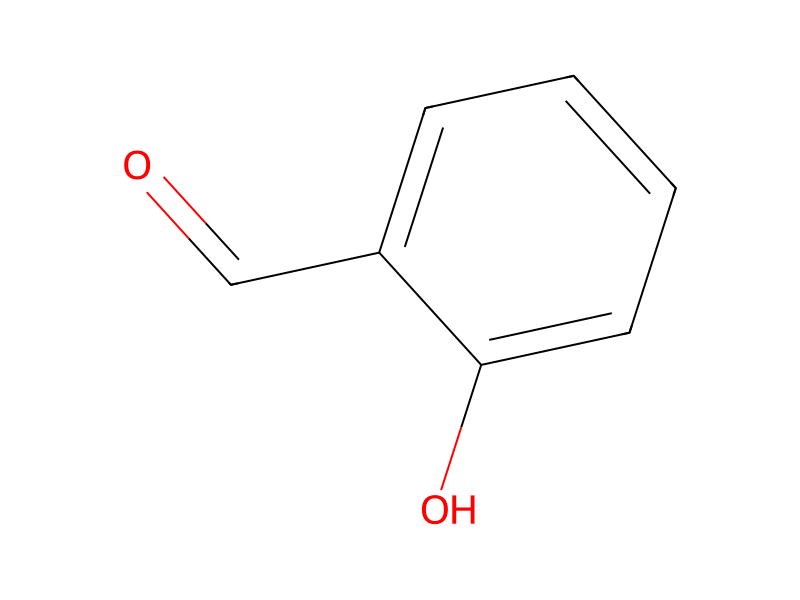
[CH:1](=O)[C:2]1[C:3](=[CH:5][CH:6]=[CH:7][CH:8]=1)[OH:4].[CH2:10]([NH2:14])[CH:11]([NH2:13])[CH3:12]>C(O)(C)C.[Pt]>[OH:4][C:3]1[CH:5]=[CH:6][CH:7]=[CH:8][C:2]=1[CH2:1][NH:14][CH2:10][CH:11]([NH:13][CH2:1][C:2]1[CH:8]=[CH:7][CH:6]=[CH:5][C:3]=1[OH:4])[CH3:12]Participants
5
Reactant 2
Product 1

Reagents, catalysts & solvents 2


Procedure
84.6 g of a bisazomethine prepared from 2 moles of salicylaldehyde and 1 mol of propylenediamine and having a melting point of 57°-58° C. are hydrogenated for 3 hours in 340 ml of isopropanol in an autoclave in the presence of 1.20 g of 5% platinum/charcoal at 45° C. and under a pressure of 50-60 atmospheres. The product crystallises out at room temperature and is dissolved by boiling, with the addition of a further 660 ml of isopropanol. The catalyst is filtered off and the diamine crystallises out on cooling. The crystals are collected by filtration, washed and dried, yielding 75.1 g of N,N'-bis-(2-hydroxybenzyl)-propylenediamine (87.5% of theory); melting point 109°-110° C.