Reaction equation

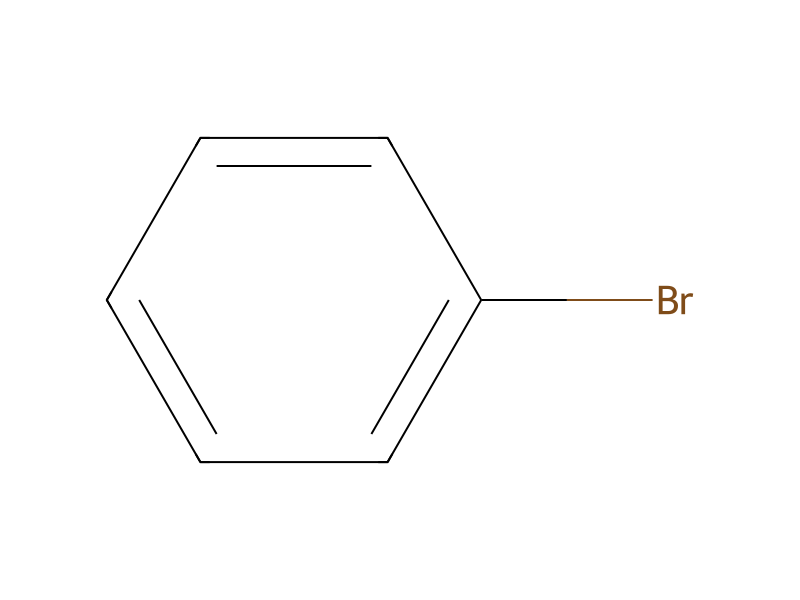
[Cl-].[Al+3].[Cl-].[Cl-].[Br:5]C1C=CC=CC=1.[CH:12]1[C:17]([Cl:18])=[CH:16][CH:15]=[C:14]([Cl:19])[CH:13]=1.[Br:20][C:21]1[CH:26]=[CH:25][C:24]([Cl:27])=[C:23]([Cl:28])[C:22]=1[Br:29]>[Fe]>[Br:29][C:22]1[CH:21]=[CH:26][C:25]([Cl:18])=[CH:24][C:23]=1[Cl:28].[Br:5][C:15]1[CH:16]=[C:17]([Cl:18])[CH:12]=[CH:13][C:14]=1[Cl:19].[Br:20][C:21]1[CH:26]=[CH:25][C:24]([Cl:27])=[C:23]([Cl:28])[CH:22]=1Participants
8
Reactant 4



Product 3


Reagents, catalysts & solvents 1

Procedure
The o-, m- or p-dichlorobenzenes or mixture thereof which is used as intermediates for syntheses of various organic compounds is brominated at 0° to 100° C. in the presence of aluminum chloride, ferric chloride or iron powder. The bromobenzene is chlorinated in the same condition. The dichlorobenzene is reacted with the dibromodichlorobenzene in the presence of an aluminum halide for 1 to 5 hours. In these methods, 1-bromo-2,4-dichlorobenzene, 1-bromo-2,5-dichlorobenzene, and 1-bromo-3,4-dichlorobenzene etc. can be obtained in high yield.
Sources & evidence
- ORD record
- ord-12b808519d014a45884e6fff12f972d8
- Source dataset
- uspto-grants-1982_08
- Patent number
- US04347390
Linked notes
Loading…