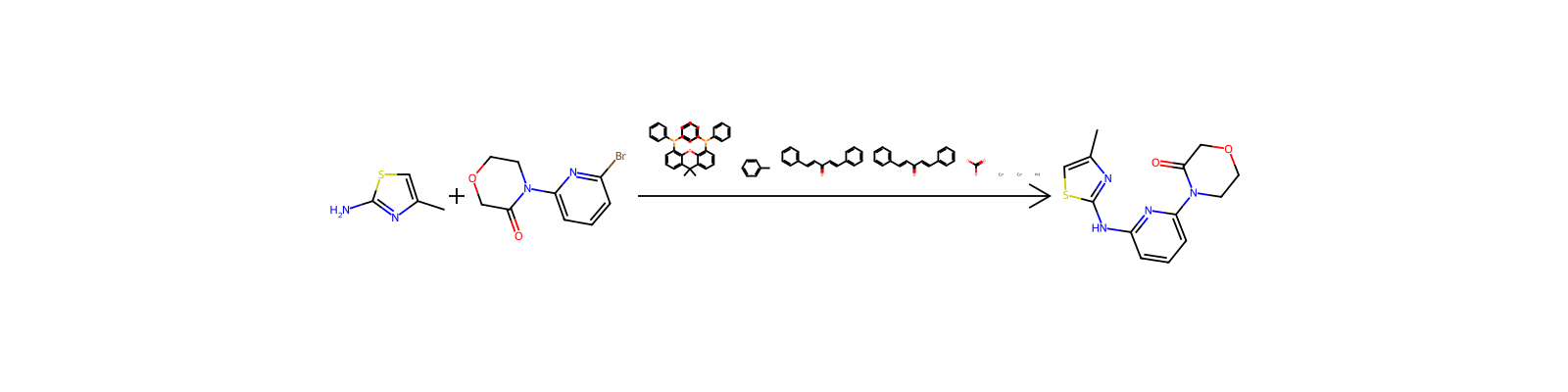
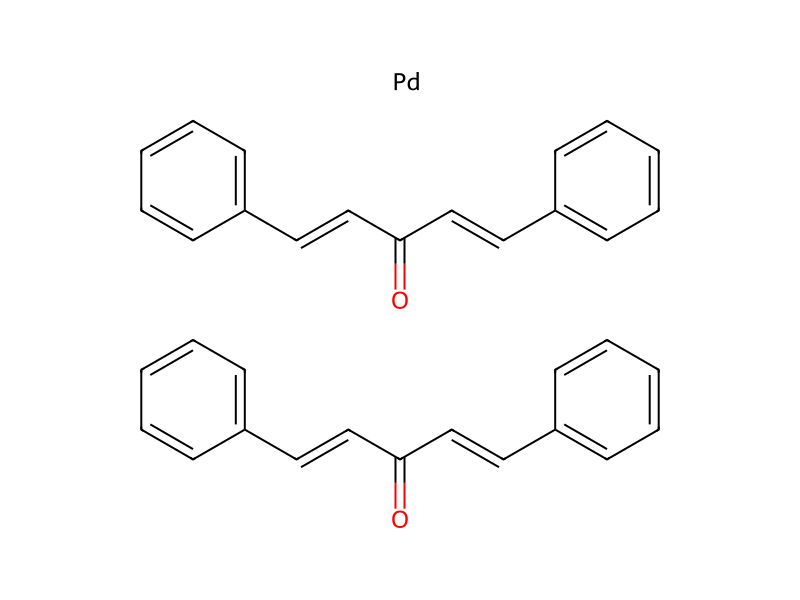
**_September 24 2015_** 4-methylthiazol-2-amine (200 mg, 1.75 mmol), 4-(6-bromopyridin-2-yl)morpholin-3-one (450 mg, 1.75 mmol), 4-(6-bromopyridin-2-yl)morpholin-3-one (450 mg, 1.75 mmol), (9,9-dimethyl-9H-xanthene-4,5-diyl)bis(diphenylphosphine) (81 mg, 0.14 mmol) and cesium carbonate (685 mg, 2.10 mmol) in toluene (15 mL) and DMF (1)were microwaved at 115 °C under N2 for one hour. _(Note: Initially, DMF was not added as co-solvent, the microwave instrument was repeatly failed to reach the temperature, and shut down ar 100 °C. It was due to the low thremal absorbance of toluene. Therefore, DMF was added to improve this situation.)_ LCMS showed no precursors and 87% of the desired mass MH+291 @ 0.87 min on a 2-min basic run. The reaction was cooled to RT. **_September 25 2015_** The reaction mixture was diluted with EtOAc, washed with water, filtered, and evaporated to give a brown solid as the crude product. The crude product was added to a silica gel column, and was eluted with 20-100%EtOAc in Heptane. Collected fractions. Based on TLC and LCMS, most product fractions contained a non-MS-ionization unknown, were combined, and evpoarated to give an orange-yellow solid. The orange-yellow solid was reloaded to a silica gel column and was eluted with 20-100%EtOAc in Heptane . Collected fractions . **_September 28 2015_** Based on TLC and LCMS, the product fractions were combined, and evpoarated to give a pale-yellow solid. Based on LCMS, it was 93% pure; based on NMR, it was 94~95% pure.