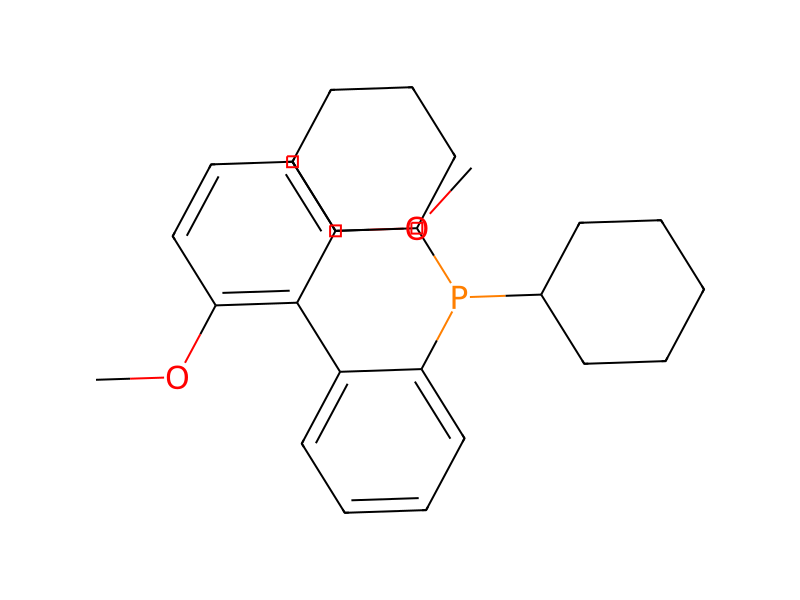
CC1(C)C(C)(C)OB([C:9]2[CH:10]=[C:11]([C:15]([OH:18])([CH3:17])[CH3:16])[CH:12]=[N:13][CH:14]=2)O1.Cl[C:21]1[N:22]=[C:23]2[CH:28]=[CH:27][C:26]([F:29])=[CH:25][N:24]2[CH:30]=1.C1(P(C2CCCCC2)C2C=CC=CC=2C2C(OC)=CC=CC=2OC)CCCCC1.[O-]P([O-])([O-])=O.[K+].[K+].[K+]>O1CCCC1.C([O-])(=O)C.[Pd+2].C([O-])(=O)C>[F:29][C:26]1[CH:27]=[CH:28][C:23]2[N:24]([CH:30]=[C:21]([C:9]3[CH:10]=[C:11]([C:15]([OH:18])([CH3:16])[CH3:17])[CH:12]=[N:13][CH:14]=3)[N:22]=2)[CH:25]=1To a solution of the title compound from Example 2 Step D (0.1855 g, 0.704 mmol) and the title compound from Example 2 Step B (0.10 g, 0.586 mmol) in tetrahydrofuran (5.86 mL) were added palladium acetate (0.013 g, 0.059 mmol), 2-dicyclohexylphosphino-2′,6′-dimethoxy-1,1′-biphenyl (0.048 g, 0.117 mmol), and potassium phosphate tribasic (0.373 g, 1.759 mmol). The resulting mixture was heated at 100° C. for 18 hours. The mixture was then cooled to room temperature, filtered with the aid of ethyl acetate, and concentrated under reduced pressure. Purification by flash chromatography on silica gel (30-50% acetone in dichloromethane) provided the title compound: LCMS m/z 273.99 [M+H]+; 1H NMR (500 MHz, CDCl3) δ 8.99 (d, J=1.6 Hz, 1H), 8.72 (d, J=2.2 Hz, 1H), 8.39 (t, J=2.0 Hz, 1H), 8.10 (t, J=2.6 Hz, 1H), 7.96 (s, 1H), 7.63 (dd, J=9.9, 4.8 Hz, 1H), 7.17-7.13 (m, 1H), 2.00 (br s, 1H), 1.68 (s, 6H).
Loading…