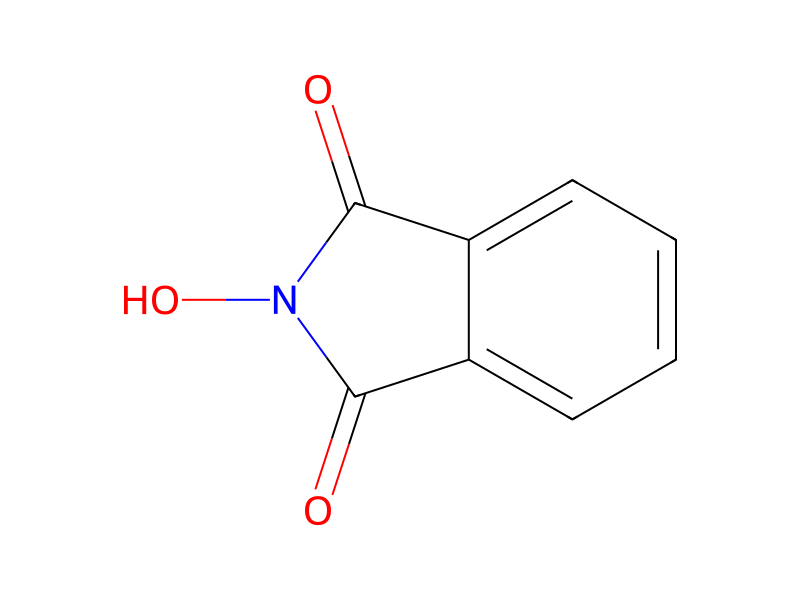
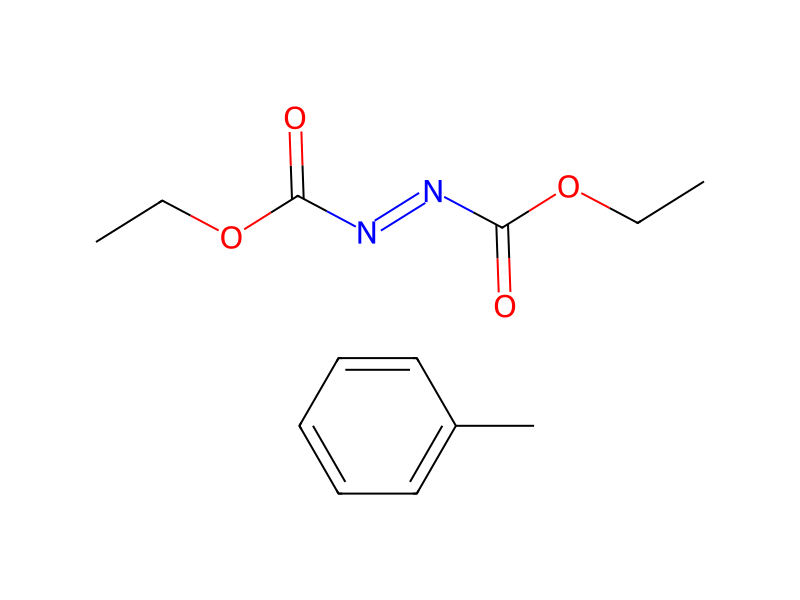
N-Hydroxyphthalimide → Benzyl (2-((1,3-dioxoisoindolin-2-yl)oxy)ethyl)carbamate
HRID 710951
Reaction equation

[CH2:1]([O:8][C:9](=[O:14])[NH:10][CH2:11][CH2:12][OH:13])[C:2]1[CH:7]=[CH:6][CH:5]=[CH:4][CH:3]=1.C1(P(C2C=CC=CC=2)C2C=CC=CC=2)C=CC=CC=1.O[N:35]1[C:39](=[O:40])[C:38]2=[CH:41][CH:42]=[CH:43][CH:44]=[C:37]2[C:36]1=[O:45].C1(C)C=CC=CC=1.N(C(OCC)=O)=NC(OCC)=O>O1CCCC1>[CH2:1]([O:8][C:9](=[O:14])[NH:10][CH2:11][CH2:12][O:13][N:35]1[C:39](=[O:40])[C:38]2[C:37](=[CH:44][CH:43]=[CH:42][CH:41]=2)[C:36]1=[O:45])[C:2]1[CH:7]=[CH:6][CH:5]=[CH:4][CH:3]=1Participants
6