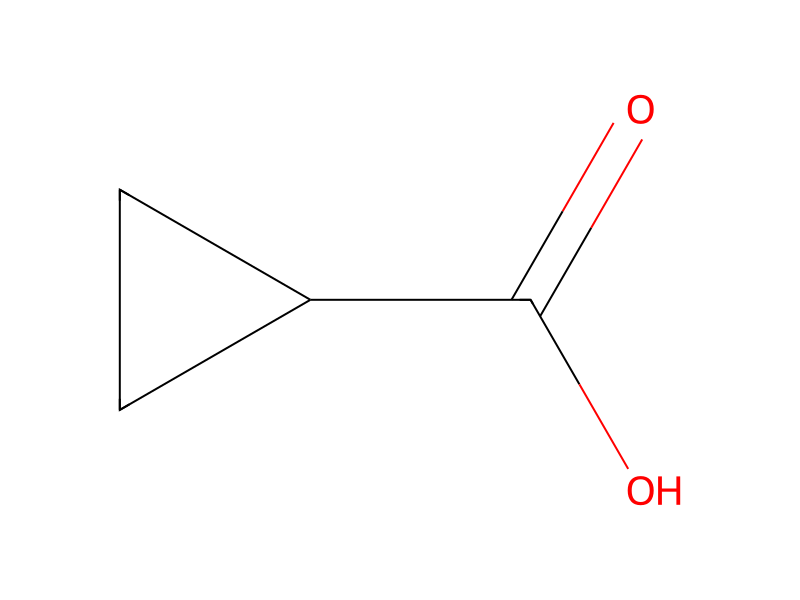
Cyclopropanecarboxylic acid → N'-(7-bromoquinoxalin-2-yl)cyclopropanecarbohydrazide
Reaction equation

[Br:1][C:2]1[CH:11]=[C:10]2[C:5]([N:6]=[CH:7][C:8]([NH:12][NH2:13])=[N:9]2)=[CH:4][CH:3]=1.CN(C(ON1N=NC2C=CC=NC1=2)=[N+](C)C)C.F[P-](F)(F)(F)(F)F.CCN(C(C)C)C(C)C.[CH:47]1([C:50](O)=[O:51])[CH2:49][CH2:48]1>CN(C=O)C.CCOC(C)=O>[Br:1][C:2]1[CH:11]=[C:10]2[C:5]([N:6]=[CH:7][C:8]([NH:12][NH:13][C:50]([CH:47]3[CH2:49][CH2:48]3)=[O:51])=[N:9]2)=[CH:4][CH:3]=1Participants
7
Reactant 4



Product 1

Reagents, catalysts & solvents 2


Procedure
To the solution of 7-bromo-2-hydrazinylquinoxaline (200 mg, 0.83 mmol) in DMF (3 mL) was added HATU (380 mg, 1 mmol), DIPEA (0.205 mL, 1 mmol) and cyclopropanecarboxylic acid (71 mg, 0.83 mmol). After stirring at r.t. for 5 h, the mixture was diluted with EtOAc. The organic layer was washed with water for three times, then concentrated to afford N′-(7-bromoquinoxalin-2-yl)cyclopropane-carbohydrazide as yellow solid which was used directly in the next step. m/z 309 (M+H)+.
Workup
- washThe organic layer was washed with water for three times
- concentrationconcentrated
Sources & evidence
- ORD record
- ord-4404a10cb1fb4730b7ea7712e16e4625
- Source dataset
- uspto-grants-2015_11
- Patent number
- US09181264B2
Reaction notes
Loading…