HomeMCPWorkbenchSkills
HomeWorkbenchNotificationsMe
llms.txt · MCP GuidePrivacy Policy · Terms of Service · Supportv1.8.0
  1. Home
  2. /Reaction

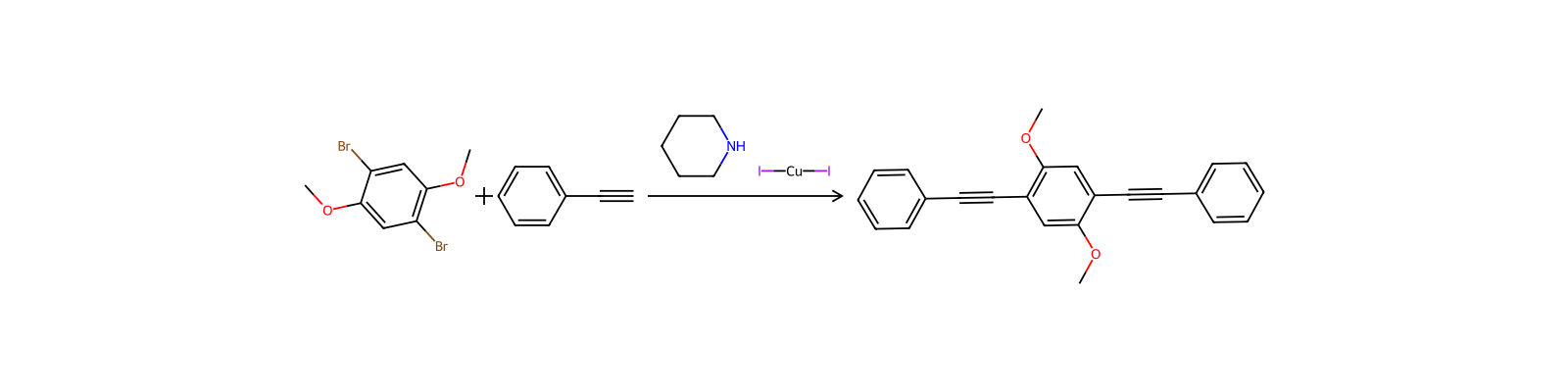
Phenylacetylene → 1,4-Bis(phenylethynyl)-2,5-dimethoxybenzene

HRID 7196
Notes
Print preview

Reaction equation

HRID 7196 reaction equation
Br[C:2]1[CH:7]=[C:6]([O:8][CH3:9])[C:5](Br)=[CH:4][C:3]=1[O:11][CH3:12].[C:13]1([C:19]#[CH:20])[CH:18]=[CH:17][CH:16]=[CH:15][CH:14]=1>N1CCCCC1.[Cu](I)I>[C:13]1([C:19]#[C:20][C:2]2[CH:7]=[C:6]([O:8][CH3:9])[C:5]([C:20]#[C:19][C:13]3[CH:18]=[CH:17][CH:16]=[CH:15][CH:14]=3)=[CH:4][C:3]=2[O:11][CH3:12])[CH:18]=[CH:17][CH:16]=[CH:15][CH:14]=1
ParticipantsConditionsProcedureWorkupSources & evidenceReaction notes

Participants

5

Reactant 2

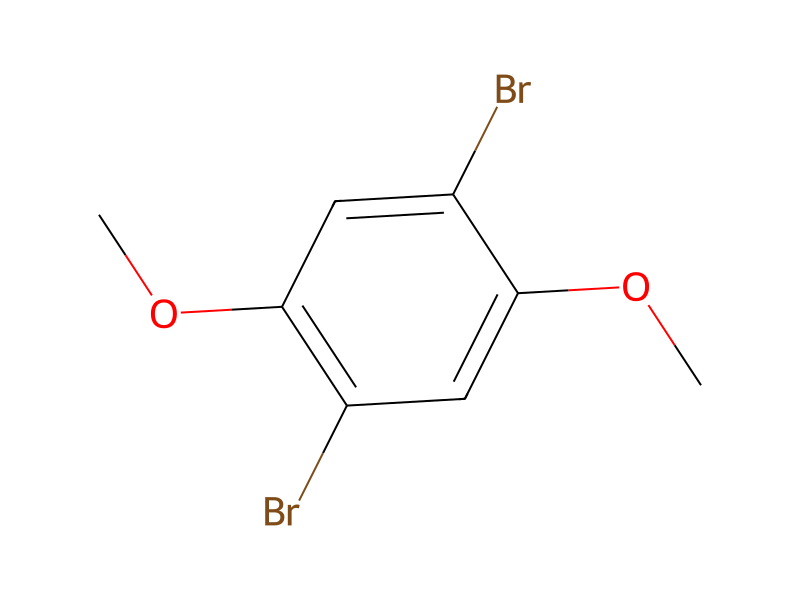
HCID 10821PhenylacetyleneHCID 2312401,4-Dibromo-2,5-dimethoxybenzene

Product 1

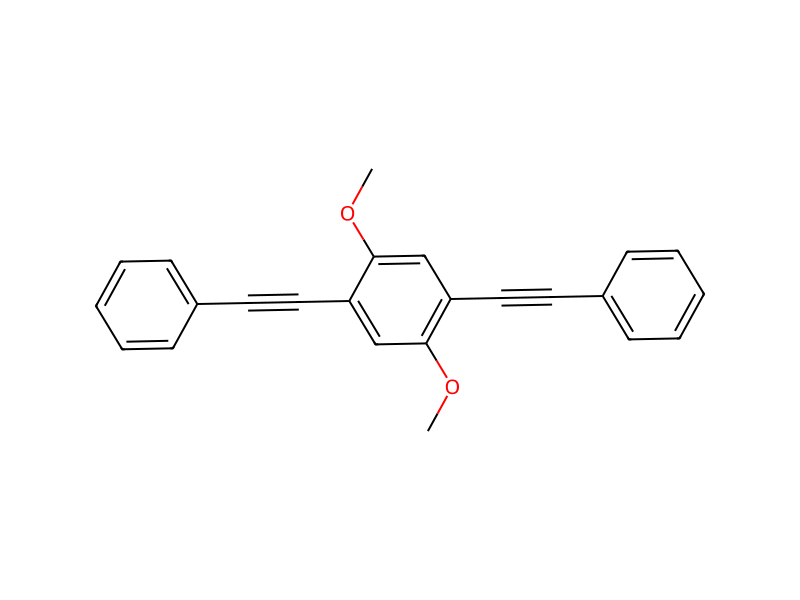
HCID 126604771,4-Bis(phenylethynyl)-2,5-dimethoxybenzeneYield 75.7%

Reagents, catalysts & solvents 2

HCID 83717Copper iodideCatalystHCID 8082PiperidineSolvent

Conditions

Temperature
80 °C

Procedure

50 g (160 mmol) of 1,4-dibromo-2,5-dimethoxy benzene, 3.6 g (0.005 mol) of bistriphenylphosphine palladium dichloride and 0.97 g (0.005 mol) of copper iodide were put into a 1 litter 3-neck flask equipped with a stirrer, a thermometer and a reflux condenser under an argon atmosphere, and dissolved in 500 ml of piperidine. 43 g (0.422 mol) of phenylacetylene was then slowly added dropwise at room temperature. The reaction temperature was slowly raised to 80° C. and then the reaction mixture was stirred at the same temperature for 12 hours. When the reaction was completed, the reaction mixture was cooled down to room temperature, and then generated salt was filtered off. The solvent was removed under a reduced pressure, and then the residue was extracted with methylene chloride. Organic layer was washed with water several times and dried with anhydrous magnesium sulfate, and then the solvent was removed to obtain yellow solid. This solid was recrystallized from ethyl acetate to obtain yellow crystal, which was sufficiently dried in a vacuum oven at 40° C. to give 41 g (yield: 72%) of the desired product, and its melting point was 172° C.–174° C.
Workup

  1. customequipped with a stirrer
  2. temperaturethe reaction mixture was cooled down to room temperature
  3. filtrationwas filtered off
  4. customThe solvent was removed under a reduced pressure
  5. extractionthe residue was extracted with methylene chloride
  6. washOrganic layer was washed with water several times
  7. dry with materialdried with anhydrous magnesium sulfate
  8. customthe solvent was removed
  9. customto obtain yellow solid
  10. customThis solid was recrystallized from ethyl acetate
  11. customto obtain yellow crystal, which
  12. customwas sufficiently dried in a vacuum oven at 40° C.

Sources & evidence

ORD record
ord-69e50f4a0a4148ad88f1efb062fdfe32
Source dataset
uspto-grants-2006_08
DOI
10.6084/m9.figshare.5104873.v1
Patent number
US07084231B2

Reaction notes

Loading…

On this pageParticipantsConditionsProcedureWorkupSources & evidenceReaction notes