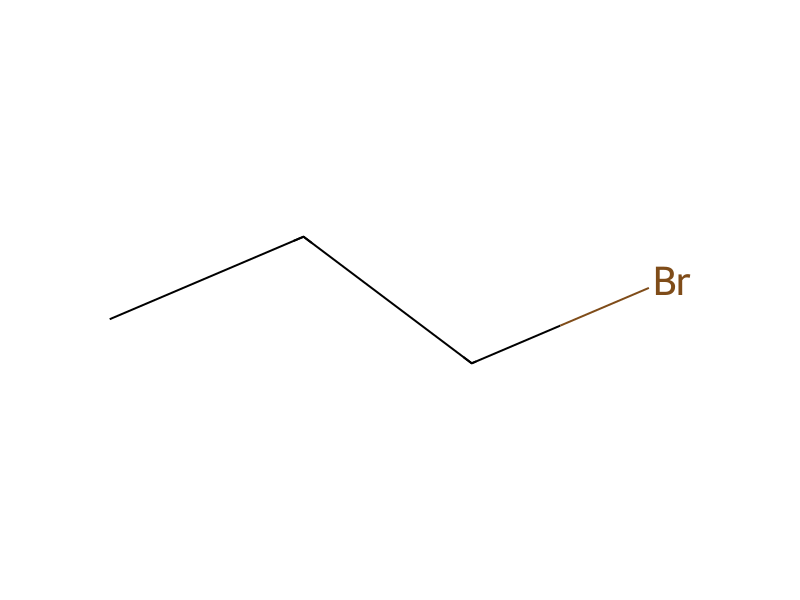
[H-].[Na+].[CH:3]([C:5]1[CH:6]=[C:7]2[C:11](=[CH:12][CH:13]=1)[NH:10][CH:9]=[C:8]2[CH2:14][C:15]1[CH:24]=[CH:23][C:18]([C:19]([O:21][CH3:22])=[O:20])=[CH:17][C:16]=1[O:25][CH3:26])=[O:4].Br[CH2:28][CH2:29][CH3:30].Cl>CN(C)C=O>[CH:3]([C:5]1[CH:6]=[C:7]2[C:11](=[CH:12][CH:13]=1)[N:10]([CH2:28][CH2:29][CH3:30])[CH:9]=[C:8]2[CH2:14][C:15]1[CH:24]=[CH:23][C:18]([C:19]([O:21][CH3:22])=[O:20])=[CH:17][C:16]=1[O:25][CH3:26])=[O:4]Sodium hydride (2.96 g of a 60% w/w dispersion in mineral oil) was added to dry dimethylformamide (DMF, 100 ml), under a nitrogen atmosphere. The mixture was stirred and cooled in an ice-bath, and a solution of methyl 4-(5-formylindol-3-ylmethyl)-3-methoxybenzoate (20 g) in DMF (75 ml) added slowly. After 1 h, 1-bromopropane (9.13 g) was added slowly. After 2 h, the mixture was carefully acidified with 2M hydrochloric acid (100 ml), extracted with ethyl acetate (twice), and the extract washed with 1M hydrochloric acid, water, and brine. The dried (MgSO4) solution was evaporated, and the residue dissolved in ethyl acetate and filtered through a pad of silica gel. The filtrate was evaporated, and the product crystallised from ether to give methyl 4-(5-formyl-1-propylindol-3-ylmethyl)-3-methoxybenzoate (19.2 g, 85%) as white needles; mp 98-99°; partial NMR (250 MHz, DMSO-d6): 0.82(t, 3H, CH3), 1.75(m, 2H, CH2), 3.83(s, 3H, OCH3), 3.92(s, 3H, OCH3), 4.1(m, 4H, ArCH2Ar' and NCH2), 9.95(s, 1H, CHO).