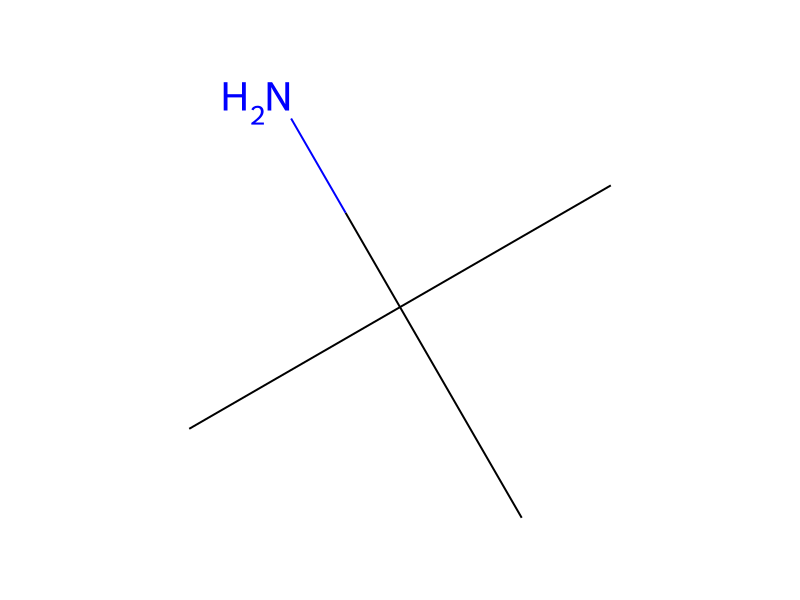
[C:1]([NH2:5])([CH3:4])([CH3:3])[CH3:2].C(N(CC)CC)C.[Br:13][C:14]1[CH:19]=[CH:18][C:17]([S:20](Cl)(=[O:22])=[O:21])=[CH:16][CH:15]=1>ClCCl.C(OCC)(=O)C>[Br:13][C:14]1[CH:19]=[CH:18][C:17]([S:20]([NH:5][C:1]([CH3:4])([CH3:3])[CH3:2])(=[O:22])=[O:21])=[CH:16][CH:15]=1Place t-butylamine (4.32 mL, 41.1 mmol), triethylamine (8.15 mL, 58.7 mmol) and dichloromethane (75 mL) in a 3-neck round bottom flask. Cool this stirring solution to 0° C. and add a solution of 4-bromobenzenesulfonyl chloride (10.0 g, 39.1 mmol) in dichloromethane (50 mL). Add additional dichloromethane (25 mL) and stir the reaction overnight, allowing it to warm to ambient temperature. Evaporate the reaction in vacuo. Suspend the resulting white solid in ethyl acetate and filter it. Concentrate the filtrate in vacuo and purify the resulting residue by flash chromatography (silica gel; 50%-80% gradient CH2Cl2 in hexanes) to provide 9.85 g of 4-bromo-N-tert-butyl-benzenesulfonamide (86%).