Reaction equation
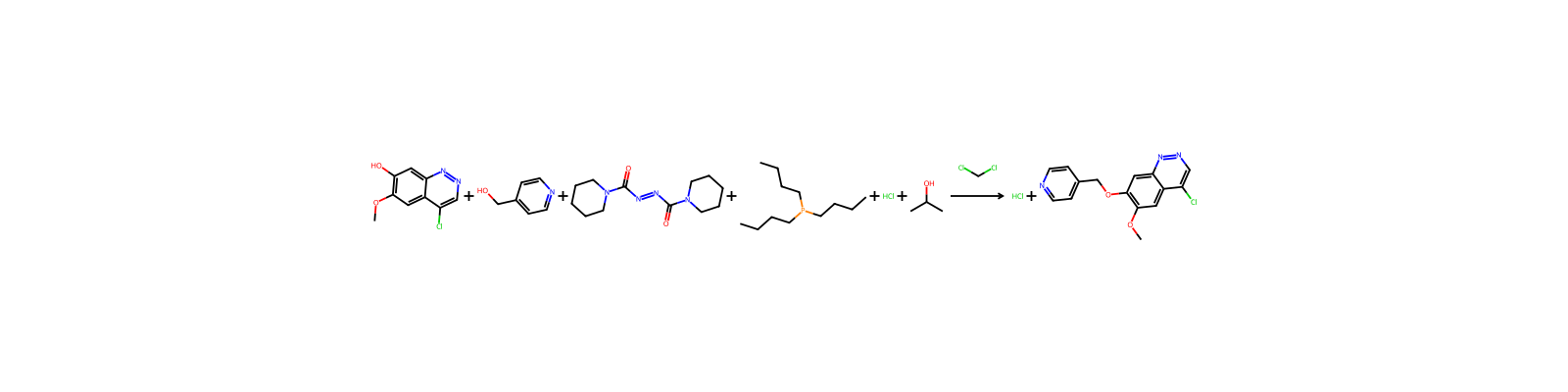
[Cl:1][C:2]1[C:11]2[C:6](=[CH:7][C:8]([OH:14])=[C:9]([O:12][CH3:13])[CH:10]=2)[N:5]=[N:4][CH:3]=1.O[CH2:16][C:17]1[CH:22]=[CH:21][N:20]=[CH:19][CH:18]=1.N(C(N1CCCCC1)=O)=NC(N1CCCCC1)=O.C(P(CCCC)CCCC)CCC.Cl.C(O)(C)C>C(Cl)Cl>[ClH:1].[Cl:1][C:2]1[C:11]2[C:6](=[CH:7][C:8]([O:14][CH2:16][C:17]3[CH:22]=[CH:21][N:20]=[CH:19][CH:18]=3)=[C:9]([O:12][CH3:13])[CH:10]=2)[N:5]=[N:4][CH:3]=1Participants
8
Reactant 6




Product 1

Reagents, catalysts & solvents 1

Procedure
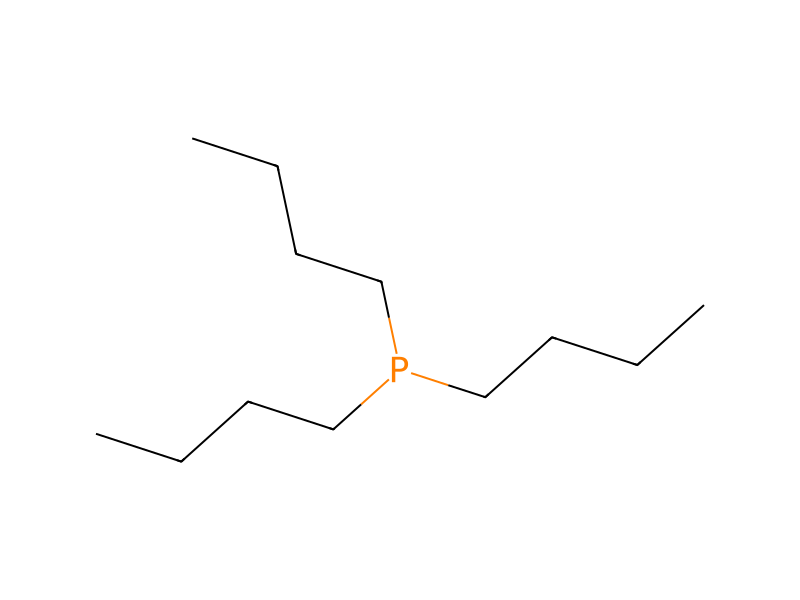
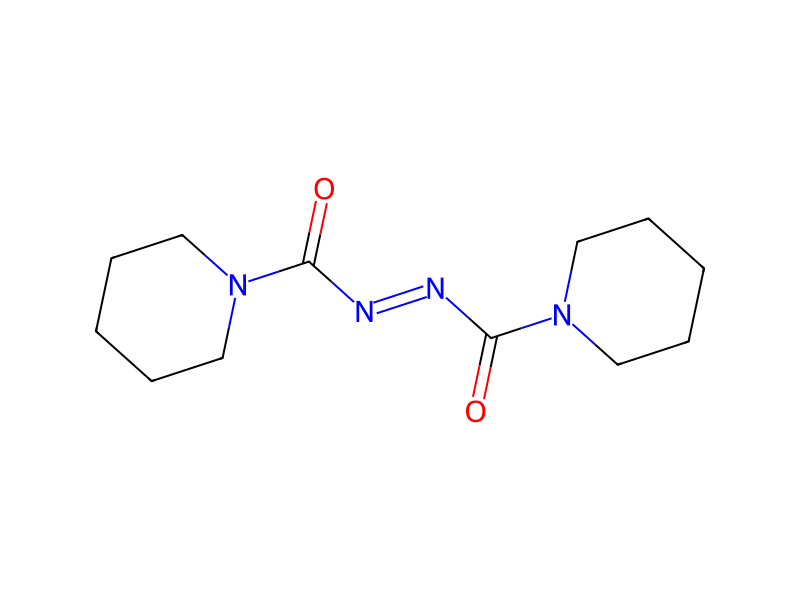
The starting material, 4-chloro-6-methoxy-7-(4-pyridylmethoxy)cinnoline hydrochloride, was obtained by adding 4-chloro-7-hydroxy-6-methoxycinnoline (200 mg, 0.95 mmol), followed by 4-hydroxymethylpyridine (108 mg, 1 mmol) and 1,1′-(azodicarbonyl)dipiperidine (647 mg, 2.5 mmol), in portions, to a solution of tri(n-butyl)phosphine (640 μg, 2.5 mmol) in methylene chloride (6 ml). After stirring for 1 hour at ambient temperature, a solution of 7M hydrogen chloride in isopropanol (300 μl, 2.1 mmol) was added. The resulting solid was filtered off, washed with methylene chloride and ether to give 4-chloro-6-methoxy-7-(4-pyridylmethoxy)cinnoline hydrochloride as a solid (196 mg, 55%).
Workup
- filtrationThe resulting solid was filtered off
- washwashed with methylene chloride and ether
Sources & evidence
- ORD record
- ord-1925b59d42954b6c9cf79949b3a51998
- Source dataset
- uspto-grants-2006_08
- Patent number
- US07087602B2
Linked notes
Loading…