HomeMCPWorkbenchSkills
HomeWorkbenchNotificationsMe
llms.txt · MCP GuidePrivacy Policy · Terms of Service · Supportv1.8.3
  1. Home
  2. /Reaction

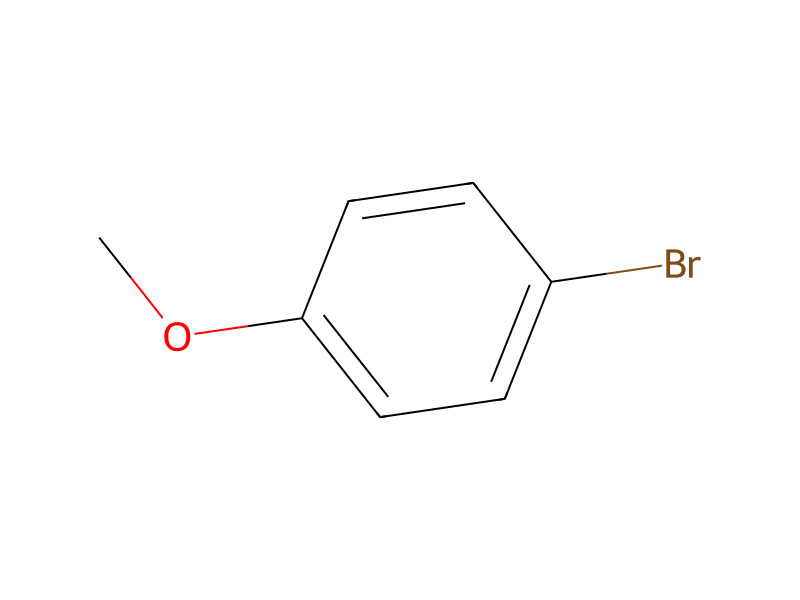
4-Bromoanisole → 1-(4-Bromobutyl)-4-methoxybenzene

HRID 750936
Print

Reaction equation

HRID 750936 reaction equation
Br[C:2]1[CH:7]=[CH:6][C:5]([O:8][CH3:9])=[CH:4][CH:3]=1.[Mg].[Br:11][CH2:12][CH2:13][CH2:14][CH2:15]Br.[Li+].[Cl-].[Cl-].[NH4+]>C1COCC1.C(OCC)(=O)C>[Br:11][CH2:12][CH2:13][CH2:14][CH2:15][C:2]1[CH:7]=[CH:6][C:5]([O:8][CH3:9])=[CH:4][CH:3]=1
ParticipantsProcedureWorkupSources & evidenceReaction notes

Participants

8

Reactant 5

HCID 77304-Bromoanisole2×HCID 80561,4-DibromobutaneHCID 25517Ammonium ChlorideHCID 433294Lithium ChlorideHCID 5462224Magnesium

Product 1

HCID 5781911-(4-Bromobutyl)-4-methoxybenzene

Reagents, catalysts & solvents 2

HCID 8028TetrahydrofuranSolvent3×
HCID 8857Ethyl AcetateSolvent

Procedure

After starting the reaction by adding 5.00 ml 4-bromoanisole to a mixture of 4.86 g (0.20 mol) magnesium turnings and 100 ml THF, 20.00 ml 4-bromoanisole (total: 25.0 ml (37.4 g; 0.20 mol) were added at a pace sufficient to maintain reflux temperature. The reaction mixture was heated to reflux for additional 3 h, cooled to r.t. and dropped at 0° C. within 1 h to a stirred solution prepared by mixing 129.6 g (71.6 ml, 0.60 mol) 1,4-dibromo-butane in 200 ml THF with a freshly prepared solution of 0.17 g (4.0 mmol) LiCl and 0.267 g (2.0 mmol) Cu(II)Cl2 in 20 ml THF. Stirring was continued for 12 h at r.t. followed by the addition of 100 ml of a 20% ammonium chloride solution and 200 ml ethyl acetate. The water phase was extracted twice with 50 ml ethyl acetate, all organic phases were combined, dried over sodium sulphate and evaporated. The resulting oil was fractionated by vacuum distillation. Yield: 27.7 g (57%), b.p. 112-115° C./0.15 mbar.

Workup

  1. customthe reaction
  2. addition25.0 ml (37.4 g; 0.20 mol) were added at a pace sufficient
  3. temperatureto maintain
  4. temperaturereflux temperature
  5. temperatureThe reaction mixture was heated
  6. temperatureto reflux for additional 3 h
  7. additiondropped at 0° C. within 1 h to a stirred solution
  8. customprepared
  9. extractionThe water phase was extracted twice with 50 ml ethyl acetate
  10. dry with materialdried over sodium sulphate
  11. customevaporated
  12. distillationThe resulting oil was fractionated by vacuum distillation

Sources & evidence

ORD record
ord-fe397c1be7974c76a3d96e0f1af2f3ff
Source dataset
uspto-grants-2008_07
DOI
10.6084/m9.figshare.5104873.v1
Patent number
US07405231B2

Reaction notes

On this pageParticipantsProcedureWorkupSources & evidenceReaction notes





