Reaction equation
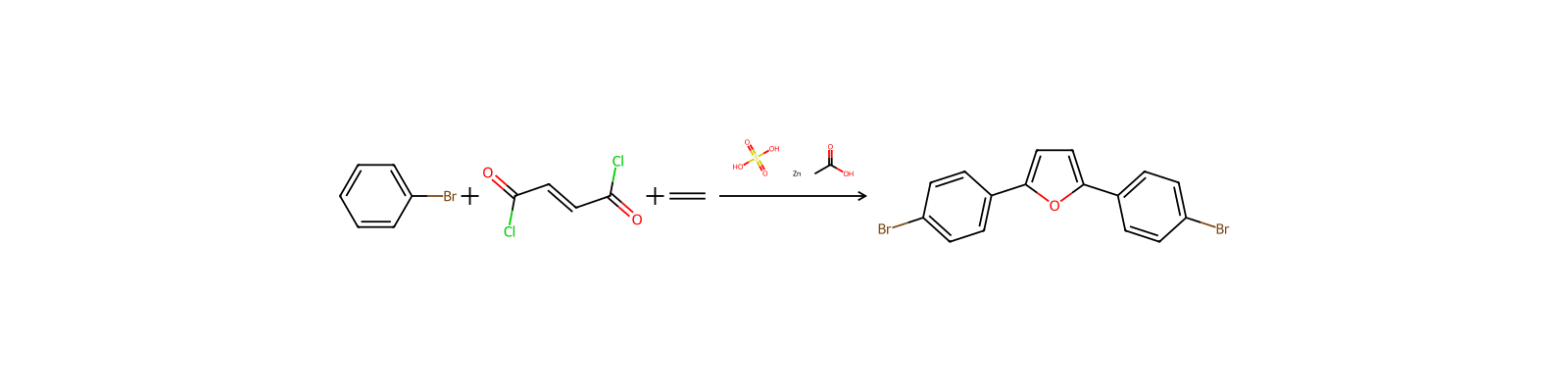
[Br:1][C:2]1[CH:7]=[CH:6][CH:5]=[CH:4][CH:3]=1.[C:8](Cl)(=[O:14])/[CH:9]=[CH:10]/[C:11](Cl)=O.[CH2:16]=[CH2:17]>OS(O)(=O)=O.[Zn].CC(O)=O>[Br:1][C:2]1[CH:7]=[CH:6][C:5]([C:11]2[O:14][C:8]([C:16]3[CH:4]=[CH:3][C:2]([Br:1])=[CH:7][CH:17]=3)=[CH:9][CH:10]=2)=[CH:4][CH:3]=1Participants
Reactant 3

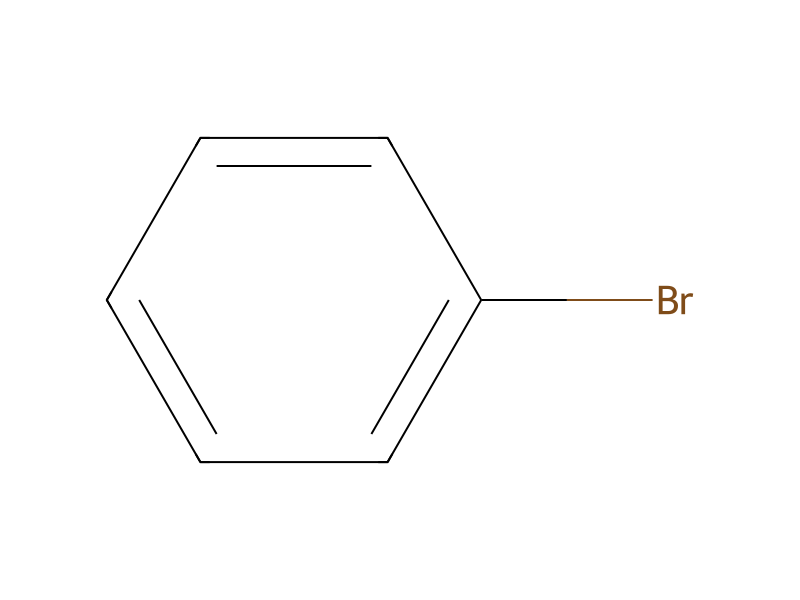
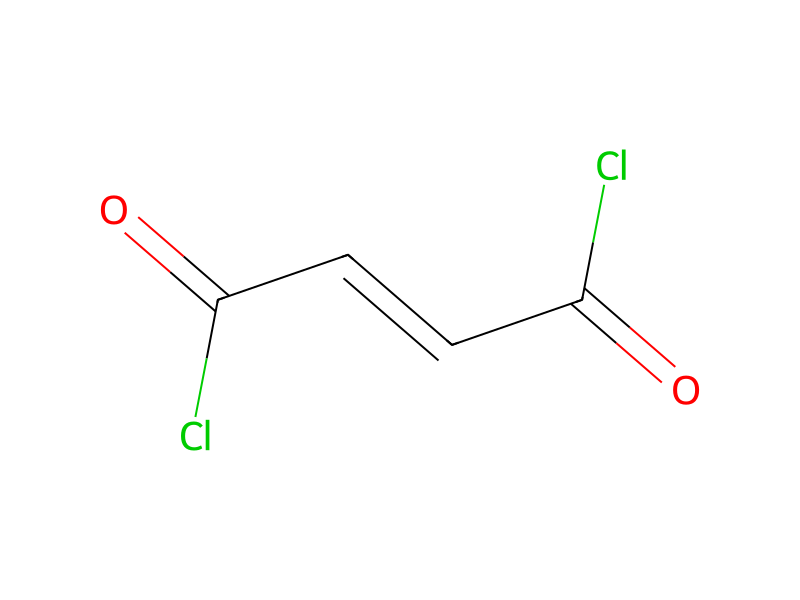
Product 1

Reagents, catalysts & solvents 2


Procedure
A literature procedure as known in the art for preparation of trans-di-p-bromobenzoylethylene from bromobenzene and fumaryl chloride was employed. J. B. Conant and R. E. Lutz, J. Am. Chem. Soc. 47, 881 (1925). The ethylene compound was reduced with Zn-HOAc to prepare 1,4-di-p-bromophenyl-1,4-butanedione. E. Campaigne and W. O. Foye, J. Org. Chem. 17, 1405 (1952). The saturated 1,4-diketone (7.9 g, 0.02 mol) was suspended in 80 mL of AC2O and the mixture was heated to reflux. Concentrated H2SO4 (4-5 drops) was added and refluxing was continued for 5 min. The solution was poured into water-ice (1 L), stirred well, and filtered: crude yield 7 g (93%). Recrystallization from acetic acid gave 5.6 g (75%), mp 198°-199° C. (lit. (R. E. Lutz and W. M. Eisner, J. Am. Chem. Soc. 56, 2698 (1934)) mp 200°-201° C.).
Workup
- temperaturethe mixture was heated to reflux
- temperaturerefluxing
- filtrationfiltered
- customRecrystallization from acetic acid
- customgave 5.6 g (75%), mp 198°-199° C. (lit. (R. E. Lutz and W. M. Eisner, J. Am. Chem. Soc. 56, 2698 (1934)) mp 200°-201° C.)
Sources & evidence
- ORD record
- ord-a9328cbc649c44739edcb5b4674d8842
- Source dataset
- uspto-grants-1998_03
- Patent number
- US05723288
Linked notes
Loading…