HomeMCPWorkbenchSkills
HomeWorkbenchNotificationsMe
llms.txt · MCP GuidePrivacy Policy · Terms of Service · Supportv1.8.3
  1. Home
  2. /Reaction

Potassium Carbonate → 2-((3-cyclopropyl-4-nitro-1H-indazol-1-yl)methyl)-5-methyl-1,3,4-thiadiazole

HRID 79458
Print

Reaction equation

HRID 79458 reaction equation
Br[C:2]1[C:10]2[C:5](=[CH:6][CH:7]=[CH:8][C:9]=2[N+:11]([O-:13])=[O:12])[N:4]([CH2:14][C:15]2[S:16][C:17]([CH3:20])=[N:18][N:19]=2)[N:3]=1.[CH:21]1(B(O)O)[CH2:23][CH2:22]1.C(=O)([O-])[O-].[K+].[K+].C1(P(C2CCCCC2)C2C=CC=CC=2C2C(OC)=CC=C(S([O-])(=O)=O)C=2OC)CCCCC1.[Na+]>O.C([O-])(=O)C.[Pd+2].C([O-])(=O)C.O1CCOCC1>[CH:21]1([C:2]2[C:10]3[C:5](=[CH:6][CH:7]=[CH:8][C:9]=3[N+:11]([O-:13])=[O:12])[N:4]([CH2:14][C:15]3[S:16][C:17]([CH3:20])=[N:18][N:19]=3)[N:3]=2)[CH2:23][CH2:22]1
ParticipantsProcedureWorkupSources & evidenceReaction notes

Participants

8

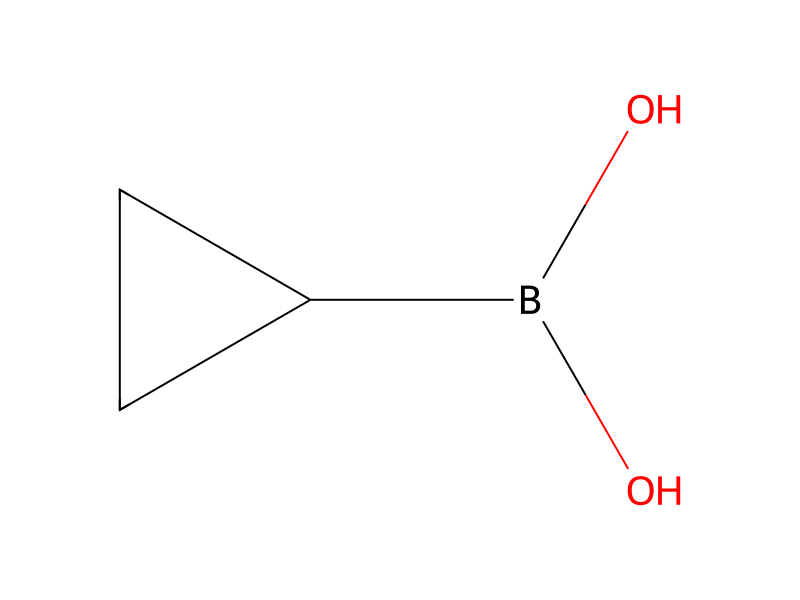
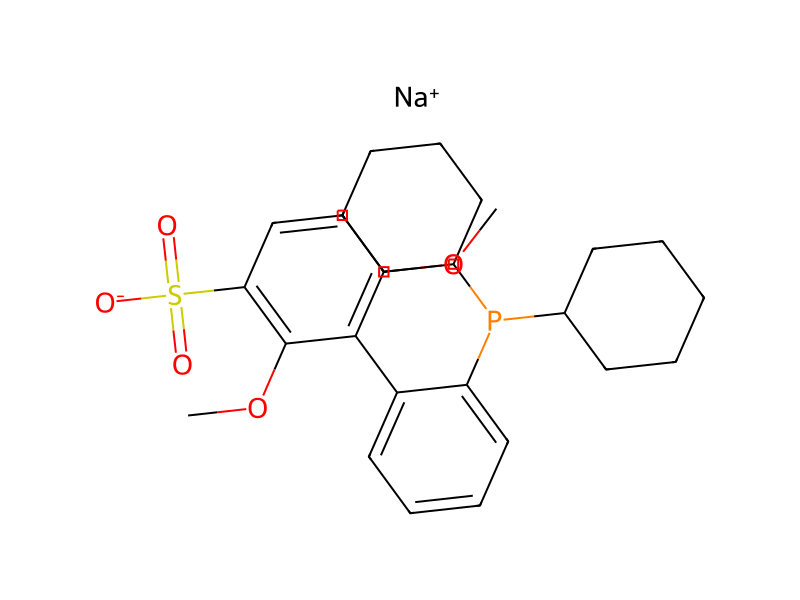
Reactant 4

HCID 11430Potassium CarbonateHCID 2760897Cyclopropylboronic acidHCID 23677046Sodium 2'-(dicyclohexylphosphino)-2,6-dimethoxybiphenyl-3-sulfonateHCID 672601402-((3-bromo-4-nitro-1H-indazol-1-yl)methyl)-5-methyl-1,3,4-thiadiazole

Product 1

HCID 672590452-((3-cyclopropyl-4-nitro-1H-indazol-1-yl)methyl)-5-methyl-1,3,4-thiadiazole
Yield 15.5%

Reagents, catalysts & solvents 3

HCID 167845palladium(II) acetateCatalystHCID 962WaterSolventHCID 312751,4-DioxaneSolvent

Procedure

A 10 mL round bottom flask equipped with a reflux condenser and a nitrogen line was charged with 2-((3-bromo-4-nitro-1H-indazol-1-yl)methyl)-5-methyl-1,3,4-thiadiazole (195 mg, 0.551 mmol), cyclopropylboronic acid (104 mg, 1.21 mmol), palladium acetate (7 mg, 0.031 mmol), potassium carbonate (258 mg, 1.87 mmol), and sodium 2′-(dicyclohexylphosphino)-2,6-dimethoxybiphenyl-3-sulfonate (32 mg, 0.062 mmol). To the flask was added a 1,4-dioxane:water mixture (5:1; 2.4 mL) and the flask was evacuated and refilled with nitrogen three times. The reaction mixture was heated at reflux for 8 hours followed by stirring for 16 hours at ambient temperature. The cooled reaction mixture was diluted with excess water and extracted multiple times with DCM and EtOAc. The combined organic extracts were dried over anhydrous sodium sulfate and concentrated under reduced pressure. The residue was subjected to preparative thin-layer chromatography (silica, 5% MeOH-DCM as eluent) to afford the desired product (27 mg) as a solid.

Workup

  1. customA 10 mL round bottom flask equipped with a reflux condenser
  2. customwater mixture (5:1; 2.4 mL) and the flask was evacuated
  3. additionrefilled with nitrogen three times
  4. temperatureThe reaction mixture was heated
  5. temperatureat reflux for 8 hours
  6. customThe cooled reaction mixture
  7. extractionextracted multiple times with DCM and EtOAc
  8. dry with materialThe combined organic extracts were dried over anhydrous sodium sulfate
  9. concentrationconcentrated under reduced pressure

Sources & evidence

ORD record
ord-eb491b5e19914fa7962c0791bff0d362
Source dataset
uspto-grants-2014_09
DOI
10.6084/m9.figshare.5104873.v1
Patent number
US08841455B2

Reaction notes

On this pageParticipantsProcedureWorkupSources & evidenceReaction notes