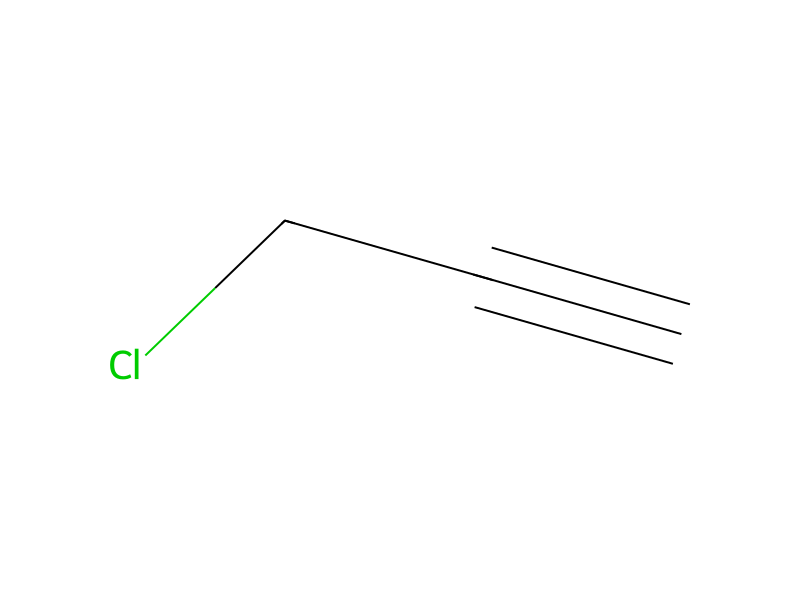
To a flask under N2 fitted with a reflux condenser was added 6-tetrazol-1-yl-pyridin-3-ol (2.25 g, 13.7 mmol) and N,N-dimethylformamide (8.2 mL). Potassium carbonate (3.79 g, 27.4 mmol, 2 eq.), potassium iodide (0.143 g, 0.86 mmol, 0.06 eq.) and propargyl chloride (1.98 mL, 17.9 mmol, 1.3 eq.) were added and heated at 80° C. for three hours. The reaction was cooled to room temperature and 10 mL of water was added to affect precipitation. The solid was filtered off, washed with water and dried overnight. The expected product was used in the next step without further purification. 1H NMR (DMSO-d6): δ 10.08 (1H, s), 8.36 (1H, d, J=3.0 Hz), 8.01 (1H, d, J=9 Hz), 7.79 (1H, dd, J=3.0, 9.0 Hz), 5.01 (2H, s), 3.71 (1H, s)