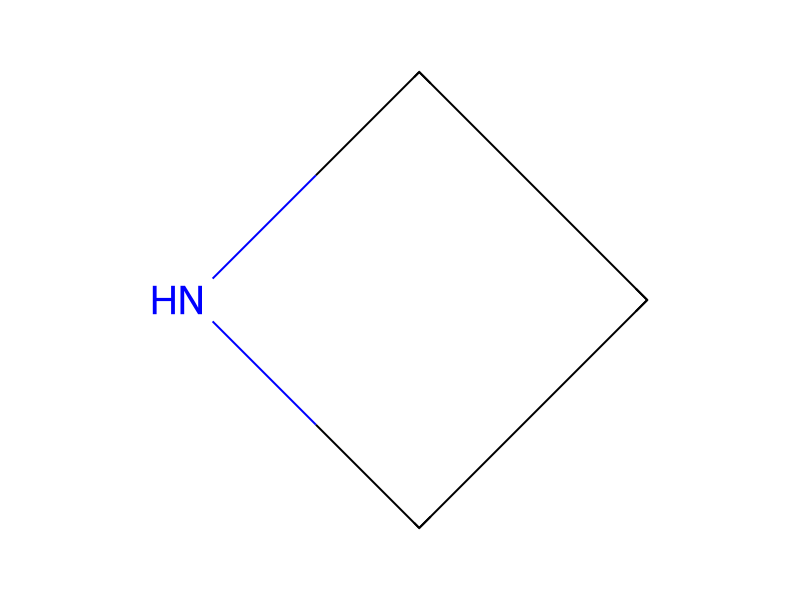
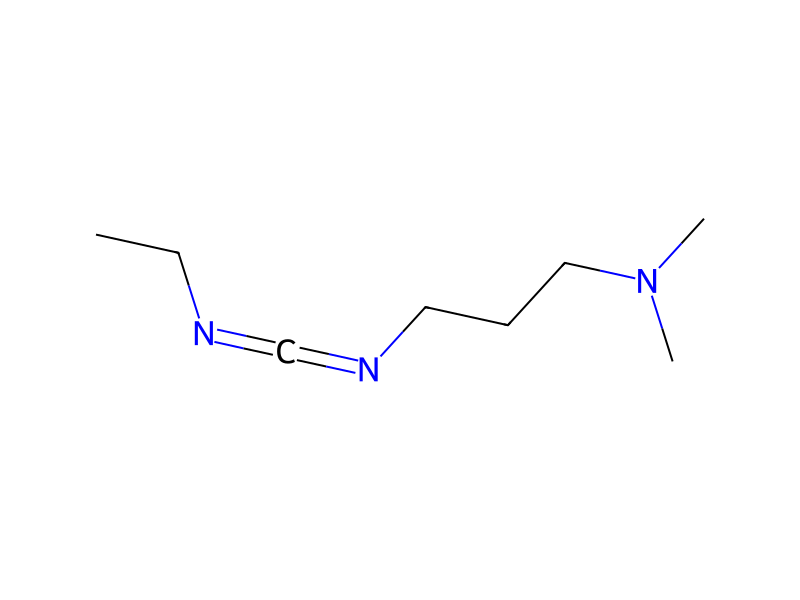
Cl.[O:2]=[C:3]1[NH:12][C:11]2[N:10]=[CH:9][C:8](/[CH:13]=[CH:14]/[C:15]([OH:17])=O)=[CH:7][C:6]=2[CH2:5][CH2:4]1.BrC1C=[C:21]2[C:26](=[N:27][CH:28]=1)NC(=O)CC2.C1C=CC2N(O)N=NC=2C=1.CCN(C(C)C)C(C)C.N1CCC1.CCN=C=NCCCN(C)C>CN(C=O)C>[N:27]1([C:15](=[O:17])/[CH:14]=[CH:13]/[C:8]2[CH:7]=[C:6]3[C:11](=[N:10][CH:9]=2)[NH:12][C:3](=[O:2])[CH2:4][CH2:5]3)[CH2:26][CH2:21][CH2:28]1A 16 mL vial flask was successively charged with (2E)-3-(7-oxo-5,6,7,8-tetrahydro-1,8-naphthyridin-3-yl)acrylic acid hydrochloride (50 mg, 0.20 mmol), prepared (as in J. Med. Chem. 2003, 46, 9, 1627-1635) from 6-bromo-3,4-dihydro-1,8-naphthyridin-2(1H)-one described in U.S. Pat. No. 4,866,074 (Rorer Pharmaceutical Corp.), DMF (4.8 mL), HOBt (32 mg, 0.23 mmol), DIPEA (78 μL, 0.47 mmol), azetidine (16 μL, 0.23 mmol) and EDAC (45 mg, 0.23 mmol). The reaction mixture was stirred at room temperature overnight and concentrated to dryness. The residue was purified twice on preparative TLC (eluent: dichloromethane/MeOH, 95/5) to give the title compound (31 mg, 62%) as a white solid.