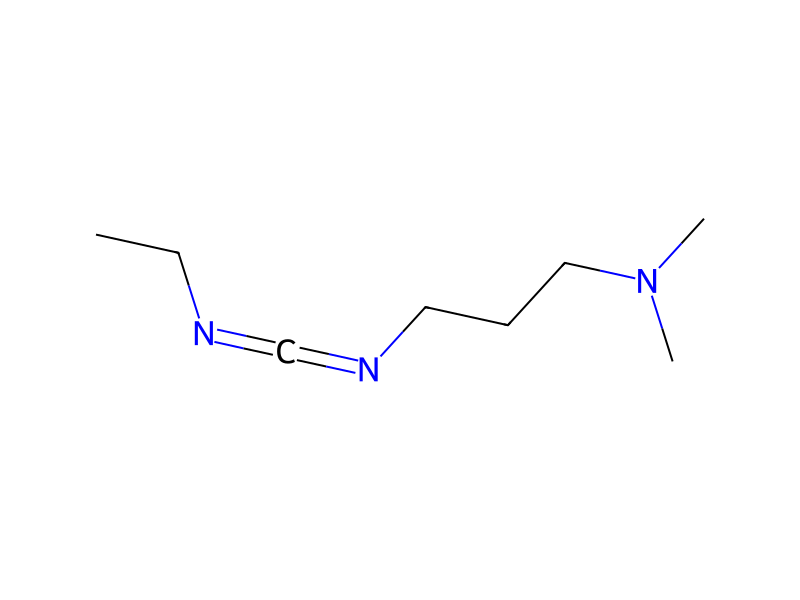
Cl.[CH2:2]([O:6][CH:7]1[CH2:10][NH:9][CH2:8]1)[CH:3]([CH3:5])[CH3:4].CCN=C=N[CH2:16][CH2:17][CH2:18][N:19](C)C.C1C=CC2N([OH:31])N=NC=2C=1.C(N([CH:38]([CH3:40])C)CC)(C)C.Cl[CH2:42][C:43]1[CH:47]=[CH:46][N:45]([CH3:48])N=1.[C:49](OCC)(=[O:51])C>O>[CH2:2]([O:6][CH:7]1[CH2:10][N:9]([C:49](=[O:51])/[CH:42]=[CH:43]/[C:47]2[CH:38]=[C:40]3[C:48](=[N:45][CH:46]=2)[NH:19][C:18](=[O:31])[CH2:17][CH2:16]3)[CH2:8]1)[CH:3]([CH3:5])[CH3:4]3-Isobutoxyazetidine hydrochloride (98 mg, 0.6 mmol), EDCI (113 mg, 0.6 mmol), HOBt (80 mg, 0.6 mmol) and diisopropylethylamine (170 μL, 1.0 mmol) were successively added to a solution of 3-(chloromethyl)-1-methyl-1H-pyrazole (100 mg, 0.4 mmol) in dimethylormamide (10 mL) at room temperature. The reaction mixture was stirred over a week-end and then diluted by addition ethyl acetate (20 mL) and water (2×20 mL). The aqueous layer was separated and extracted with ethyl acetate (2×20 mL). The combined organic phases were washed with a saturated solution of sodium chloride (3×20 mL), dried over sodium sulfate, filtered and concentrated to dryness. The residue was purified by chromatography on silica gel, using dichloromethane/methanol (98:2 to 92:8) as eluent. The title product was obtained as a white solid (40 mg, 31%).