HomeMCPSkillsWorkbenchOpenChem
HomeWorkbenchNotificationsMe
llms.txt · skill.md · MCP GuidePrivacy Policy · Terms of Service · Supportv1.8.5
  1. Home
  2. /Reaction

Diisopropylethylamine → (E)-6-(3-(3-(Benzofuran-2-yl)azetidin-1-yl)-3-oxoprop-1-en-1-yl)-1'-methyl-1H-spiro[[1,8]naphthyridine-3,4'-piperidin]-2(4H)-one

HRID 83088
Print

Reaction equation

Cl.[O:2]1[C:6]2[CH:7]=[CH:8][CH:9]=[CH:10][C:5]=2[CH:4]=[C:3]1[CH:11]1[CH2:14][NH:13][CH2:12]1.Cl.[CH3:16][N:17]1[CH2:22][CH2:21][C:20]2([CH2:31][C:30]3[C:25](=[N:26][CH:27]=[C:28](/[CH:32]=[CH:33]/[C:34](O)=[O:35])[CH:29]=3)[NH:24][C:23]2=[O:37])[CH2:19][CH2:18]1.CCN=C=NCCCN(C)C.Cl.C1C=NC2N(O)N=NC=2C=1.CCN(C(C)C)C(C)C>CN(C=O)C>[O:2]1[C:6]2[CH:7]=[CH:8][CH:9]=[CH:10][C:5]=2[CH:4]=[C:3]1[CH:11]1[CH2:12][N:13]([C:34](=[O:35])/[CH:33]=[CH:32]/[C:28]2[CH:29]=[C:30]3[C:25](=[N:26][CH:27]=2)[NH:24][C:23](=[O:37])[C:20]2([CH2:21][CH2:22][N:17]([CH3:16])[CH2:18][CH2:19]2)[CH2:31]3)[CH2:14]1
ParticipantsProcedureWorkupSources & evidenceReaction notes

Participants

7

Reactant 5

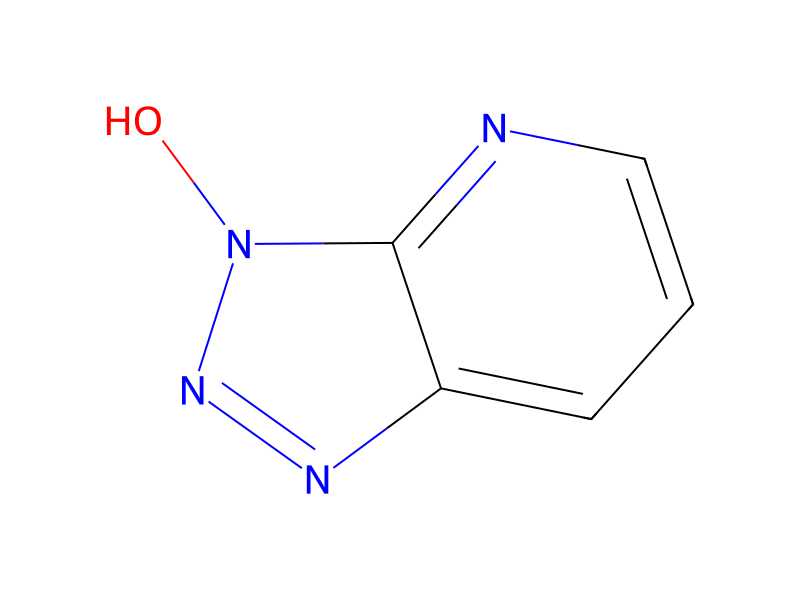
HCID 81531DiisopropylethylamineHCID 181649HOAtHCID 27239391,3-Propanediamine, N'-(ethylcarbonimidoyl)-N,N-dimethyl-, monohydrochlorideHCID 671545513-(Benzofuran-2-yl)azetidine hydrochlorideHCID 67154626(E)-3-(1'-methyl-2-oxo-2,4-dihydro-1H-spiro[[1,8]naphthyridine-3,4'-piperidine]-6-yl)acrylic acid hydrochloride


Product 1

HCID 52950836
(E)-6-(3-(3-(Benzofuran-2-yl)azetidin-1-yl)-3-oxoprop-1-en-1-yl)-1'-methyl-1H-spiro[[1,8]naphthyridine-3,4'-piperidin]-2(4H)-one
Yield 9.7%

Reagents, catalysts & solvents 1

HCID 6228DimethylformamideSolvent

Procedure

To a solution of 3-(benzofuran-2-yl)azetidine hydrochloride (30 mg, 0.086 mmol) and (E)-3-(1′-methyl-2-oxo-2,4-dihydro-1H-spiro[[1,8]naphthyridine-3,4′-piperidine]-6-yl)acrylic acid hydrochloride (20 mg, 0.059 mmol) in dry DMF (4 mL) were added EDCI.HCl (17.02 mg, 0.089 mmol), HOAt (12.09 mg, 0.089 mmol) and DIPEA (51 μL, 0.296 mmol). The reaction was stirred at room temperature overnight. The mixture was partitioned between dichloromethane and H2O, the layers were separated and the aqueous layer was extracted with dichloromethane (2×5 mL). The combined organic layers were washed with brine (3×3 mL), dried over Na2SO4 and concentrated. The residue was chromatographic purified (silica gel, eluent dichloromethane/7M NH3 in MeOH 98:2 to 95:5). The residue was further purified by preparative LCMS (Waters X-Bridge 50×19 mm 5 μm ODB in combination with Waters X-Bridge guard 10×19 mm 5 μm, at 25 ml/min flow rate; detection of product by mass and UV signal; eluent 10 mM ammonia in milliQ water to 10 mM ammonia in MeCN 5% to 95% gradient), to yield the title compound (2.6 mg, 9.6%).

Workup

  1. customThe mixture was partitioned between dichloromethane and H2O
  2. customthe layers were separated
  3. extractionthe aqueous layer was extracted with dichloromethane (2×5 mL)
  4. washThe combined organic layers were washed with brine (3×3 mL)
  5. dry with materialdried over Na2SO4
  6. concentrationconcentrated
  7. customThe residue was chromatographic purified (silica gel, eluent dichloromethane/7M NH3 in MeOH 98:2 to 95:5)
  8. customThe residue was further purified by preparative LCMS (Waters X-Bridge 50×19 mm 5 μm ODB in combination with Waters X-Bridge guard 10×19 mm 5 μm, at 25 ml/min flow rate; detection of product by mass and UV signal; eluent 10 mM ammonia in milliQ water to 10 mM ammonia in MeCN 5% to 95% gradient)

Sources & evidence

ORD record
ord-4c0495b8ee98447bb040261e83322a2d
Source dataset
uspto-grants-2014_09
DOI
10.6084/m9.figshare.5104873.v1
Patent number
US08846711B2

Reaction notes

On this pageParticipantsProcedureWorkupSources & evidenceReaction notes