HomeMCPWorkbenchSkills
HomeWorkbenchNotificationsMe
llms.txt · MCP GuidePrivacy Policy · Terms of Service · Supportv1.8.3
  1. Home
  2. /Reaction

Triethylamine → 1-[(6-Chloroimidazo[1,2-a]pyridin-2-yl)carbonyl]-4-(4-methoxyphenyl)piperazine

HRID 849479
Print

Reaction equation

HRID 849479 reaction equation
[Cl:1][C:2]1[CH:3]=[CH:4][C:5]2[N:6]([CH:8]=[C:9]([C:11]([OH:13])=O)[N:10]=2)[CH:7]=1.[CH3:14][O:15][C:16]1[CH:21]=[CH:20][C:19]([N:22]2[CH2:27][CH2:26][NH:25][CH2:24][CH2:23]2)=[CH:18][CH:17]=1.C(P(=O)(OCC)OCC)#N.C(N(CC)CC)C>ClCCl.CN(C=O)C>[Cl:1][C:2]1[CH:3]=[CH:4][C:5]2[N:6]([CH:8]=[C:9]([C:11]([N:25]3[CH2:24][CH2:23][N:22]([C:19]4[CH:18]=[CH:17][C:16]([O:15][CH3:14])=[CH:21][CH:20]=4)[CH2:27][CH2:26]3)=[O:13])[N:10]=2)[CH:7]=1
ParticipantsProcedureWorkupSources & evidenceReaction notes

Participants

7

Reactant 4

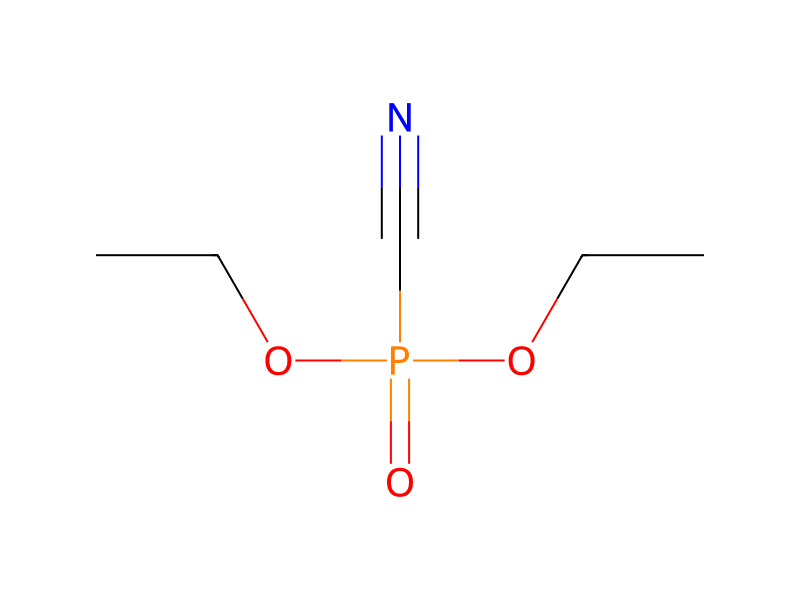
HCID 8471TriethylamineHCID 76257Diethyl cyanophosphonateHCID 2697221-(4-Methoxyphenyl)piperazineHCID 27576146-Chloroimidazo(1,2-a)pyridine-2-carboxylic acid

Product 1

HCID 154091451-[(6-Chloroimidazo[1,2-a]pyridin-2-yl)carbonyl]-4-(4-methoxyphenyl)piperazineYield 66.6%

Reagents, catalysts & solvents 2

HCID 6228DimethylformamideSolventHCID 6344DichloromethaneSolvent

Procedure

To 6-chloroimidazo[1,2-a]pyridine-2-carboxylic acid (0.170 g) and 1-(4-methoxyphenyl)piperazine (Aldrich; 0.165 g) in dichloromethane (4mL) are added diethyl cyanophosphonate (Aldrich; 0.157 mL) and triethylamine (0.144 mL), followed by DMF (2 mL). After stirring overnight, the mixture is quenched with aqueous sodium bicarbonate and then partitioned between dichloromethane and aqueous sodium bicarbonate. The organic layers are filtered through sodium sulfate and concentrated, and the residue is chromatographed on silica gel using methanol/dichloromethane (2/98) to give 0.212 g of 1-[(6-chloroimidazo[1,2-a]pyridin-2-yl)carbonyl]-4-(4-methoxyphenyl)piperazine, mp 180-181° C.; IR (mineral oil) 1620, 1517, 1237, 1246, 1230 cm-1. 1HNMR (CDCl3) δ 3.16, 3.78, 3.97, 4.47, 6.86, 6.94, 7.21, 7.56, 8.10, 8.20.

Workup

  1. customthe mixture is quenched with aqueous sodium bicarbonate
  2. custompartitioned between dichloromethane and aqueous sodium bicarbonate
  3. filtrationThe organic layers are filtered through sodium sulfate
  4. concentrationconcentrated
  5. customthe residue is chromatographed on silica gel

Sources & evidence

ORD record
ord-97f051843fc849898839cd96538dcb88
Source dataset
uspto-grants-2000_01
DOI
10.6084/m9.figshare.5104873.v1
Patent number
US06013654

Reaction notes

On this pageParticipantsProcedureWorkupSources & evidenceReaction notes