HomeMCPWorkbenchSkills
HomeWorkbenchNotificationsMe
llms.txt · MCP GuidePrivacy Policy · Terms of Service · Supportv1.8.3
  1. Home
  2. /Reaction

4-Methylmorpholine → Leucinamide

HRID 850879
Print

Reaction equation

HRID 850879 reaction equation
C(OC(CCC(N[C@H](C(N[C@H](C([NH:37][C@H:38]([C:47]([NH:49][C@H](C(N[C@H](C(O)=O)CC(C)C)=O)C(C)(C)C)=[O:48])[CH2:39][C:40]1[CH:45]=CC=C[C:41]=1C)=O)CCC(=O)OC(C)(C)C)=O)CC(=O)OC(C)(C)C)=O)=O)(C)(C)C.CN1CCOCC1.ClC(OCC(C)C)=O.FC(F)(F)C(O)=O.C(C(B1OC(C)(C)C(C)(C)O1)N)CC>CN(C)C=O.ClCCl>[NH2:37][C@H:38]([C:47]([NH2:49])=[O:48])[CH2:39][CH:40]([CH3:45])[CH3:41]
ParticipantsConditionsProcedureWorkupSources & evidenceReaction notes

Participants

7

Reactant 4

HCID 79724-MethylmorpholineHCID 62365Isobutyl chloroformateHCID 19364641alpha-(RS)-propyl-4,4,5,5-tetramethyl-1,3,2-dioxaborolane-2-methylamine trifluoroacetateHCID 22942121N-[N-[N-[N-[N-[3-(tert-butoxycarbonyl)propionyl]-O-tert-butyl-L-alpha-aspartyl]-O-tert-butyl-L-alpha-glutamyl]-2-methyl-L-phenylalanyl]-3-methyl-L-valyl]-L-leucine

Product 1

HCID 69640
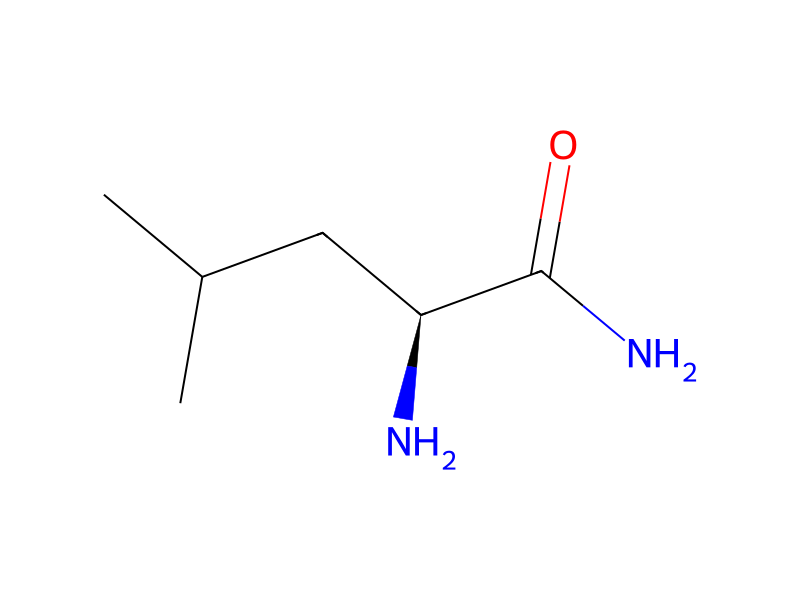
Leucinamide

Reagents, catalysts & solvents 2

HCID 6228DimethylformamideSolventHCID 6344DichloromethaneSolvent

Conditions

Temperature
-15 °C

Procedure

0.2 g (0.218 mmol) of N-[N-[N-[N-[N-[3-(tert-butoxycarbonyl)propionyl]-O-tert-butyl-L-α-aspartyl]-O-tert-butyl-L-α-glutamyl]-2-methyl-L-phenylalanyl]-3-methyl-L-valyl]-L-leucine was dissolved in 2 ml of dimethylformamide and 6 ml of dichloromethane. 0.12 ml (1.1 mmol) of N-methylmorpholine was added and the solution was cooled to -15° C. under a nitrogen atmosphere. 40 mg (0.31 mmol) of isobutyl chloroformate were added and the solution was stirred for 10 minutes at -15° C. 0.14 g (0.44 mmol) of α-(RS)-propyl-4,4,5,5-tetramethyl-1,3,2-dioxaborolane-2-methylamine trifluoroacetate was added and the mixture was stirred at room temperature for 66 hours. After evaporation the residue was partitioned between ethyl acetate and 2M hydrochloric acid. The organic layer was washed with 2M hydrochloric acid, water and saturated sodium chloride solution and then dried over anhydrous sodium sulphate. After evaporation there was obtained 0.17 g of N2-[N-[N-[N-[N-[3-(tert-butoxycarbonyl)propionyl]-O-tert-butyl-L-α-aspartyl]-O-tert-butyl-L-α-glutamyl]-2-methyl-L-phenylalanyl]-3-methyl-L-valyl]-N1-N1(RS)-(4,4,5,5-tetramethyl-1,3,2-dioxaborolan-2-yl)butyl]-L-leucinamide in the form of a solid; NMR (DMSO, 400 MHz) δ: 0.75-0.9 (m,17H), 1.01-1.08 (m,6H), 1.15-1.25 (m,1H), 1.35 9s,36H), 1.4-1.7 (m,4H), 1.75-1.8 (m,1H), 2.05-2.15 (m,2H), 2.23 (s,3H), 2.29-2.41 (m,6H), 2.55-2.6 (m,1H), 2.7-2.74 (m,1H), 2.95-3.05 (m,1H), 4.15-4.25 (m,3H), 4.48-4.55 (m,1H), 4.6-4.7 (m,1H), 7.05-7.11 (m,4H), 7.7-7.81 (m,2H), 8.05-8.12 (m,2H), 8.15-8.25 (m,2H).

Workup

  1. stirringthe mixture was stirred at room temperature for 66 hours
  2. customAfter evaporation the residue
  3. customwas partitioned between ethyl acetate and 2M hydrochloric acid
  4. washThe organic layer was washed with 2M hydrochloric acid, water and saturated sodium chloride solution
  5. dry with materialdried over anhydrous sodium sulphate
  6. customAfter evaporation

Sources & evidence

ORD record
ord-806193b3f8944e03904cc875d100da43
Source dataset
uspto-grants-2000_01
DOI
10.6084/m9.figshare.5104873.v1
Patent number
US06018020

Reaction notes

On this pageParticipantsConditionsProcedureWorkupSources & evidenceReaction notes