HomeMCPWorkbenchSkills
HomeWorkbenchNotificationsMe
llms.txt · MCP GuidePrivacy Policy · Terms of Service · Supportv1.8.3
  1. Home
  2. /Reaction

Sodium Carbonate → Methyl 4-(3-phenylpyrazolo[1,5-a]pyrimidin-6-yl)thiophene-2-carboxylate

HRID 856010
Print

Reaction equation

HRID 856010 reaction equation
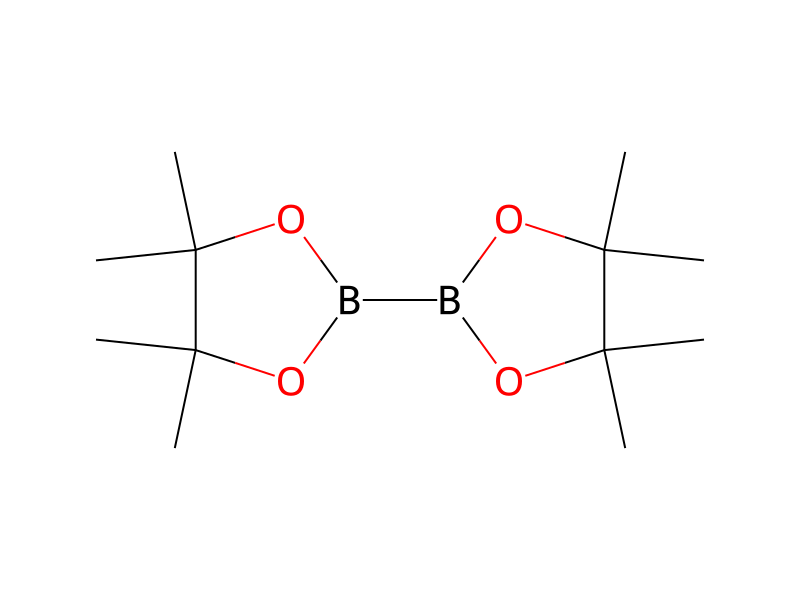
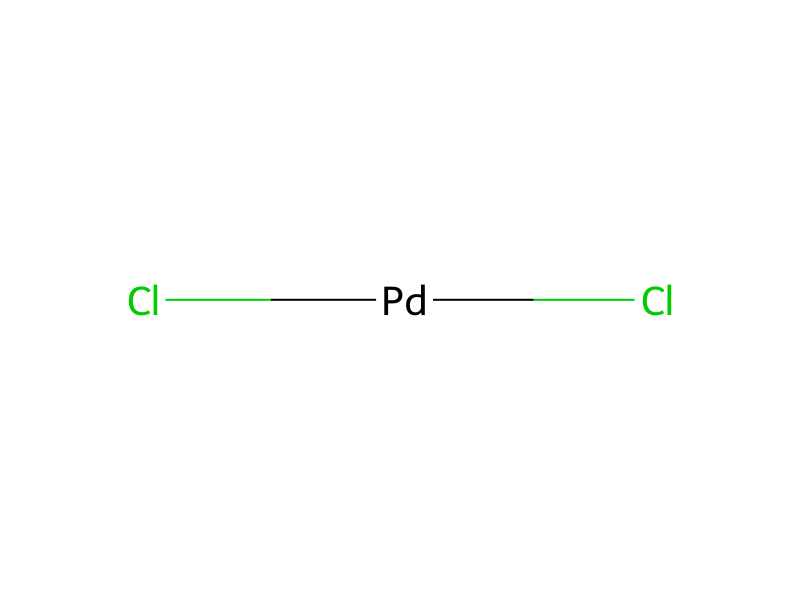
CC1(C)C(C)(C)OB([C:9]2[CH:10]=[C:11]([C:14]([O:16][CH3:17])=[O:15])[S:12][CH:13]=2)O1.CC1(C)C(C)(C)OB(B2OC(C)(C)C(C)(C)O2)O1.C([O-])(=O)C.[K+].Br[C:43]1[CH:44]=[N:45][C:46]2[N:47]([N:49]=[CH:50][C:51]=2[C:52]2[CH:57]=[CH:56][CH:55]=[CH:54][CH:53]=2)[CH:48]=1.C(=O)([O-])[O-].[Na+].[Na+]>CN(C=O)C.O1CCOCC1.C1(P(C2C=CC=CC=2)[C-]2C=CC=C2)C=CC=CC=1.[C-]1(P(C2C=CC=CC=2)C2C=CC=CC=2)C=CC=C1.[Fe+2].Cl[Pd]Cl.C1C=CC([P]([Pd]([P](C2C=CC=CC=2)(C2C=CC=CC=2)C2C=CC=CC=2)([P](C2C=CC=CC=2)(C2C=CC=CC=2)C2C=CC=CC=2)[P](C2C=CC=CC=2)(C2C=CC=CC=2)C2C=CC=CC=2)(C2C=CC=CC=2)C2C=CC=CC=2)=CC=1>[C:52]1([C:51]2[CH:50]=[N:49][N:47]3[CH:48]=[C:43]([C:9]4[CH:10]=[C:11]([C:14]([O:16][CH3:17])=[O:15])[S:12][CH:13]=4)[CH:44]=[N:45][C:46]=23)[CH:53]=[CH:54][CH:55]=[CH:56][CH:57]=1


ParticipantsConditionsProcedureWorkupSources & evidenceReaction notes

Participants

11

Reactant 5

HCID 10340Sodium CarbonateHCID 517044Potassium AcetateHCID 2733548Bis(pinacolato)diboraneHCID 52911233Methyl 4-(4,4,5,5-tetramethyl-1,3,2-dioxaborolan-2-yl)thiophene-2-carboxylateHCID 586916046-Bromo-3-phenylpyrazolo[1,5-a]pyrimidine

Product 1

HCID 58691611
Methyl 4-(3-phenylpyrazolo[1,5-a]pyrimidin-6-yl)thiophene-2-carboxylate

Reagents, catalysts & solvents 5

HCID 24290Palladium ChlorideCatalystHCID 635956Ferrocene-1,1'-bis-(diphenylphosphine)CatalystHCID 178418397HCID 178418397, compoundCatalystHCID 6228DimethylformamideSolventHCID 312751,4-DioxaneSolvent

Conditions

Temperature
80 °C

Procedure

A mixture of methyl 4-(4,4,5,5-tetramethyl-1,3,2-dioxaborolan-2-yl)thiophene-2-carboxylate (5-1, 3.00 g, 13.6 mmol, 1 equiv), 4,4,4′,4′,5,5,5′,5′-octamethyl-2,2′-bi-1,3,2-dioxaborolane (3.80 g, 15.0 mmol, 1.10 equiv), potassium acetate (4.10 g, 41.8 mmol, 3.07 equiv), and 1,1′-bis(diphenylphophino)-ferrocene)dichloropalladium (360 mg, 0.44 mmol, 0.032 equiv) in DMF (50 mL) was heated at 80° C. for 4 hours. The reaction mixture was concentrated and the residue was partitioned between aqueous half-saturated sodium bicarbonate solution and ethyl acetate (150 mL). The organic layer was dried over sodium sulfate and concentrated. A solution of this residue, 6-bromo-3-phenylpyrazolo[1,5-a]pyrimidine (1-3, 1.90 g, 6.93 mmol, 0.510 equiv), and tetrakis(triphenylphosphine)palladium (400 mg, 0.350 mmol, 0.025 equiv) in a mixture of dioxane and aqueous sodium carbonate solution (2M, 7 mL, 14 mmol, 1.0 equiv) was heated at reflux for 20 hours. The reaction mixture was partitioned between aqueous saturated sodium bicarbonate solution and ethyl acetate. The organic layer was dried over sodium sulfate and concentrated. The residue was suspended in methanol and filtered to give methyl 4-(3-phenylpyrazolo[1,5-a]pyrimidin-6-yl)thiophene-2-carboxylate (5-2) as a yellow solid. 1H NMR (400 MHz, CDCl3) δ 8.86 (d, 1H, J=2.4 Hz), 8.80 (d, 1H, J=2.2 Hz), 8.46 (s, 1H), 8.07 (d, 1H, J=1.6 Hz), 8.05 (br d, 2H, J=7.8 Hz), 7.75 (d, 1H, J=1.6 Hz), 7.47 (br t, 2H, J=7.7 Hz), 7.30 (t, 1H, J=7.5 Hz), 3.95 (s, 3H).

Workup

  1. concentrationThe reaction mixture was concentrated
  2. customthe residue was partitioned between aqueous half-saturated sodium bicarbonate solution and ethyl acetate (150 mL)
  3. dry with materialThe organic layer was dried over sodium sulfate
  4. concentrationconcentrated
  5. temperaturewas heated
  6. temperatureat reflux for 20 hours
  7. customThe reaction mixture was partitioned between aqueous saturated sodium bicarbonate solution and ethyl acetate
  8. dry with materialThe organic layer was dried over sodium sulfate
  9. concentrationconcentrated
  10. filtrationfiltered

Sources & evidence

ORD record
ord-4ae62f7073ee4ce290e48f5d6934b08f
Source dataset
uspto-grants-2007_08
DOI
10.6084/m9.figshare.5104873.v1
Patent number
US07262199B2

Reaction notes

On this pageParticipantsConditionsProcedureWorkupSources & evidenceReaction notes