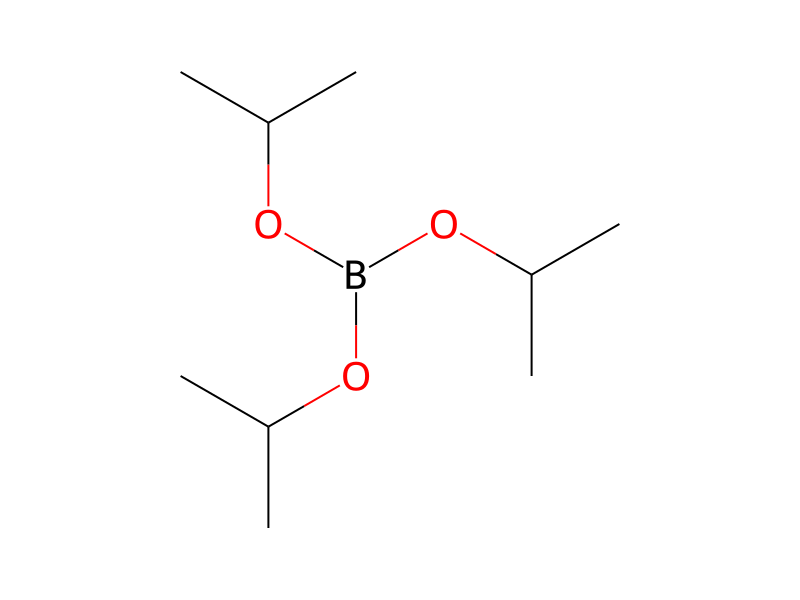
[CH3:1][C:2]1([CH3:15])[CH2:11][CH2:10][C:9]([CH3:13])([CH3:12])[C:8]2[CH:7]=[C:6](Br)[CH:5]=[CH:4][C:3]1=2.C([Li])CCC.[B:21](OC(C)C)([O:26]C(C)C)[O:22]C(C)C.Cl>C1COCC1>[CH3:1][C:2]1([CH3:15])[CH2:11][CH2:10][C:9]([CH3:13])([CH3:12])[C:8]2[CH:7]=[C:6]([B:21]([OH:26])[OH:22])[CH:5]=[CH:4][C:3]1=221.38 g (80.0 mmol) of 5,6,7,8-tetrahydro-5,5,8,8-tetramethyl-2-bromonaphthalene and 50 ml of THF are introduced into a three-necked flask under a stream of nitrogen. 38.4 ml (96.0 mmol) of n-butyllithium (2.5 M in hexane) are added dropwise, at −78° C., and the mixture is stirred for one hour. 27.7 ml (120.0 mmol) of triisopropyl borate are added dropwise at this same temperature and the mixture is stirred for 2 hours. 350 ml of hydrochloric acid (1 N) are added at −50° C. and the mixture is allowed to warm to room temperature. The reaction medium is extracted with dichloromethane and the organic phase is separated out after settling has taken place, dried over magnesium sulphate and evaporated. 18.60 g (100%) of the expected boronic acid are collected in the form of an oil which crystallizes slowly. Melting point 190–192° C.